Interview with artisan María José Gómez
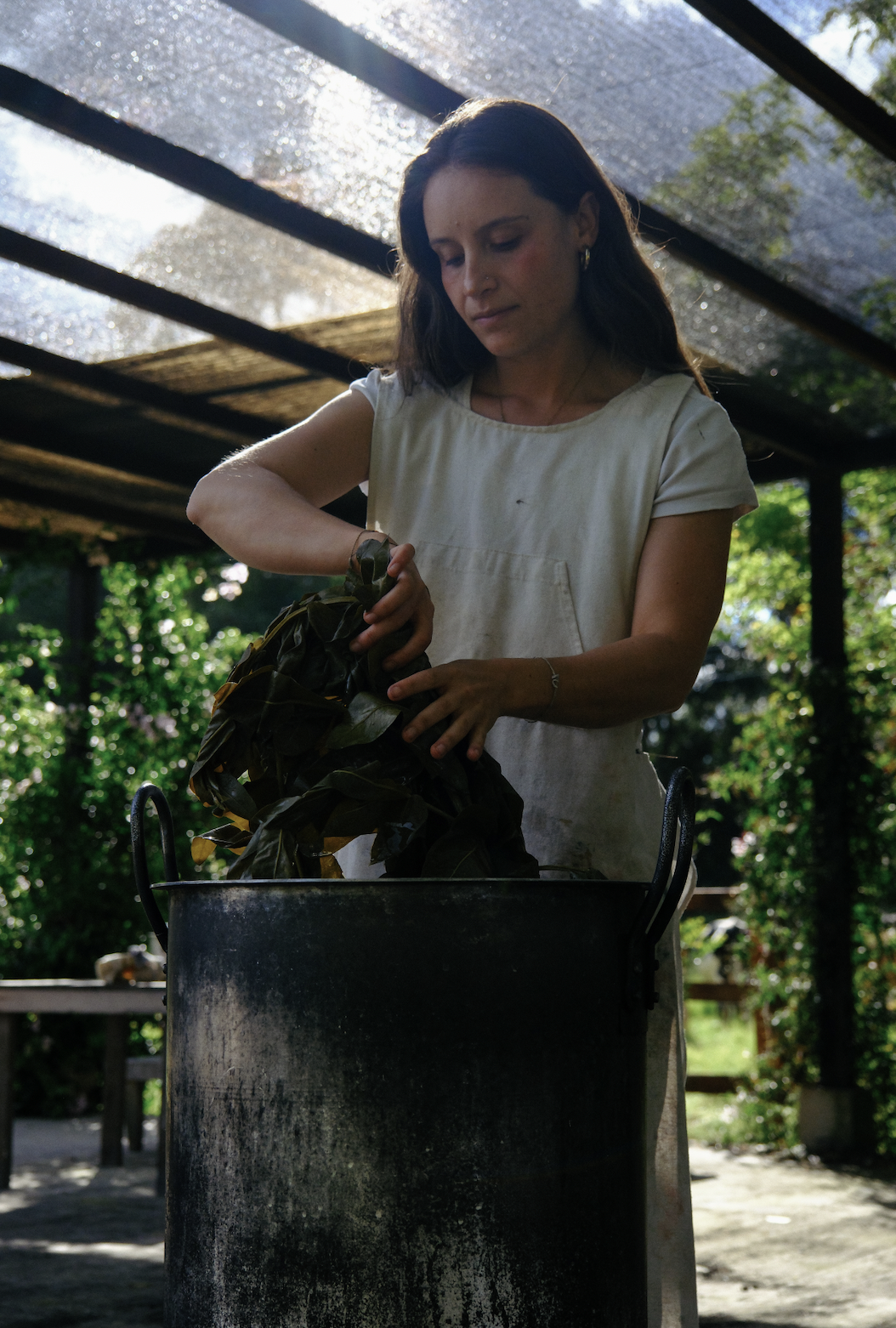
INTERVIEW | María José Gómez | Natural dye artisanInterviewer: I met María in Antigua, Guatemala. I took her natural dye class and was captivated by the process and everything she taught. We became friends and began collaborating on natural rose-dyed bags and natural achiote seed heating pads for Analog Nature. We stayed in touch virtually for three years, supporting one another's businesses and endeavors. This past fall, I finally had the opportunity to visit her, stay at her beautiful artist residency, co-host a workshop, work on our next small batch project together, and interview her. It was one of the best experiences of my life. María lives a beautiful life born out of love and creativity. The work she creates is so intentional and beautiful. As she describes it, natural dyes speak of the place where they grow, with each color telling the story of its ecosystem, the land, and the hands that cultivated it. I hope you enjoy learning more about her slow, intentional process in reverence to nature.
“It's about being very aware of changes in nature and how those changes affect the process. Being present.”
What is your name, and where are you based?
My name is Maria Jose Gomez, and I am based between Bogota, and Ubaté - Colombia
How would you describe yourself in your essence?
Very shy, I keep a lot to myself. The only way I can express most of what I need to say is by creation. Extroverted creator. It's very, it's not pure…I'm not sure how to put it into words. My essence is feeling amazed by my surroundings and life. When I don't feel amazed when I wake up or fascinated, then something is missing in my life…it is always looking for something that amazes me. I am also very romantic. I love romanticizing my life, and everything I do.
What helps you get into your rhythm and flow?
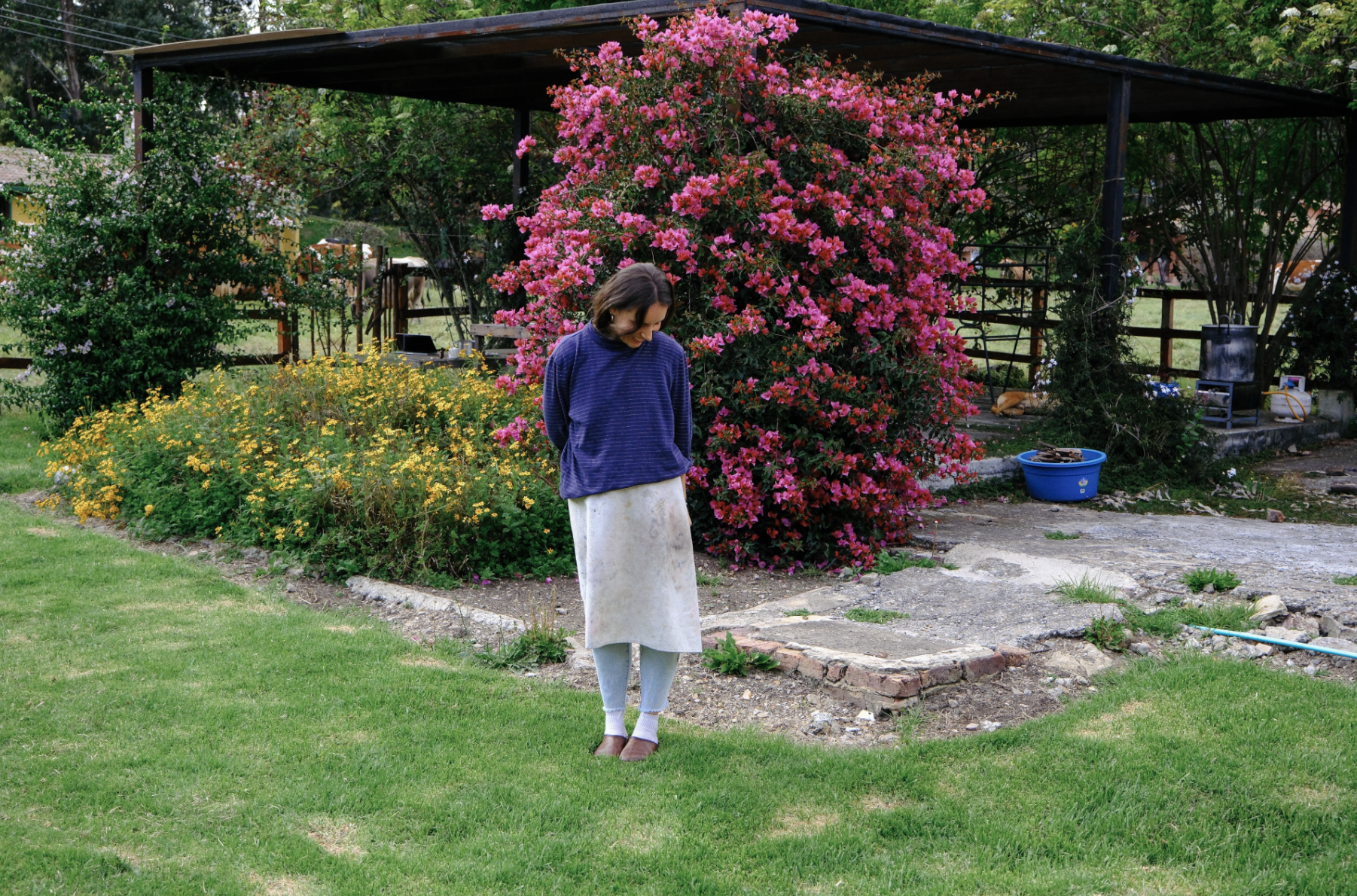
Having a routine helps me a lot, knowing the day before what I'm going to do. With natural dyes, I need to be very organized. And music. I love putting on music when I'm at the farm, especially during the in-between moments when I'm waiting for water to boil or between tasks. Sometimes just instrumental with no words so I don't get distracted. Brazilian music is nice. Waking up early is essential. I start with water and lime in the morning, then move my body. Having at least an hour with no computer, no phones, no Instagram. That's very important because part of my job involves being on Instagram. So I need that time with just me and my body before I put it to work.
Tell us about your brand Curcuma. What is it? How did it come to be?
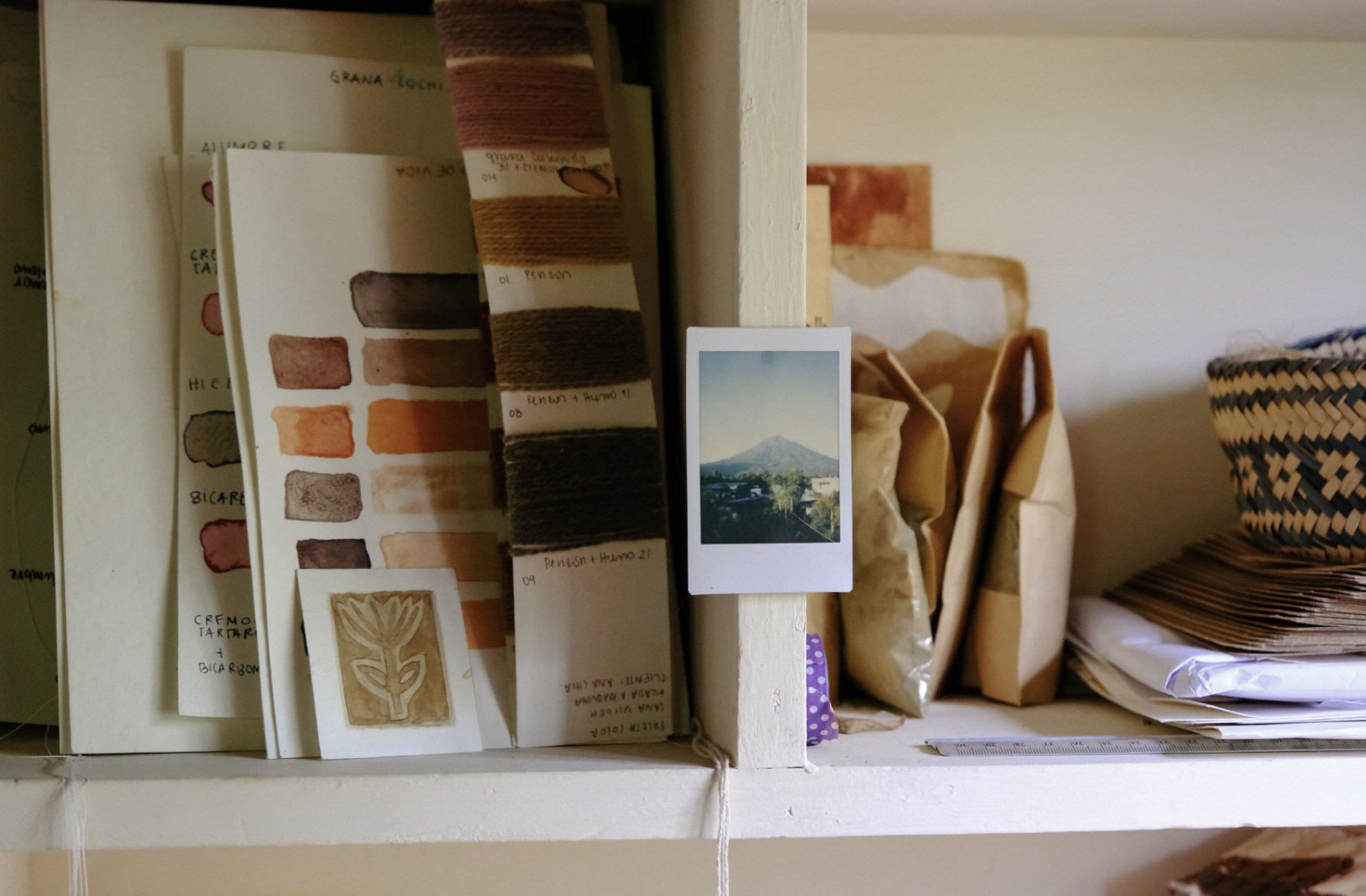
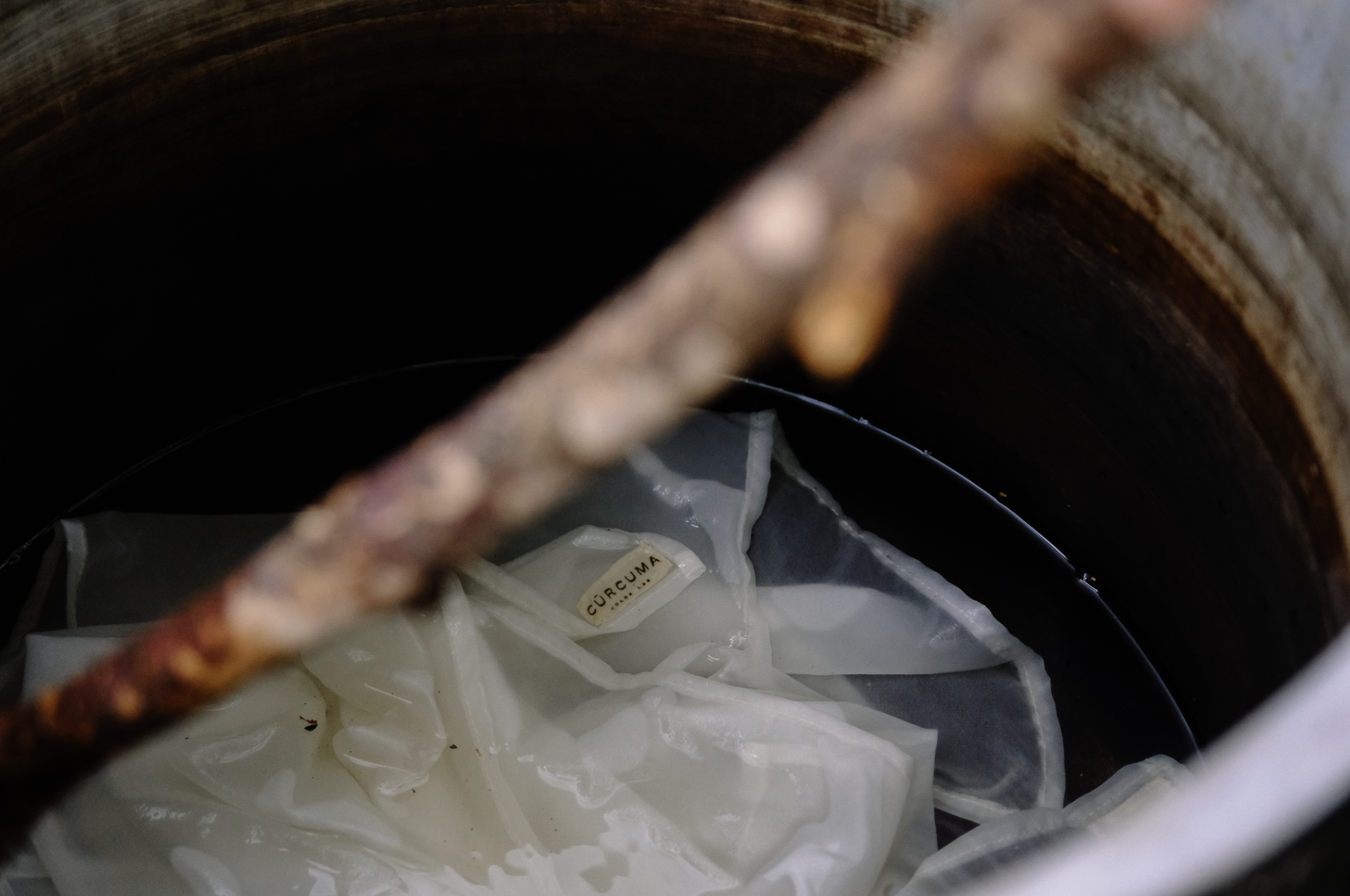
Curcuma was born in Guatemala at the beginning of 2020. I was working for Luna Zorro doing creative work with textiles, very involved with artisans and their processes. But something was missing. I wanted to create something for myself. During that time, I discovered the natural dye process in the lake in Sololá with one of the weavers. One day I was preparing eucalyptus for a facial steam, and after several hours, the water had turned so yellow. I remembered seeing this process in the indigenous community, so I put fabric in. And that was the start of Curcuma. It's a very personal and intimate brand that meets a lot of my needs.

And how about your farm and Casa Raíz, the artist residency?
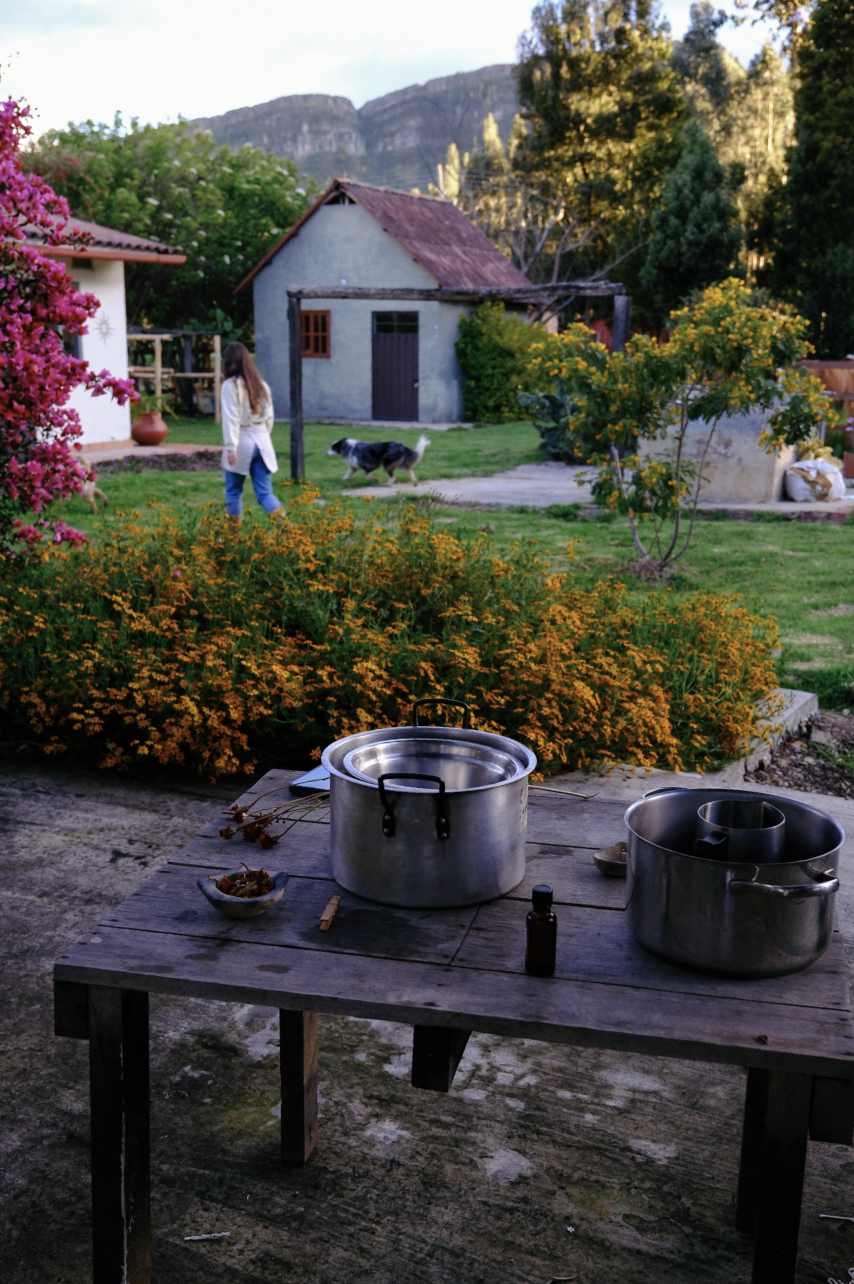
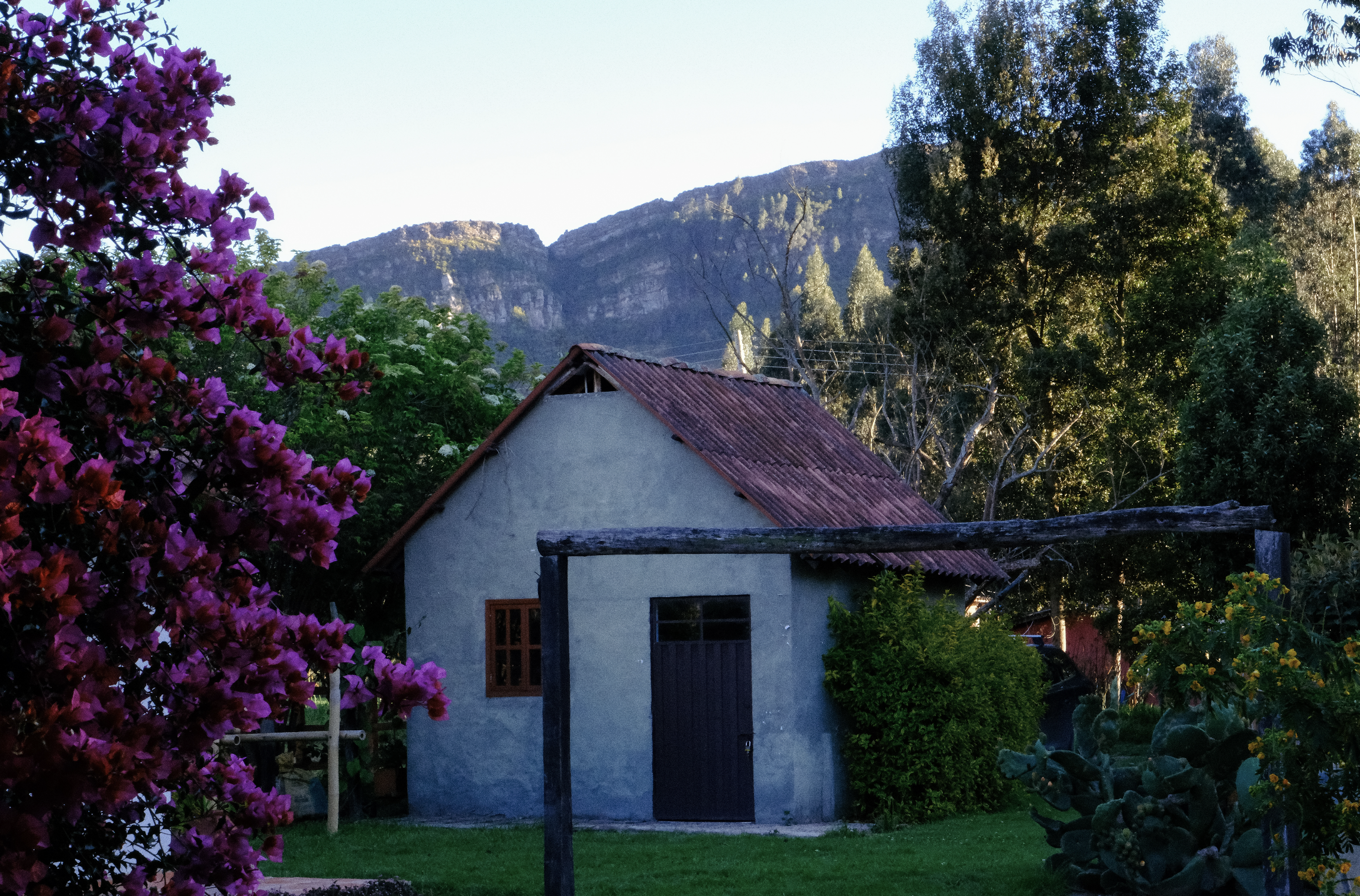
The farm is where I live now and where Casa Raíz is located. It's the second phase of this creative journey, bringing it into a physical space. When I decided to move back to Colombia from Guatemala, my mom had moved to this farm where we used to go as kids. This is where my textile background started. I did my final design project focusing on traditional wool processes and weaving here. Casa Raíz translates to root house. Being here makes me feel very rooted with my family and the territory. I wanted to share this place with people who would love to be here and have that same feeling: being creative, out of the city bubble, understanding the rhythms of the land. People are trying to move out of the city or have moments of calm, and for artists, especially textile artists, it's a very special place.
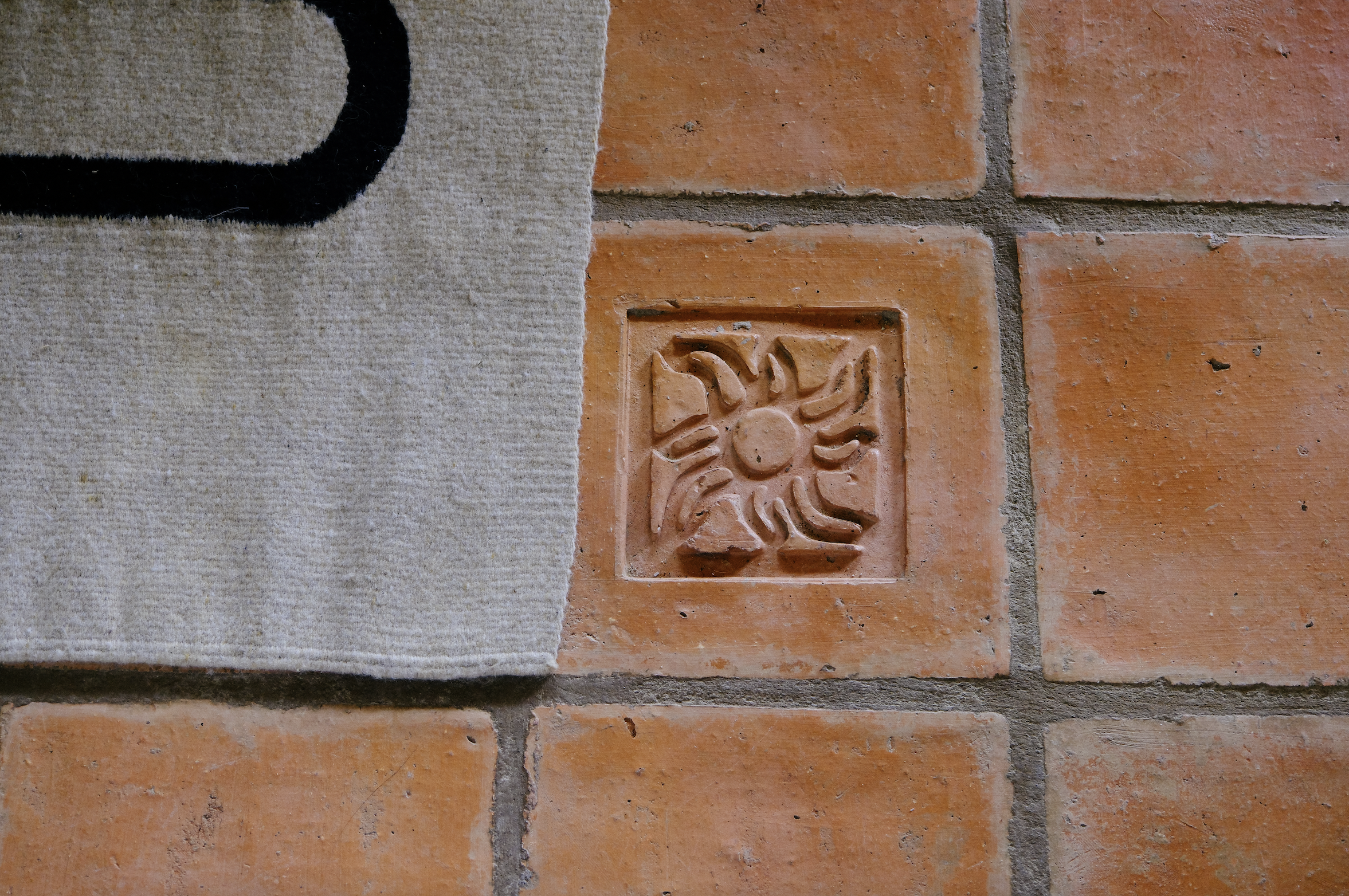
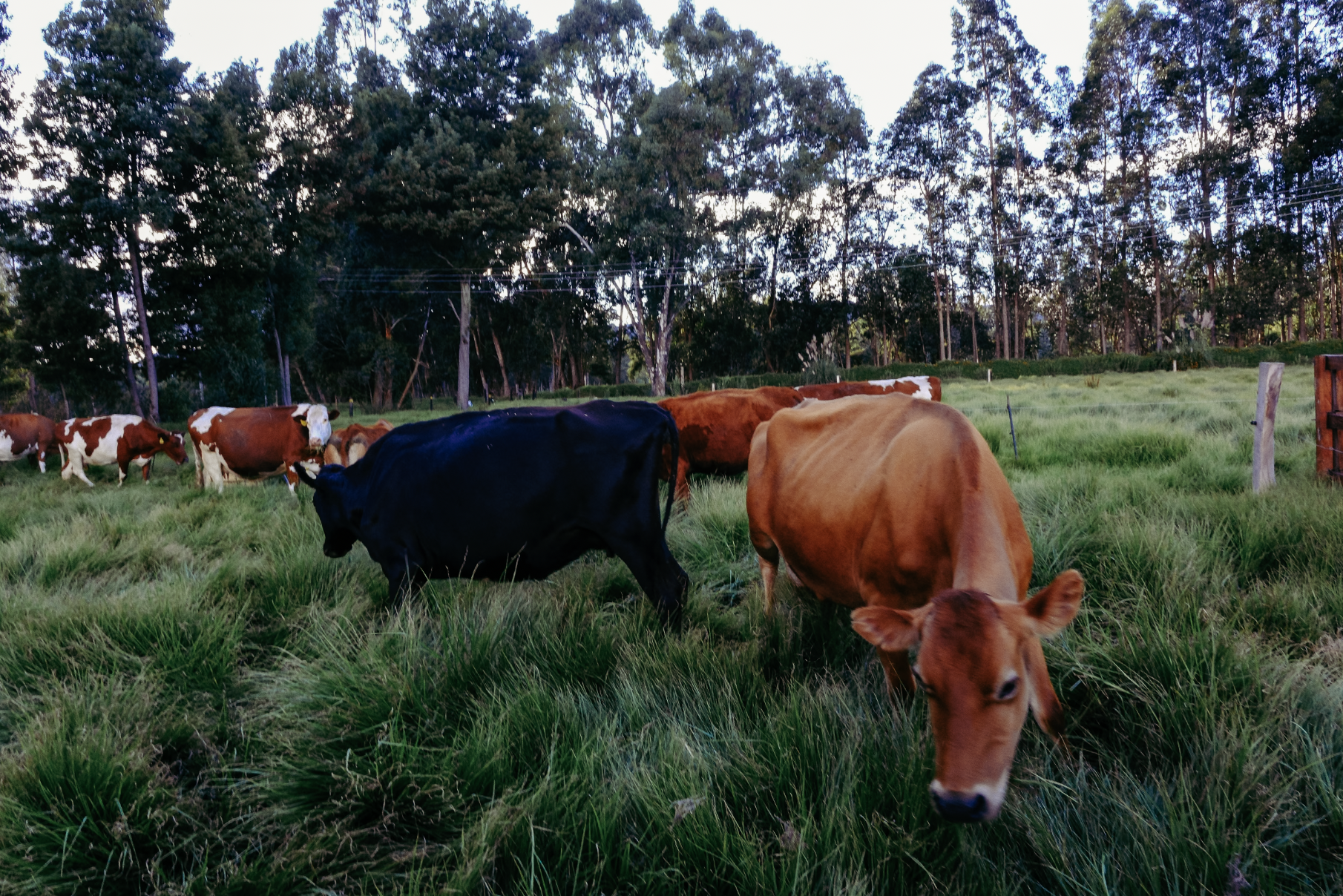
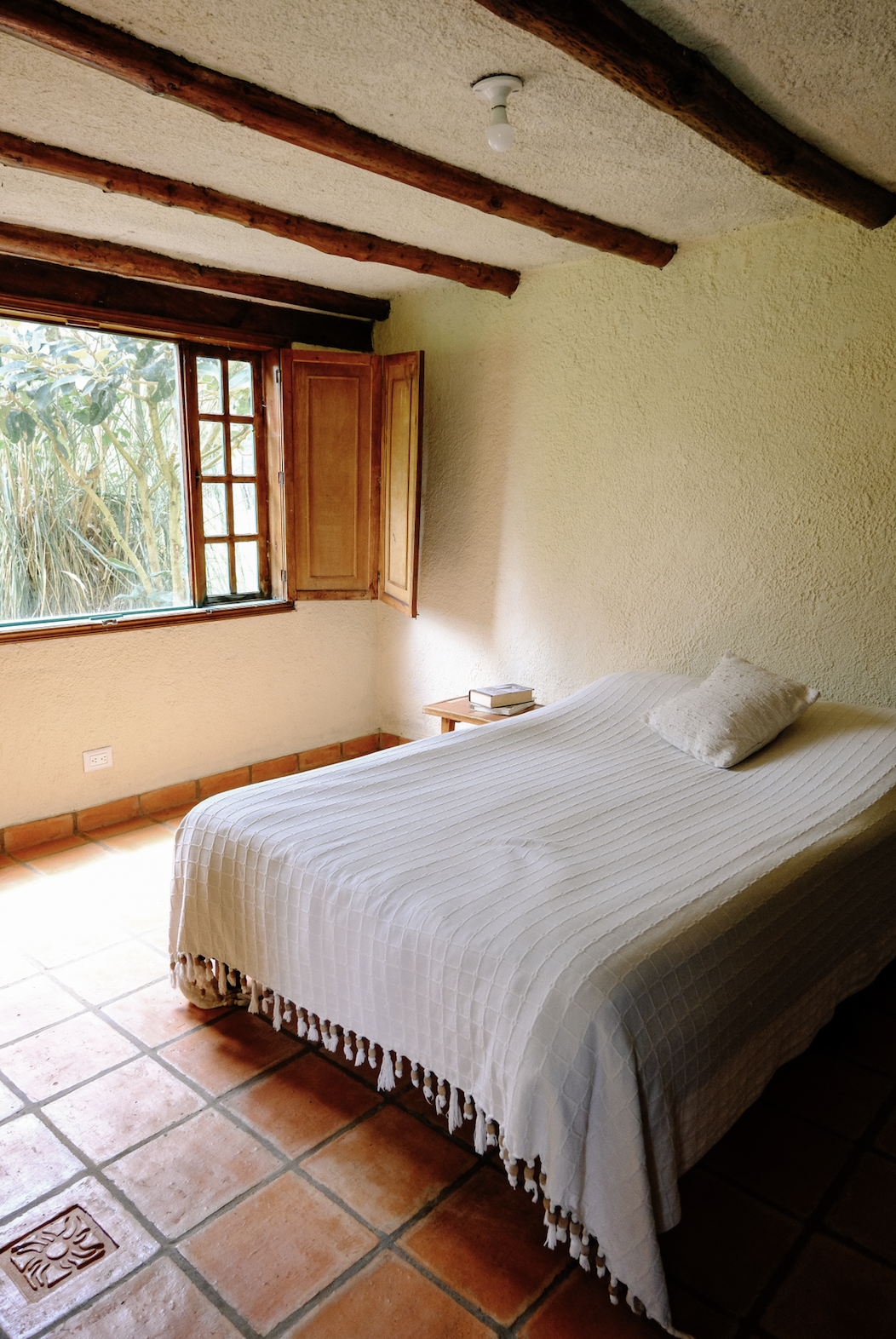
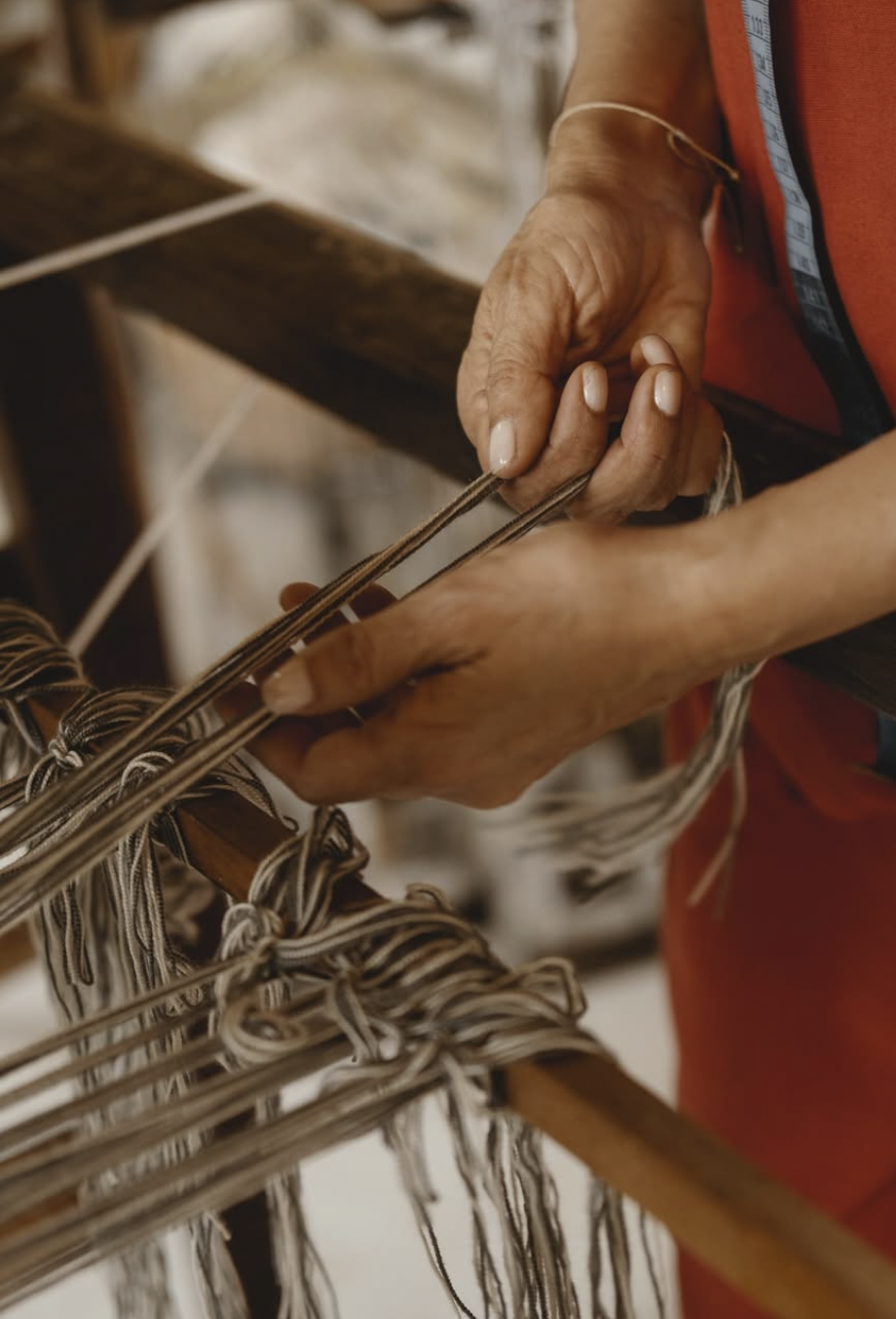
Photo by Andrea Tamayo
Can you talk about the connection between weaving and your family, particularly your mother?
My mom is a textile designer. When I was a kid, she took me to places around Colombia where she worked with artisans. In Guatemala, learning from the woman at the lake was a way of connecting with my mom from afar. Then spending time with her at the farm, seeing how she still works as a weaver and teacher, it was very inspiring.
Textiles became a way of communicating with my mom. Coming back to live with your mom after being independent and living abroad isn't easy, but her helping me with the project became a way of connecting in a very intimate and organic way.

Photo by Andrea Tamayo
Tell us about the cyclical nature of the natural dye process?
“Natural dyes have their own environment and ecosystem. You work with plants, your body, fibers, temperature, the location. So many things playing different roles. You have to be very aware of the cycles of all of this.”
Understanding that you won't have the same plant available all year is essential. I'm talking from the experience of working directly with plants I grow, spending time learning from them. During dry season, you get different colors or the plants aren't ready. So you wait or find another plant. It's the same with water. I try to use only rainwater. After spending a whole year working with it, you understand the months. You know when rainy season is starting, when to save water, when to water the plants more because dry season is coming.
It's about understanding those cycles that go along with the process and aligning myself with them.
Can you walk us through the process from harvesting to getting the color?
I love growing flowers from the beginning, from germination. I set an intention when I'm doing that: you're going to give me something, and I hope I can give something back to this land. When they're mature in the garden and I cut them, I'm aware that they're sacrificing themselves to give me colors. So what I do with this has to have a lot of value.
“You're going to give me something, and I hope I can give something back to this land.”
I often dry them first and save them in jars. When the flower is dry, the color is more saturated. It's a resting moment for them. They gain more color as they dry. Then I use whatever I need at the moment I need it.
After extracting the color, I give it back to the earth as compost. There's so much abundance. Every time I cut them, they grow back and bloom even better. It's about being mindful of that abundance and generous cycle.
How does working with natural dyes and weaving connect you to cyclical living and the rhythms of nature?
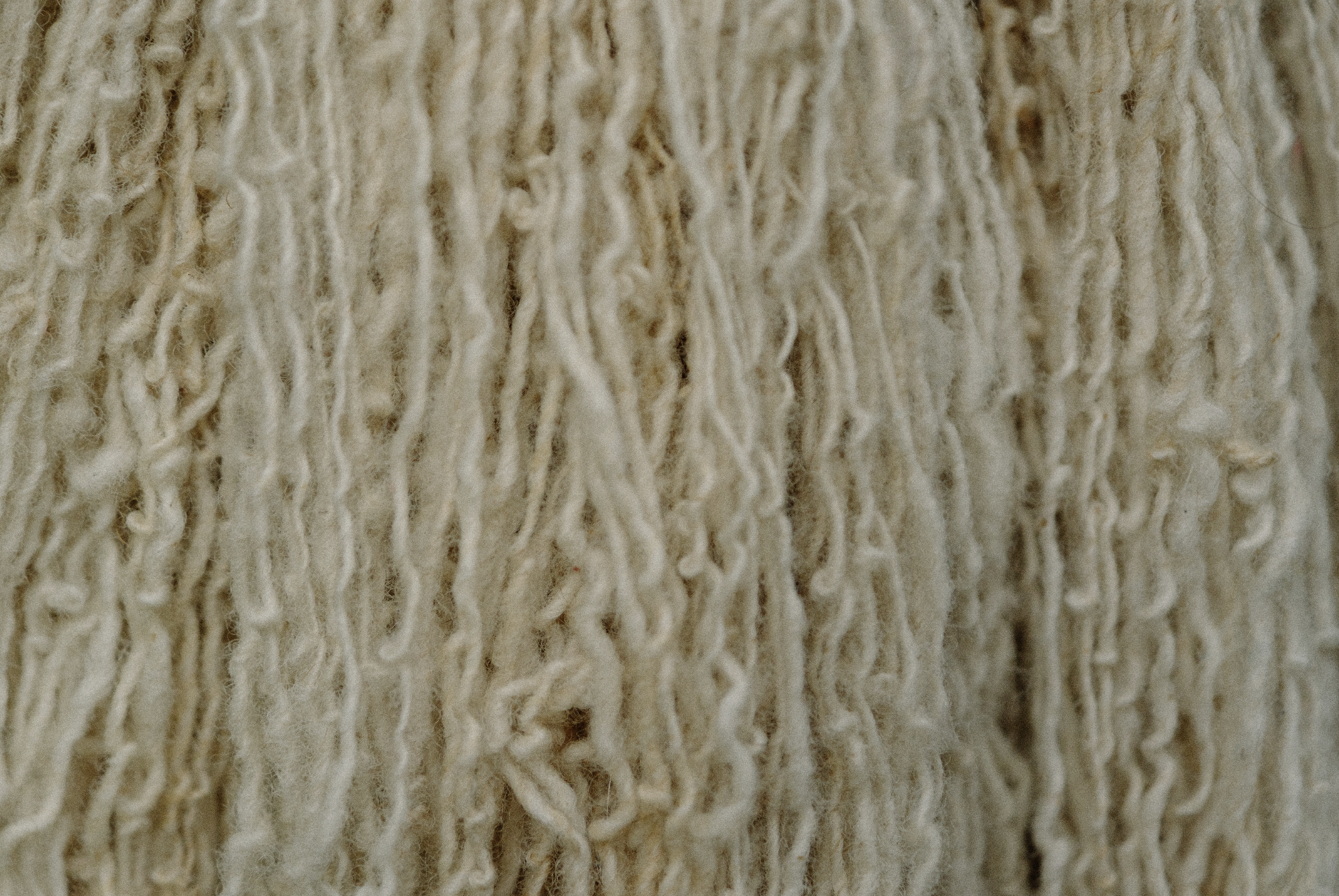
With wool, you take the hair from the sheep, but you need to wait a season for it to grow. It's only cut once a year. When you cut it, you're taking something from the animal, but you're also starting a new cycle.
“That cycle is where the fiber becomes thread, then the thread becomes part of weaving in the loom, then becomes a poncho made of wool.”
The first cut, after about nine months, is the most important. It determines the quality of all future wool. For me, the cycle finishes when the fiber rests in its final form as a designed piece.
The cutting is aggressive. It's the most intense energy. Then cleaning is a care energy, very active with a lot of contact between your hands and the fiber. Spinning is patience.
“The fiber takes time to become thread, like a new birth. Weaving is very thoughtful. You're working together with the fiber, sharing and having a conversation. And when the piece is done, it's a release. The tension is gone. A final breath, and you relax.”
It's about being very aware of changes in nature and how those changes affect the process. Being present. You can't be weaving while looking at your phone or natural dyeing while thinking about something else.
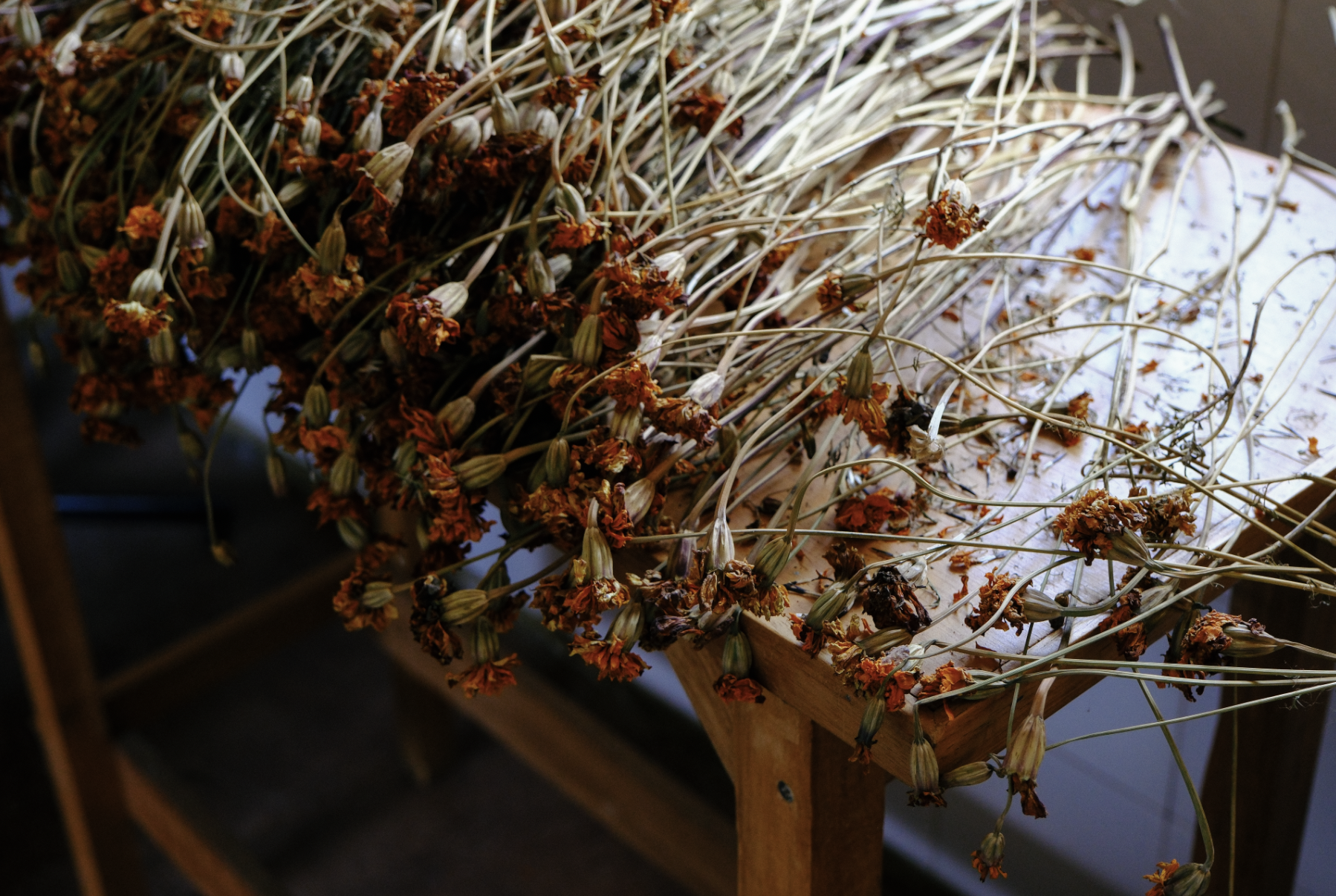
It's about understanding the materials and the territory. Being patient when I don't have enough marigolds because it's dry season. I dry the flowers because that supports the color more. It's about aligning myself with those cycles and also my own cycle as a personal process.
Sometimes I know I need to rest, just as the plants need to rest. If it's dry season, I can rest more and pay attention to myself.
“It's about having that communication between the space, the territory, and my personal day-to-day.”
Can you share how your menstrual cycle influences your creative practice?
I've been noticing during my luteal phase that I'm very sensitive and can get tired easily, wake up not in the best mood. When I'm dyeing on those days and need to be precise, it doesn't come out the way I wanted. That usually happens when I'm tired and emotional before my period.
I've been thinking about synchronizing my cycle with my creative process. If I know I'm in my luteal phase and more sensitive, I should be more gentle with myself and the process. With natural dyes, you can't control everything. It's the same as with my cycle. I need to give myself rest and be gentle at that time.
I'm interested in using my cycle as a way to track other cycles.
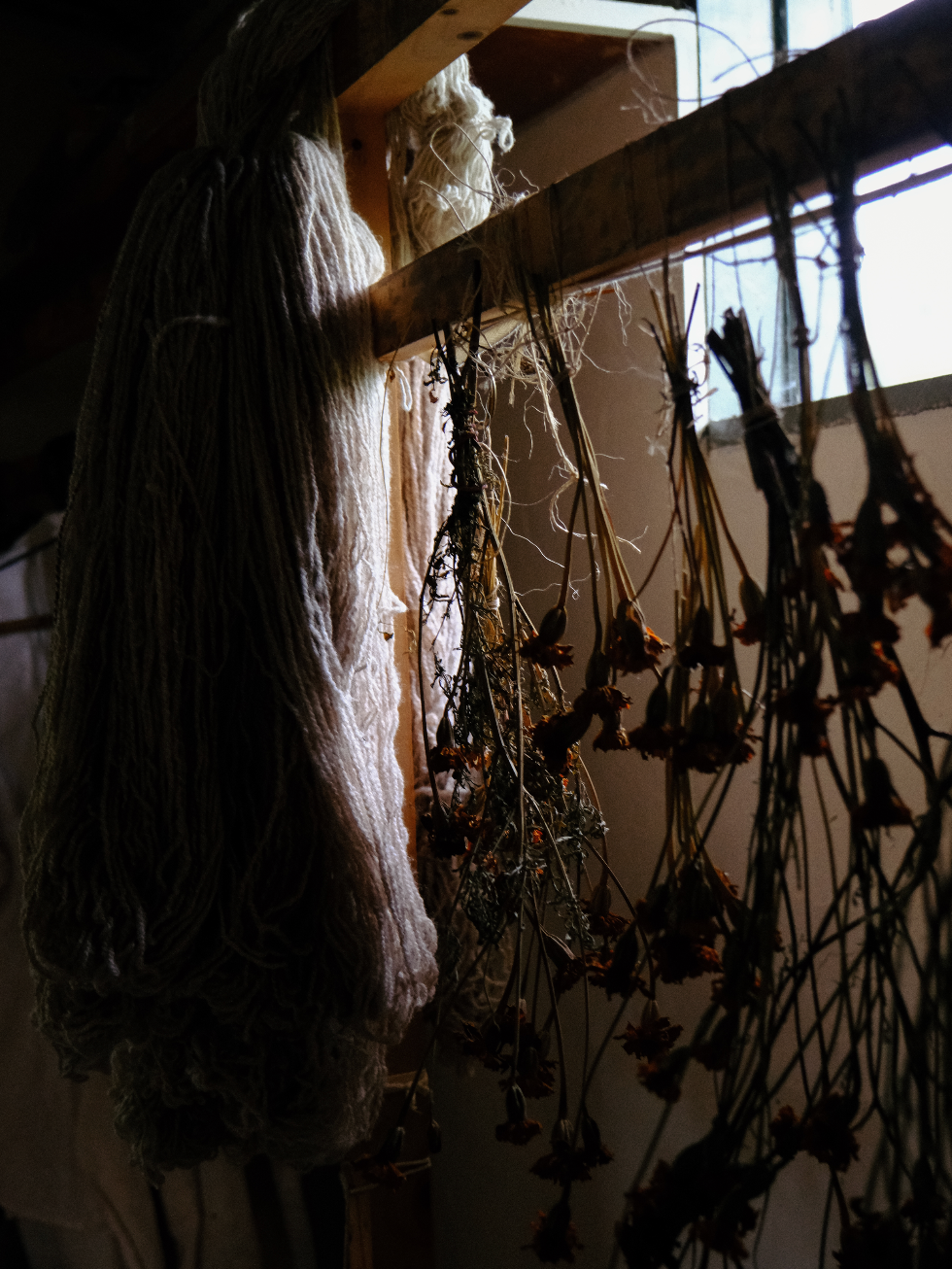
“What if it takes 28 days to dry the flowers? What if I cut them on the first day of my period and they're dry by my next cycle? It would be beautiful to synchronize my cycles with the flowers. To be in a spiral together.”
Are there certain plants that help with well-being from a natural dye perspective? Can you explain ayurvedstra?
There's this concept in natural dyes called ayurvedstra. You focus the process not on the color, but on the properties of the plant. Lavender doesn't give much color, but you can still do the natural dye process and the properties of relaxation and calmness attach to the fiber along with the smell.
You can use lavender, rosemary, eucalyptus. They give color while their properties attach to the fiber. In the end, with everything you use for natural dyes, some property of the plant attaches to the fiber.
The process of natural dying itself is very much about wellness. You have to be patient, stop rushing, follow your instincts. Natural fibers versus synthetic also make a difference.
“Synthetics have so much plastic that creates different vibrations in your body. That's why you use cotton underwear or silk pillowcases. Natural fibers for things that touch your skin, especially during rest.”
What ancestral wisdom informs your practice?
Working with Mayan weavers in Guatemala, their patience still surprises me. They create resistance in threads by making knots before natural dyeing with indigo. They're so patient. They have all the time in the world. We did a workshop where it took half a day just to prepare the fabric with knots and wrapping. There was no rush, just enjoying the process. In the end, it was the most beautiful piece I've ever made with someone. From them I learned to be patient in the process and patient with yourself.
Can you talk about using wood fire and working with the elements?
Using fire for natural dyeing gives you less control, which is beautiful. I can't control everything in the process. The fire is like a game of feeding it so the dye process keeps going. If I forget about it, it won't work. You have to be more patient and present. You can't leave. You have to keep feeding it.
I use clay pots on the fire because they keep heat and you're not worried about damaging them. I usually set an intention before working with fire, thanking the plants and the fire for staying alive to keep the water boiling. It's these conversations you create with the fire and the plants. That's very beautiful.
What is one thing you wish everybody knew about natural dyes and wool?
Time. Time and scale. How much time it takes to get the color, to prepare the fabric. The more you ask for, the harder it is and the more water it uses. Sometimes less is more. The same with wool. How much time it takes for the sheep to grow it, to shear it, for all the people involved. I wish everyone knew about time and scale.

What do you see being lost as weaving and natural dye practices fade?
I wish there were more people doing it, especially the old women who have all this wisdom. I wish we could know more about this because it's from them that we're learning this knowledge. Sometimes it gets lost because there are no books or ways for them to share it.
We need to give more voice to these campesina women who grew up on farms close to nature. There's so much knowledge and value in their wisdom. When I work with campesinas from the town next to the farm, they know so much, but it stays in their houses unless you ask.
One day we were walking and they kept cutting random leaves and plants, talking about using them to pre-mordant instead of alum or iron. They use Lengua de Vaca, cow's tongue leaves that grow everywhere and contain calcium. If I'm not there walking with them, I wouldn't know about this. It's a very beautiful exchange of knowledge, but it only happens when you're curious and spending time.
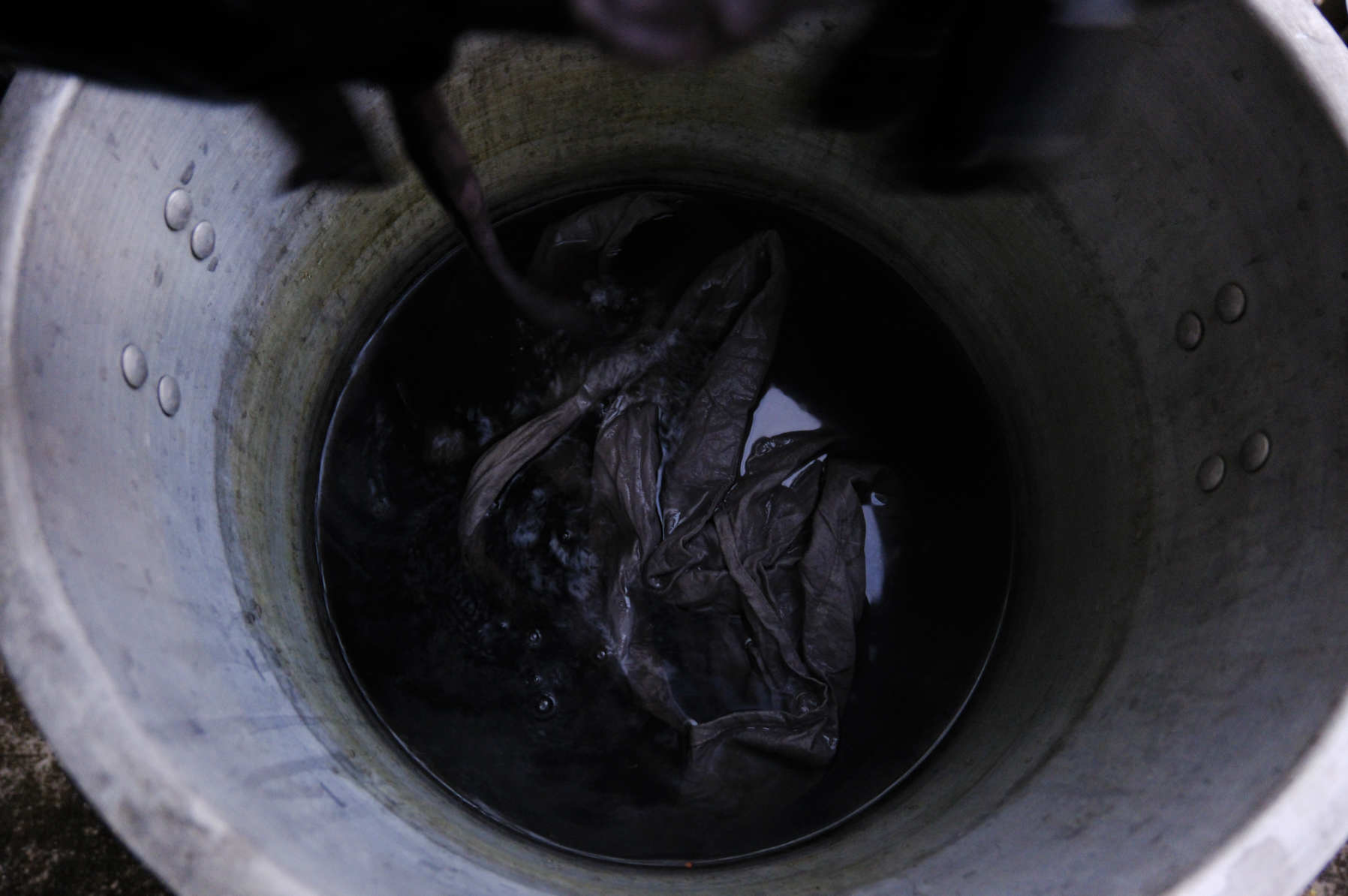
“I feel like there's a lack of curiosity nowadays. We don't ask where wool comes from or how people used to put color on fabric. We don't question the processes. When you have that curiosity, that's very valuable.”
In your opinion, what is the difference between natural color and artificial color?
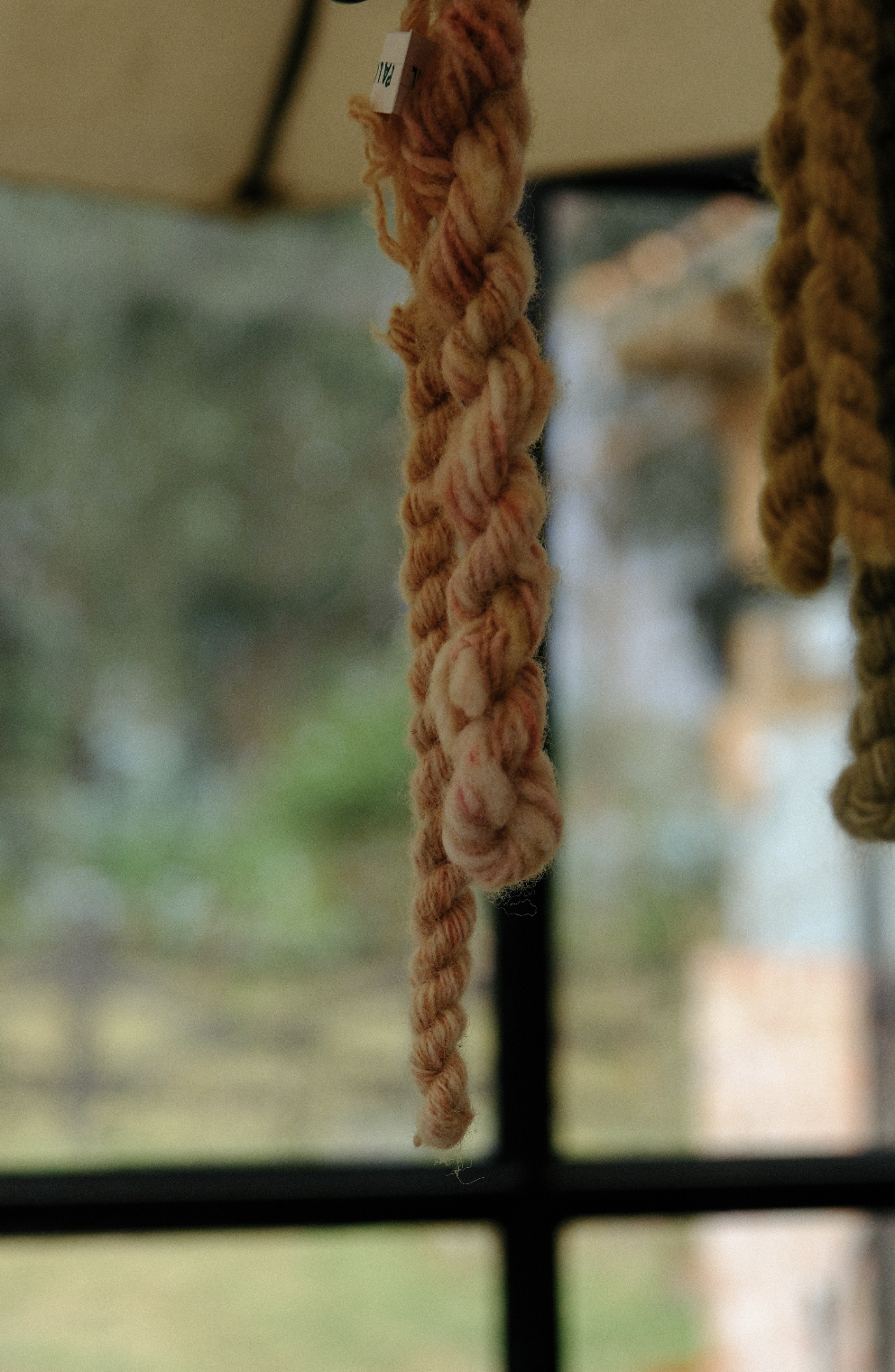
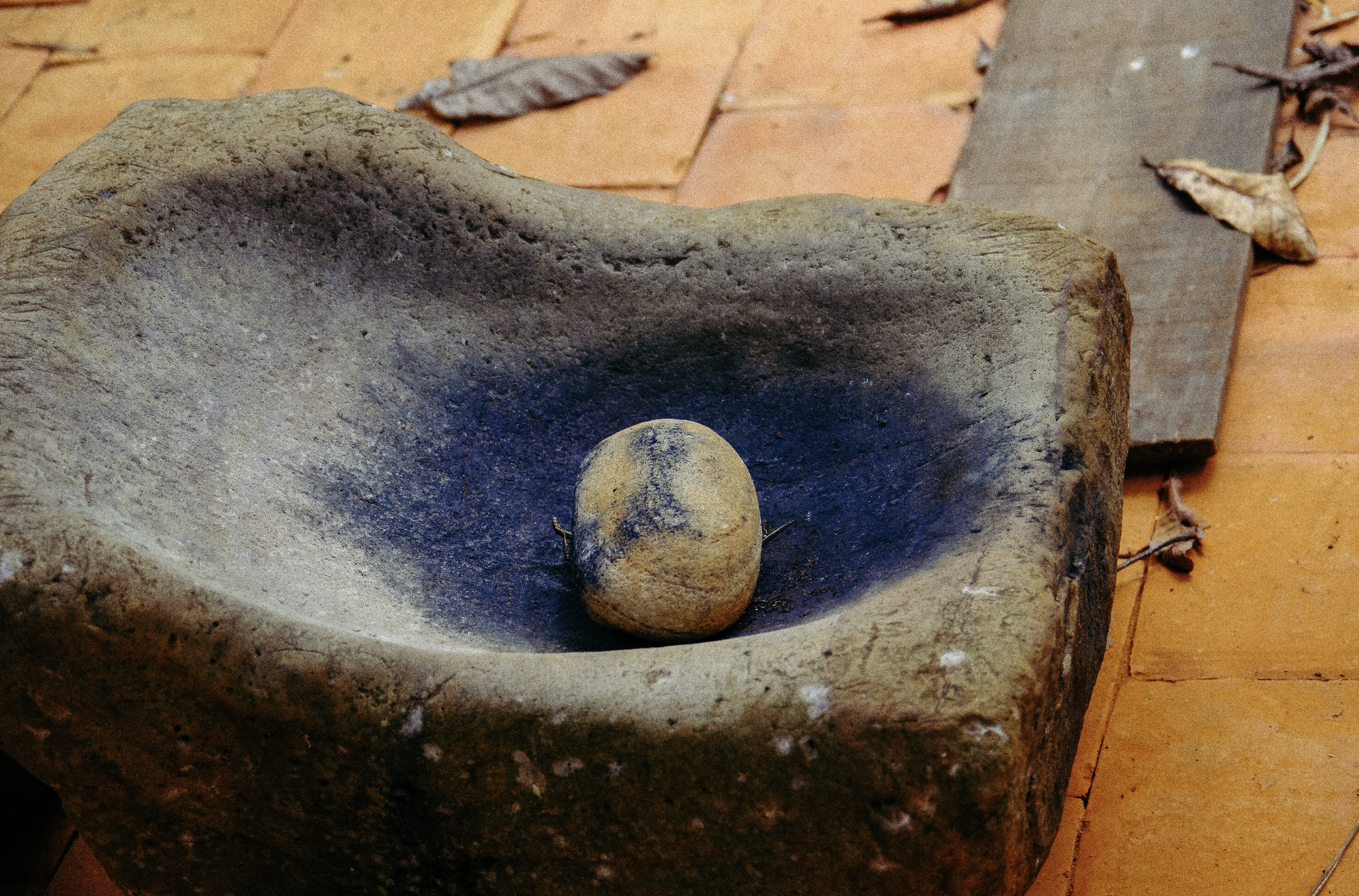
Natural color has a whole environment around it, and synthetic doesn't. Natural dyes speak of the place where they grow. If you're in the tropics extracting color from logwood, you get bright purple. In the tropics, everything is saturated: orange, bright green, pink. Those are the colors you get from that ecosystem.
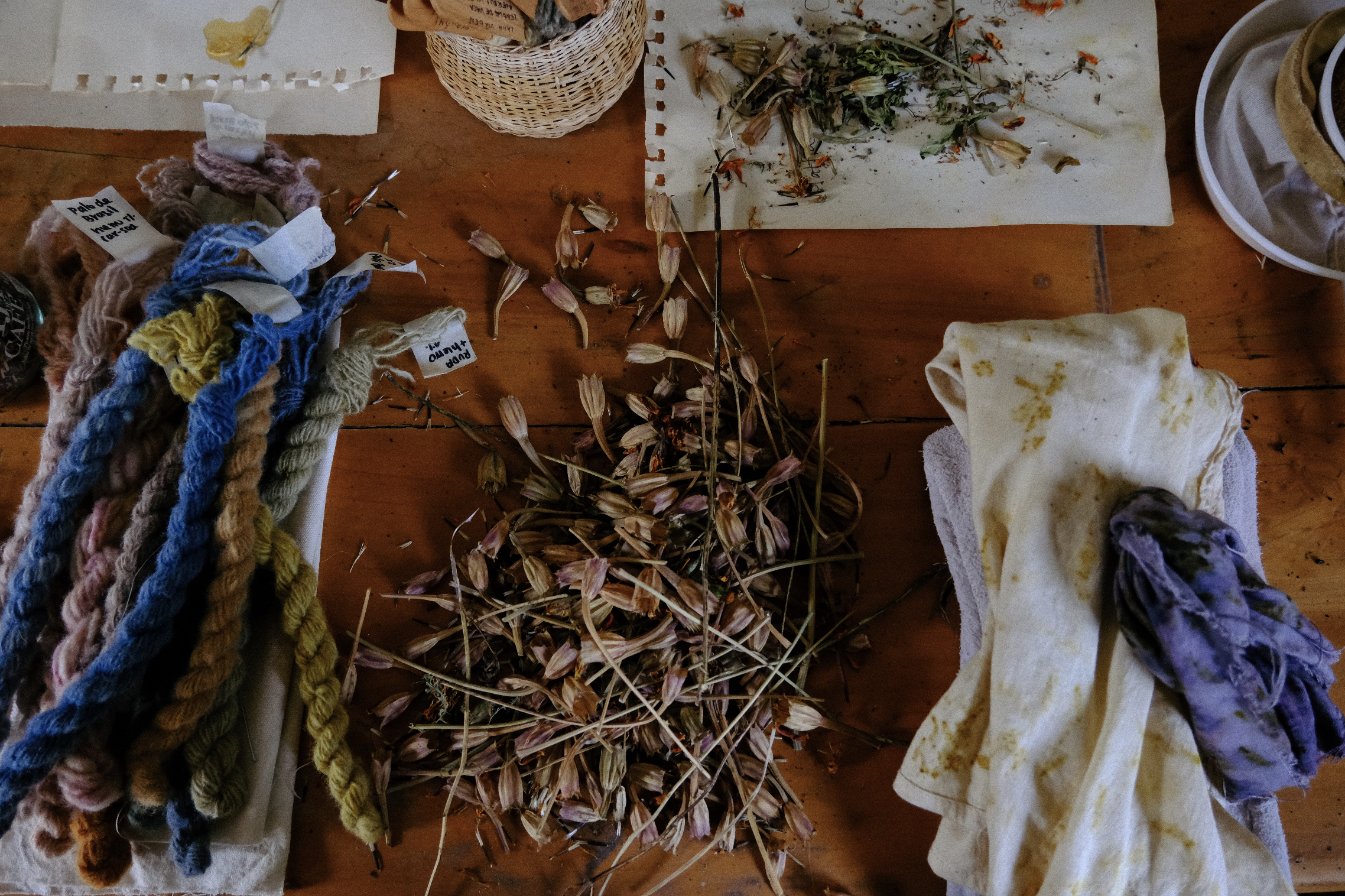
My studio is not tropical. It's more dry, so the colors aren't too saturated. For example I find walnuts, or eucalyptus, not tropical fruits. But with synthetic colors, there's no relationship between the color and the land where it comes from. There's no direct connection between the earth and the color.
What is inspiring you right now?
I'm connecting more with the process of wool and understanding how the fiber is a result of how we take care of the animals. Step by step, we can change things through how we care for nature so the wool becomes better quality. I'm very focused on that.
“It's inspiring to see all these chains and connections around wool. How many stories are behind it, how many people are participating, how many techniques there are. The nature of the wool and the animal itself.”
How do you see the artist residency at Casa Raíz fostering connection between artists and the natural world?
Casa Raíz (root house) is a space for artists to be more connected with the roots of the fibers and natural colors. If this space can create curiosity and questions, that's the goal.
“I want artists to arrive with a question and leave with more questions. The fact that they're there and keep questioning nature helps open their mind and start creating based on the questions this place awakens in them.”
These questions won't be answered by someone else, but by the territory itself. Through creating a piece, using the loom, searching for a specific color from nature.
Interview + Photography by: Brooke Stewart