Meaningful Threads: A Textile Immersion in Southwest China
Learning traditional textile crafts, natural dyes, and tea ceremony with the Dong and Miao communities in Guizhou
Travel reflection from the Deyi Living Immersion with Sadie Spencer
Photography shot by: Pauline Ferrières
Tell us a bit about yourself and what drew you to this experience. What was the inspiration?
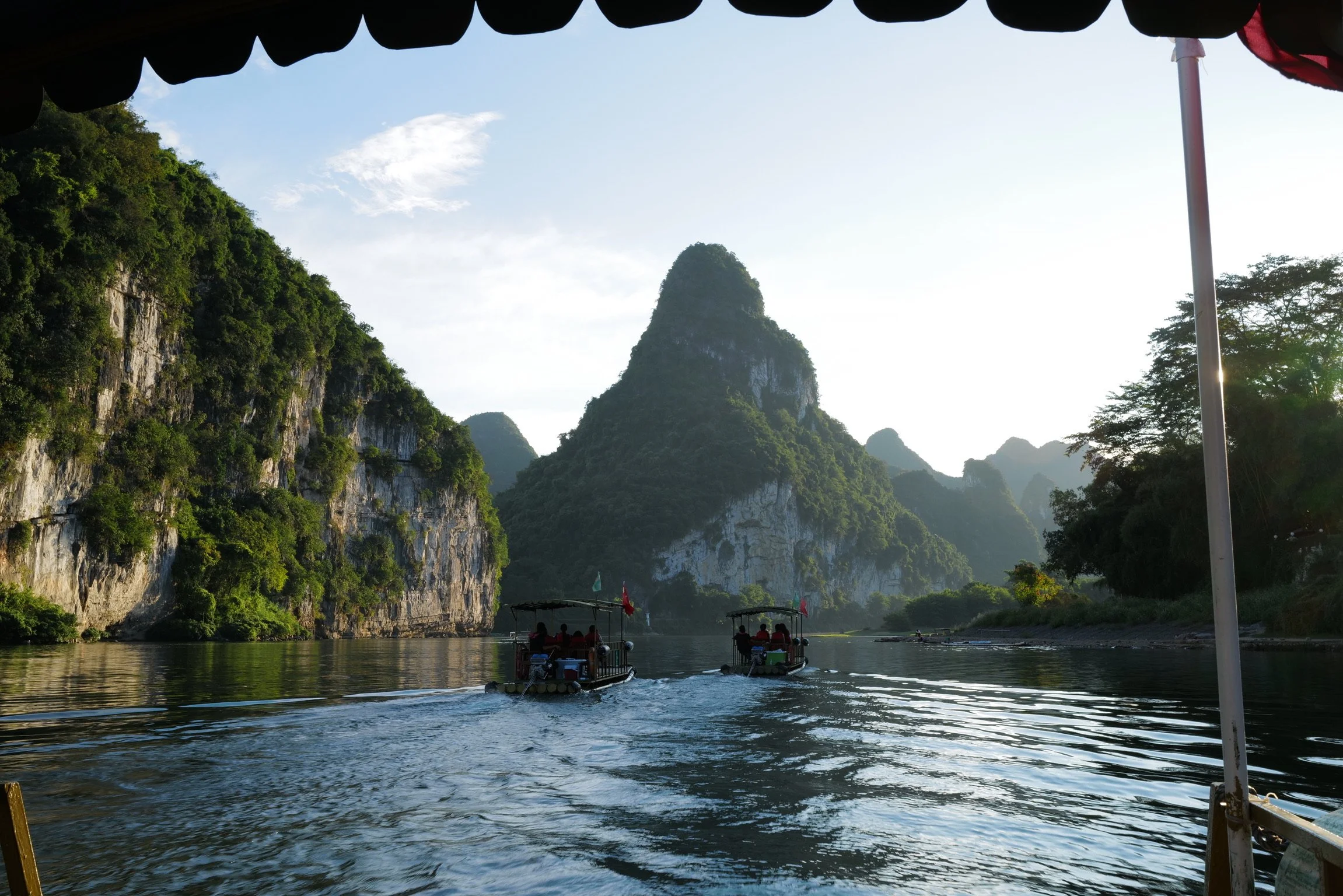
I found this retreat by pure accident during my tiny daily "scroll allowance." A story post by Pauline Ferrières appeared on my screen, showing the karst mountains in Yangshuo glowing like a dream. Her story post mentioned that there was space for one more sister, and the trip was less than four weeks away. I sent it to my boyfriend half joking, saying I wished I could go. He asked "why can't you?" and I didn't have a real answer.
I had never left the United States, and big adventures like this always felt out of reach, as if those kinds of experiences only belonged to people a lot more brave than me. I tend to be indecisive by nature. I can take ages to make a choice, cycling through pros and cons until I talk myself out of anything unfamiliar. As a result, I've lived a fairly small life.
“I've always been drawn to beauty in a deep, almost devotional way. I love slow fashion, thoughtful consumption, fabric, texture, nature, and any practice that honors the relationship between humans and the rest of the living world. When I read that this retreat centered on ancient textile craft, tea ceremony, Taoist philosophy, and that I'd get to practice qigong along the Li River, it felt like someone had gathered the pieces of my inner life and arranged them into an itinerary.”
But this was different. There was no overthinking. It was an immediate yes. Within twenty-four hours of seeing Pauline's post, I had paid my deposit, booked flights, and thrown myself into the confusing process of securing a Chinese visa in time.
And then there was the question of work. Ugh. That pesky, practical little anchor. I had already completely booked the trip without confirming I could even take the time off, and to be quite frank, I didn't care. If saying yes to something that felt this true cost me my job, then so be it.
When I finally worked up the nerve to tell my boss, I started with "so, I have an opportunity to go to China in a few weeks..." and she didn't even let me finish. She just said, "yes, say no more. You're going." I didn't have to go through my overly-rehearsed fumbling explanation about why this trip felt like a soul level yes.
It was so much easier than I imagined, and I'm deeply grateful for that. It felt like another sign that when I follow what my heart is really reaching for, life tends to meet me halfway.
I knew this journey would stretch me in the best way. I never imagined my first trip outside the US would take me to an indigenous village in China, learning directly from traditions that have carried their wisdom through centuries. But the moment I said yes, I felt something open. It felt like stepping toward the life I've always wanted to live.
Where were you, and whose homelands and local traditions did you learn from?
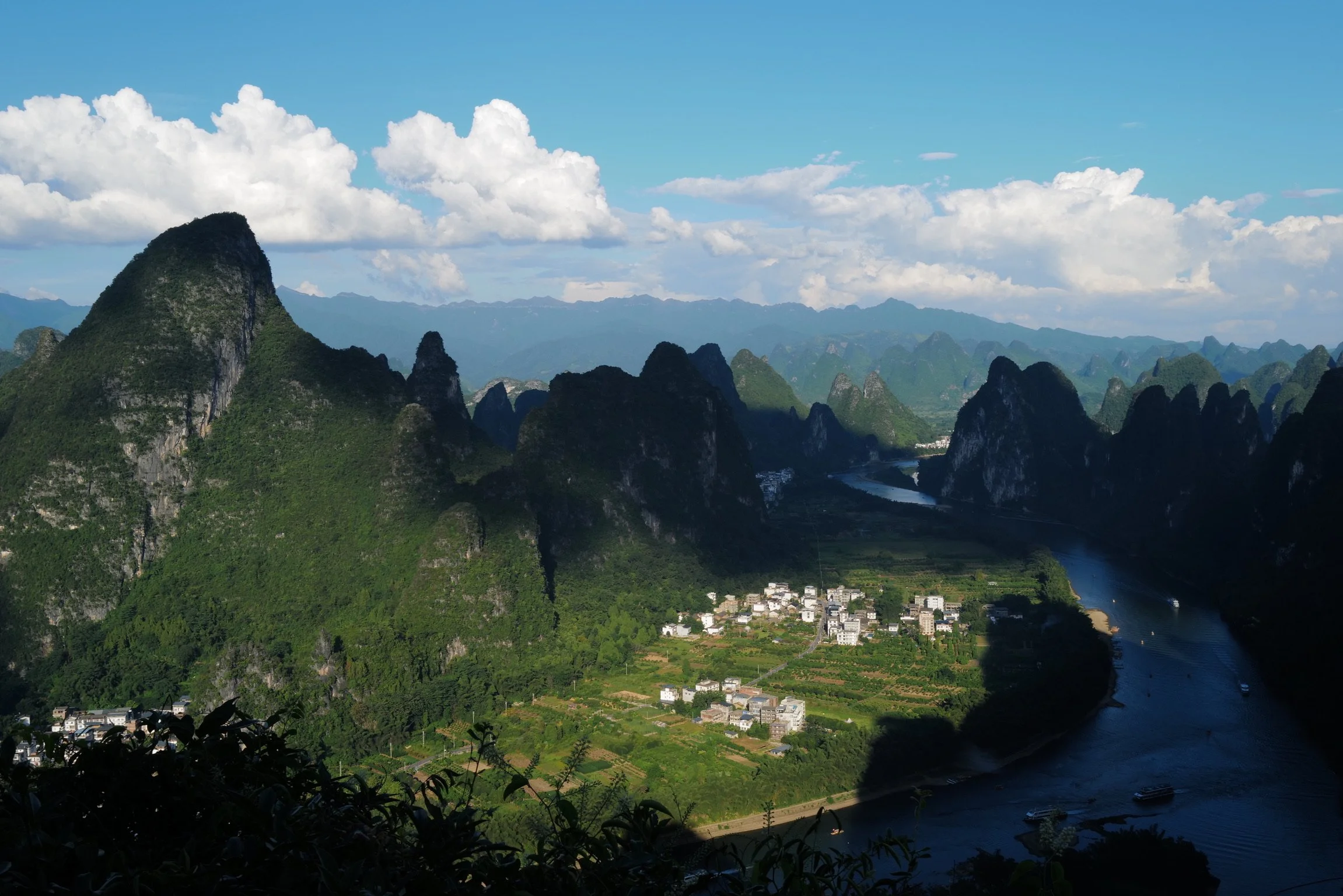
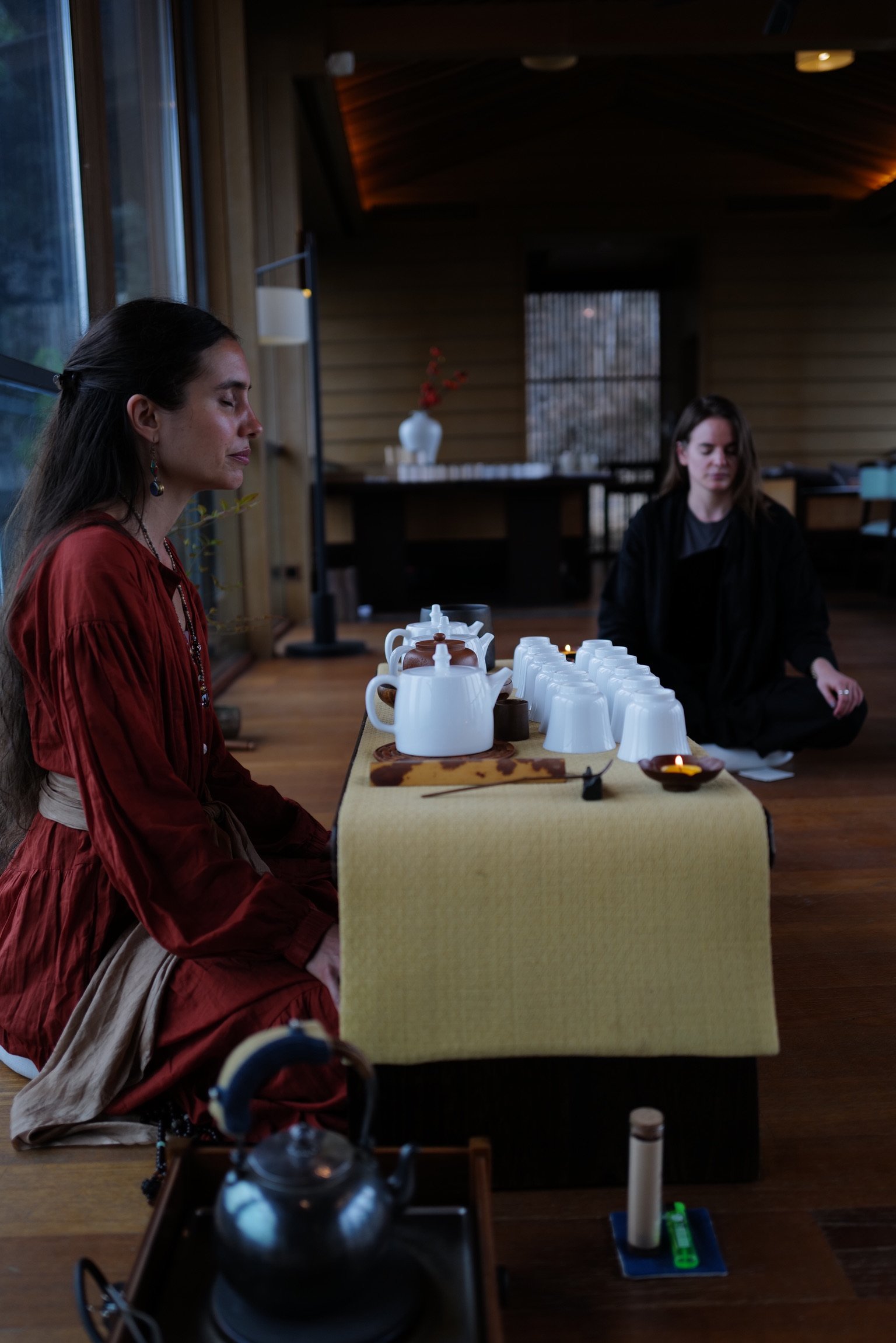
We began in Yangshuo, Guangxi, where the Li River drifts under towering karst peaks. With guides Pauline and Jade, we learned the fundamentals of traditional Chinese art, experienced the ritual of gong fu cha ceremony with exceptionally rare and treasured teas, and studied the wisdom of the five elements (wood, fire, earth, metal, water), a philosophy that framed both the retreat and the cultural lens we were being invited into.
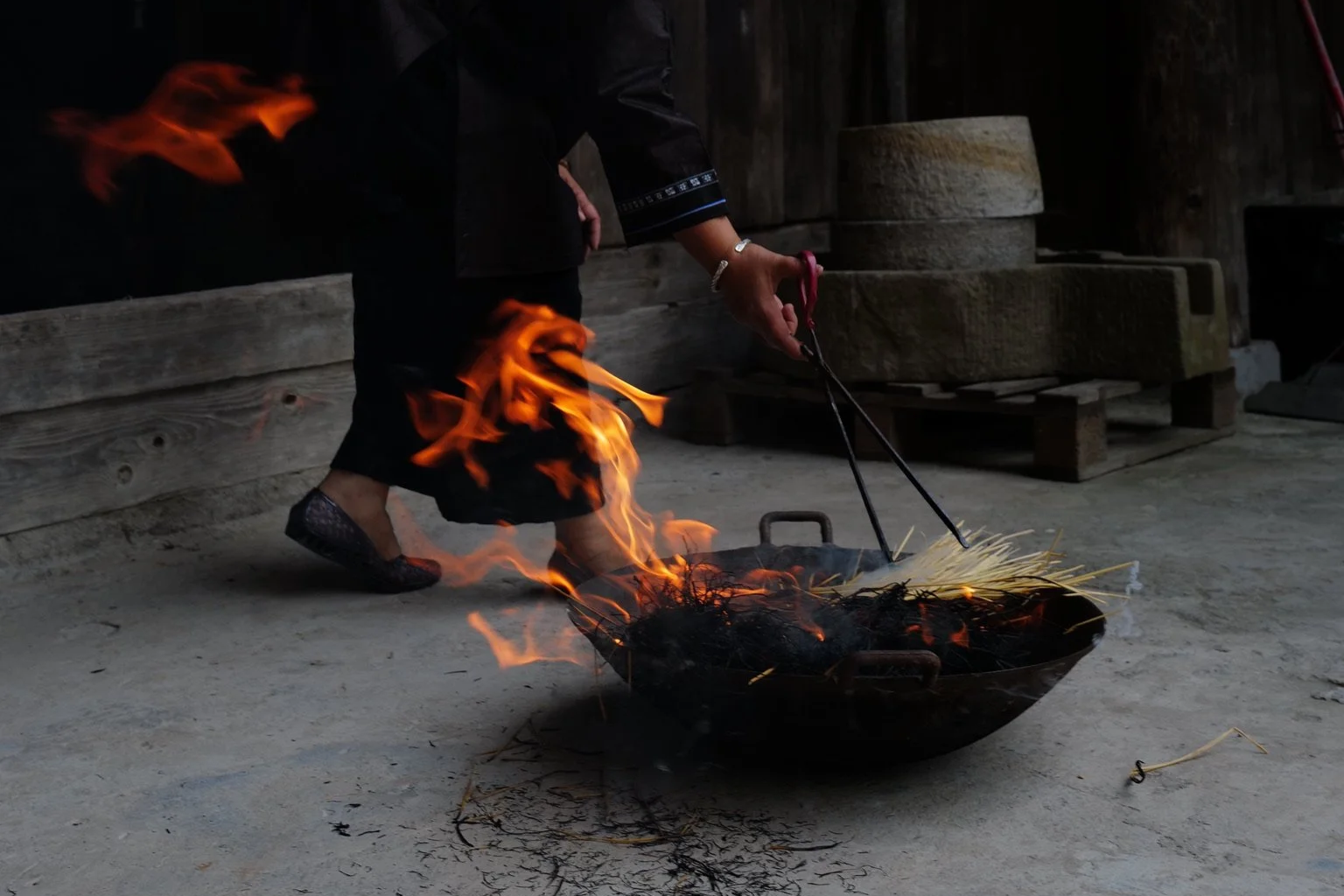
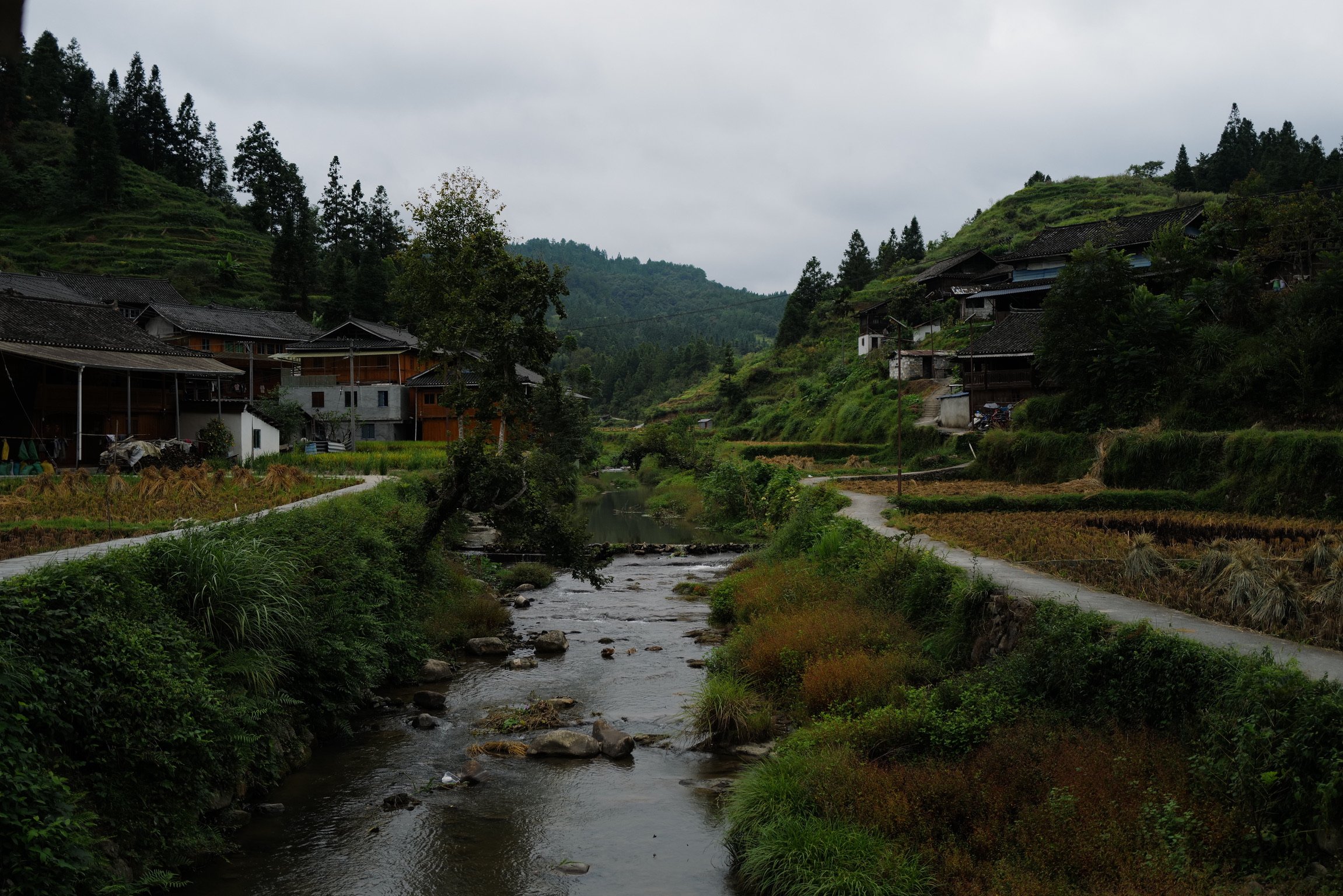
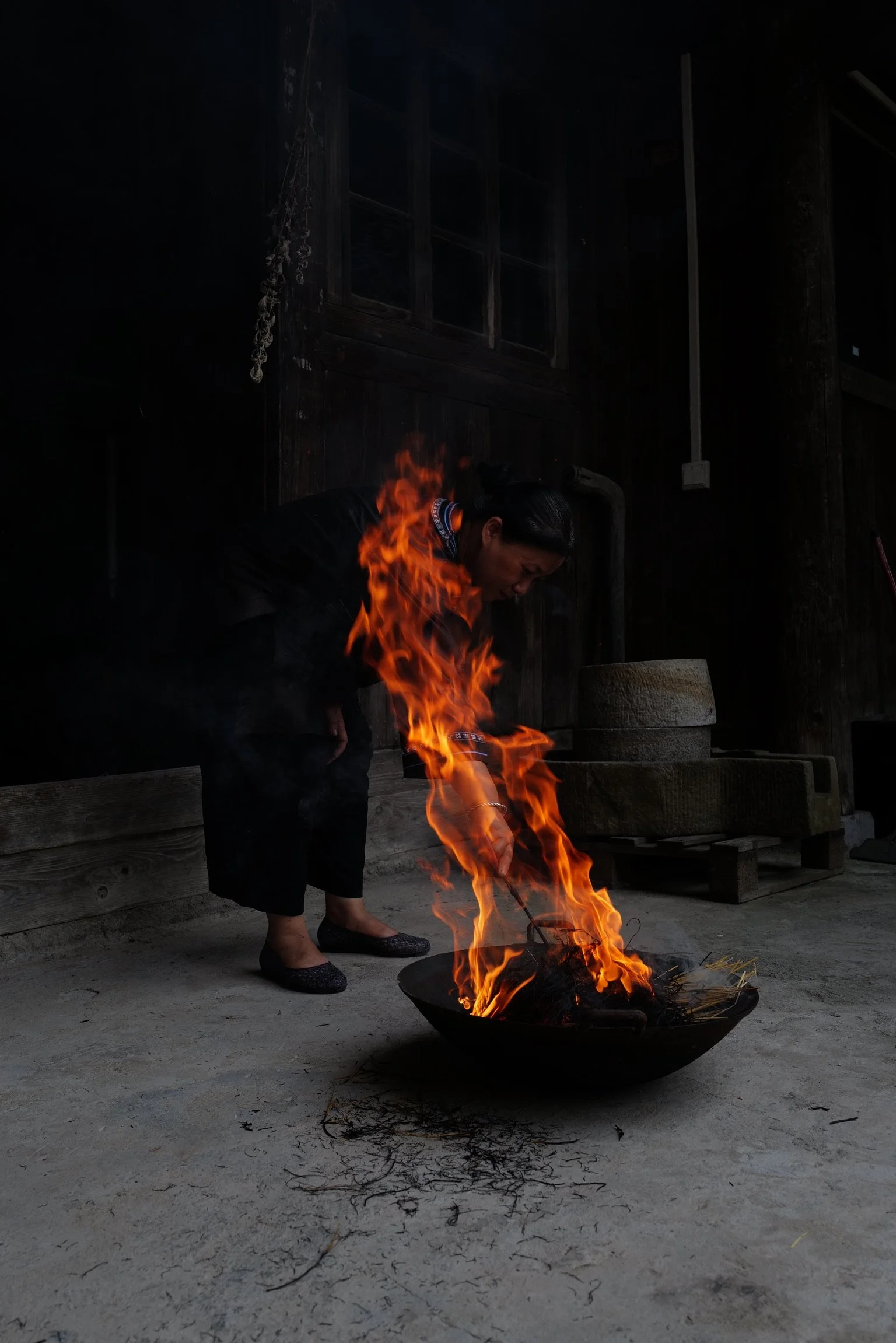
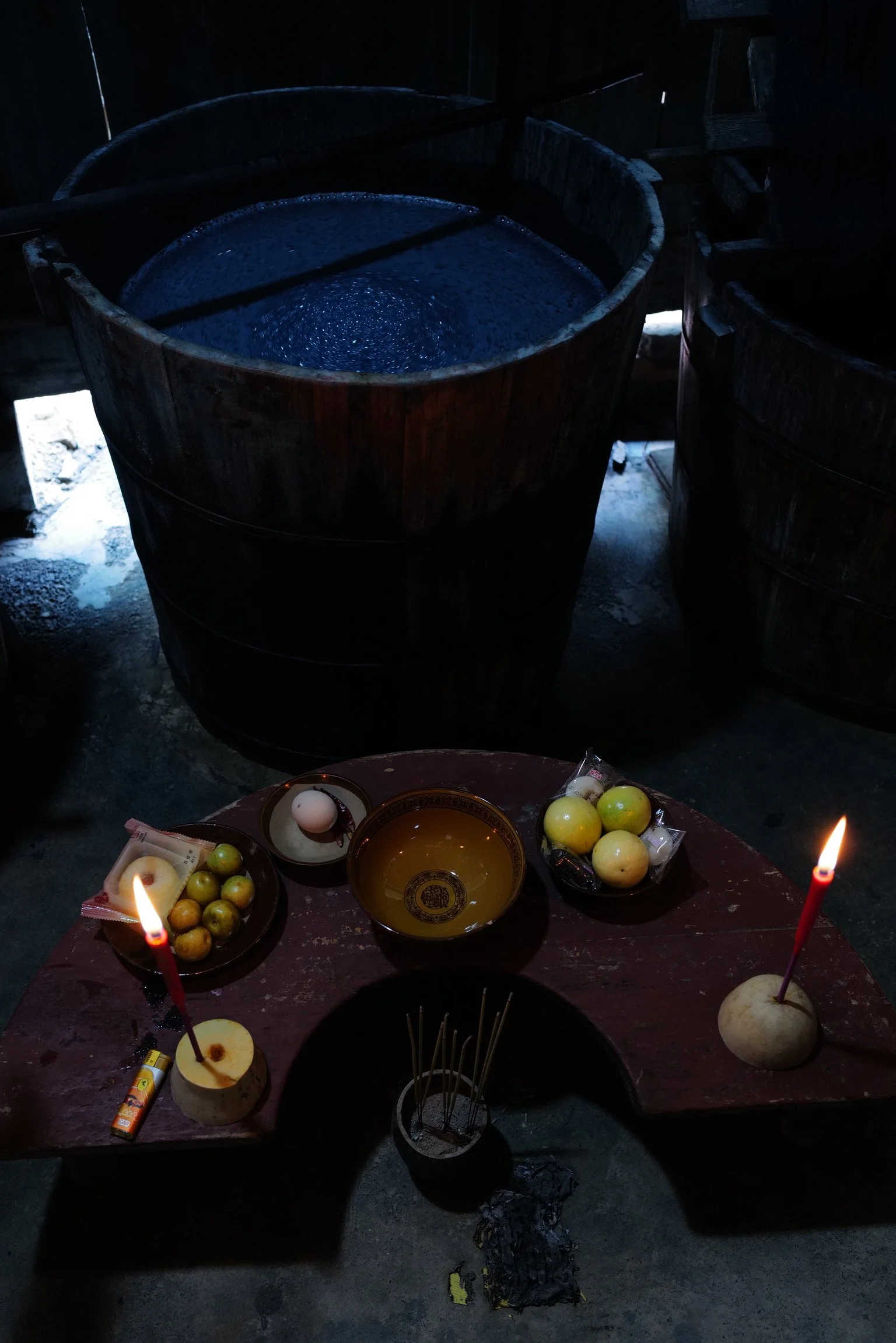
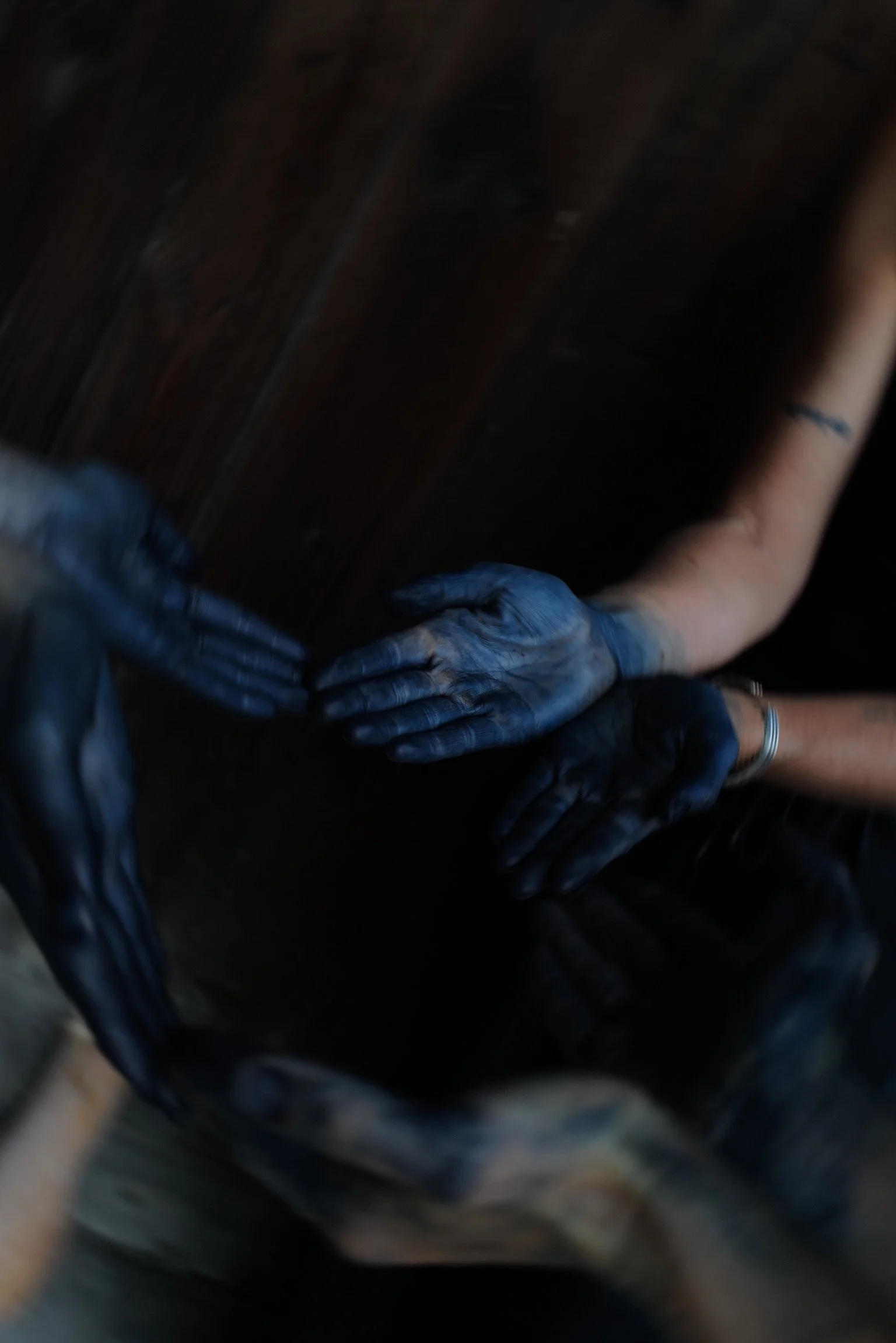
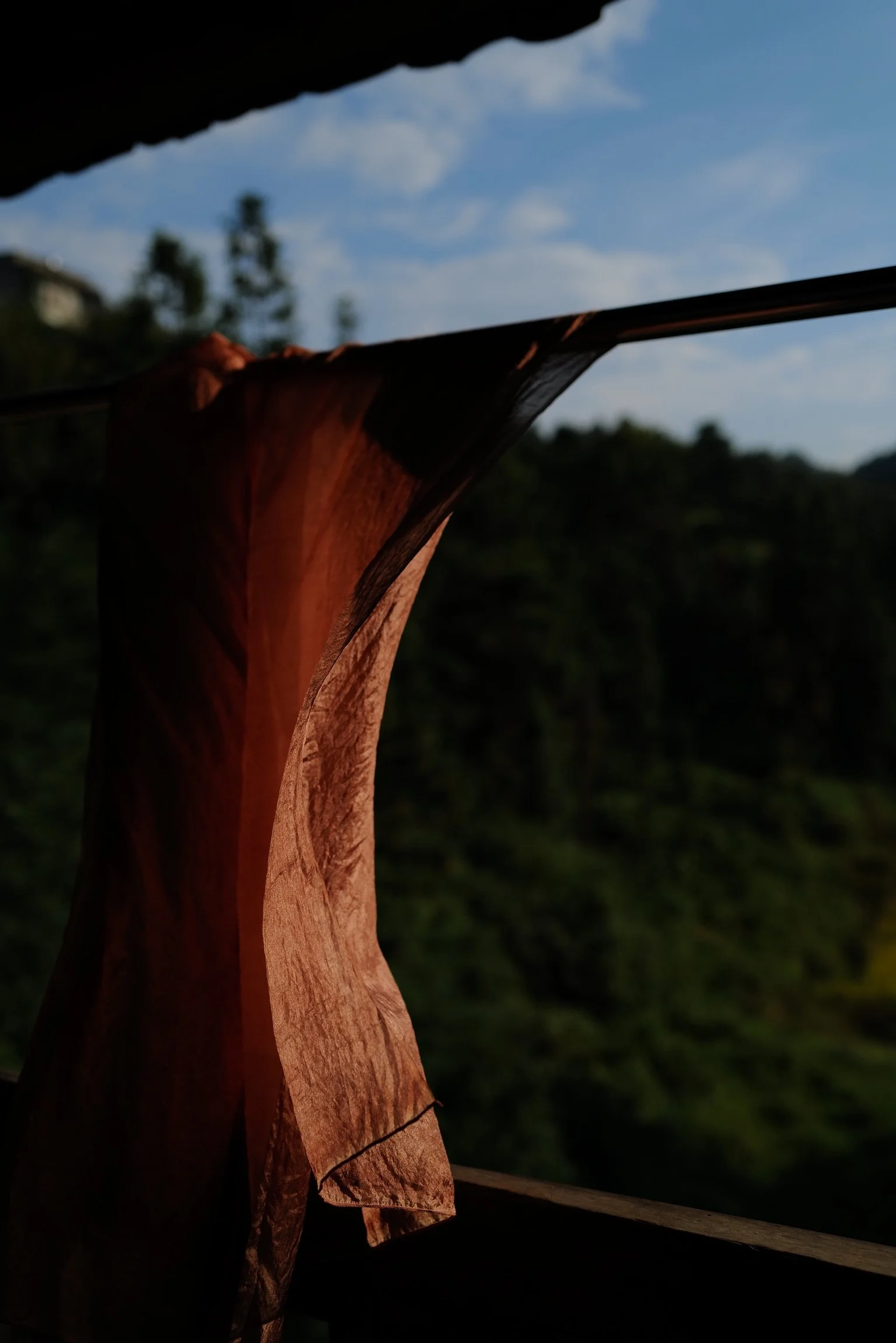
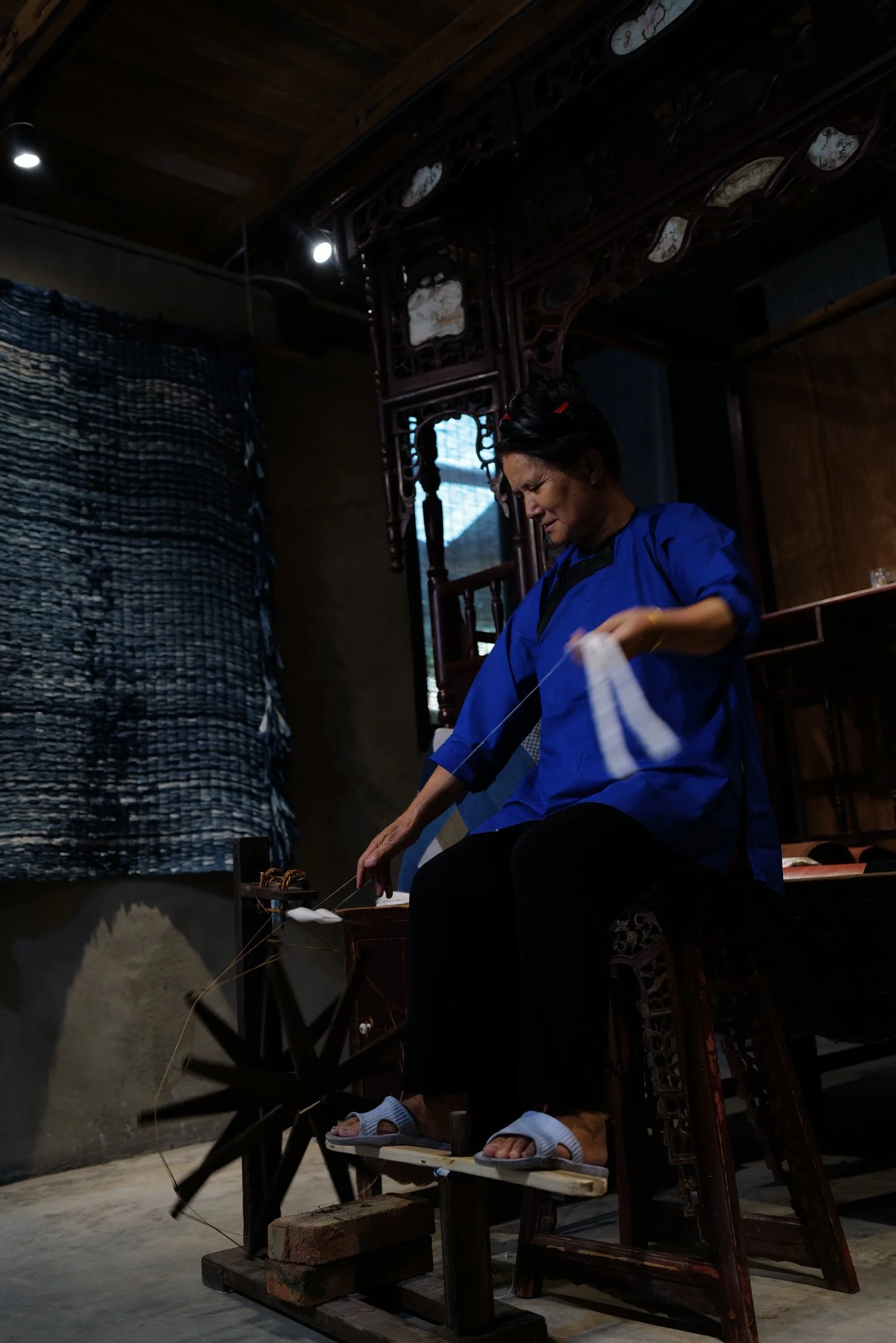
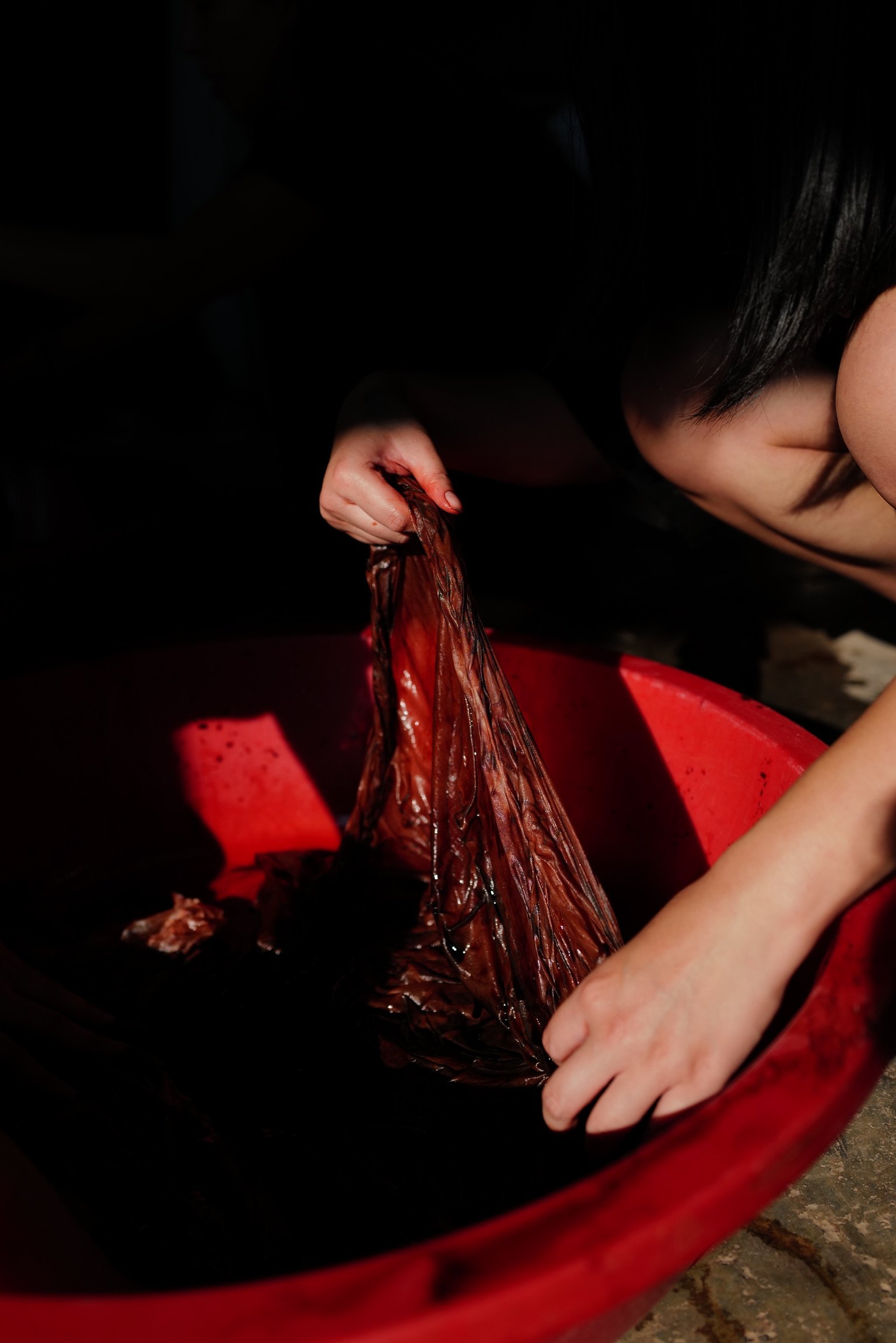
From Yangshuo, we traveled to Qiandongnan in Guizhou Province, a mountainous region and the homeland of the Dong people. We were warmly welcomed with traditional song and ceremony. We stayed in a traditional Dong wooden house, built by hand, without nails, and engineered by a lineage of craft and ecological intelligence. This was also the home of Yang Yi and the Deyi Living workshop, where many of their textiles are made. There, we learned loom weaving, cotton hand spinning, and natural dye processes using fermented Chinese yam, indigo, and mugwort, and learned about their ancient processes they use to create their special textiles. We were able to handle heirloom textiles still used in Dong ceremony and ritual today.
At the Deyi workshop, we met twin sisters Fenglan and Fenghuang, who taught us batik wax-resist printing and their peoples symbology and story.
We visited both Sanbao Dong Village, on the banks of the Rongjiang River, and Zengying Dong Village, communities that once hid themselves deep in the mountains while protecting their traditions through political upheaval. Reaching them meant winding roads so narrow and sharp they almost rattled the spirit right out of the body, before delivering it back, newly grateful.
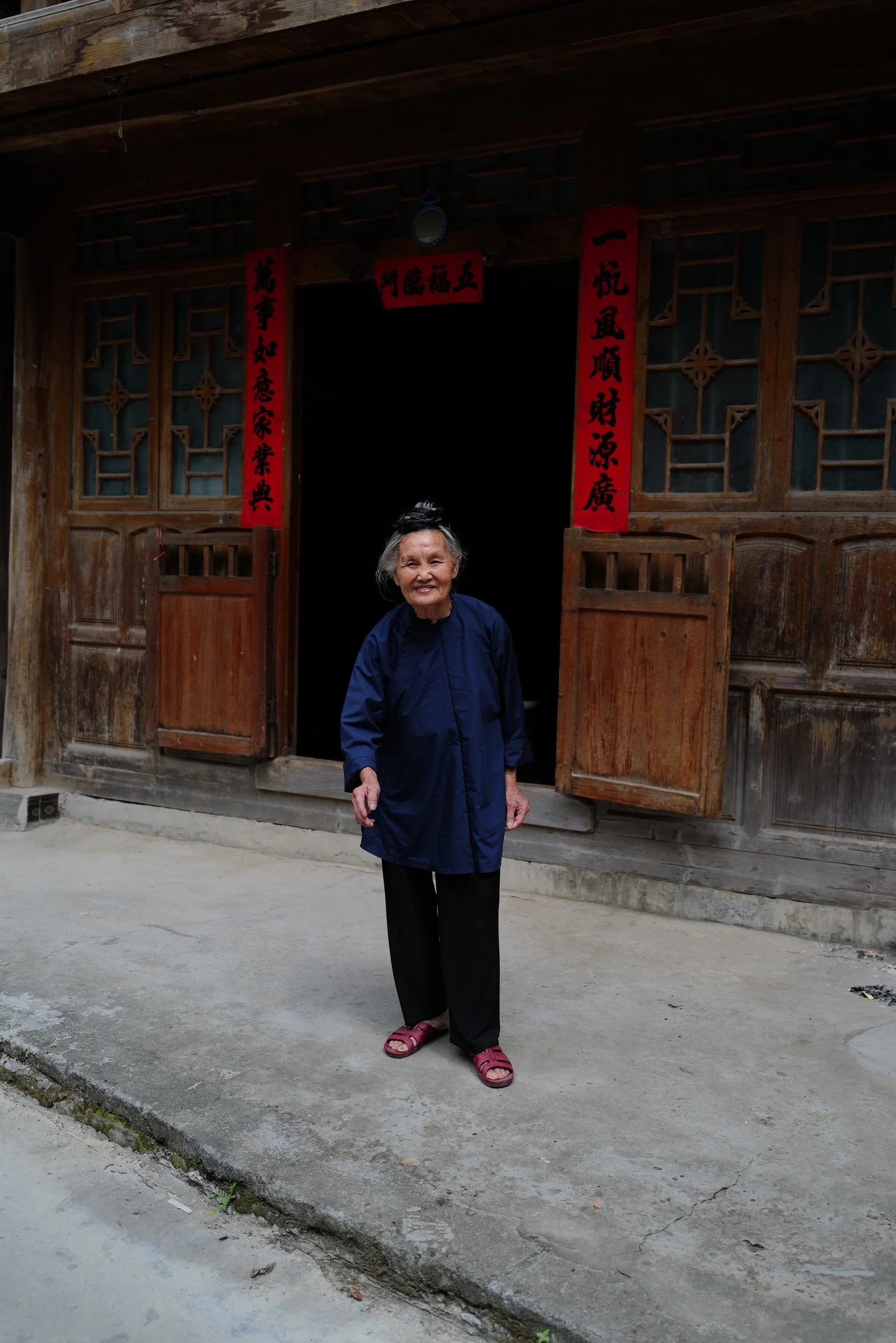
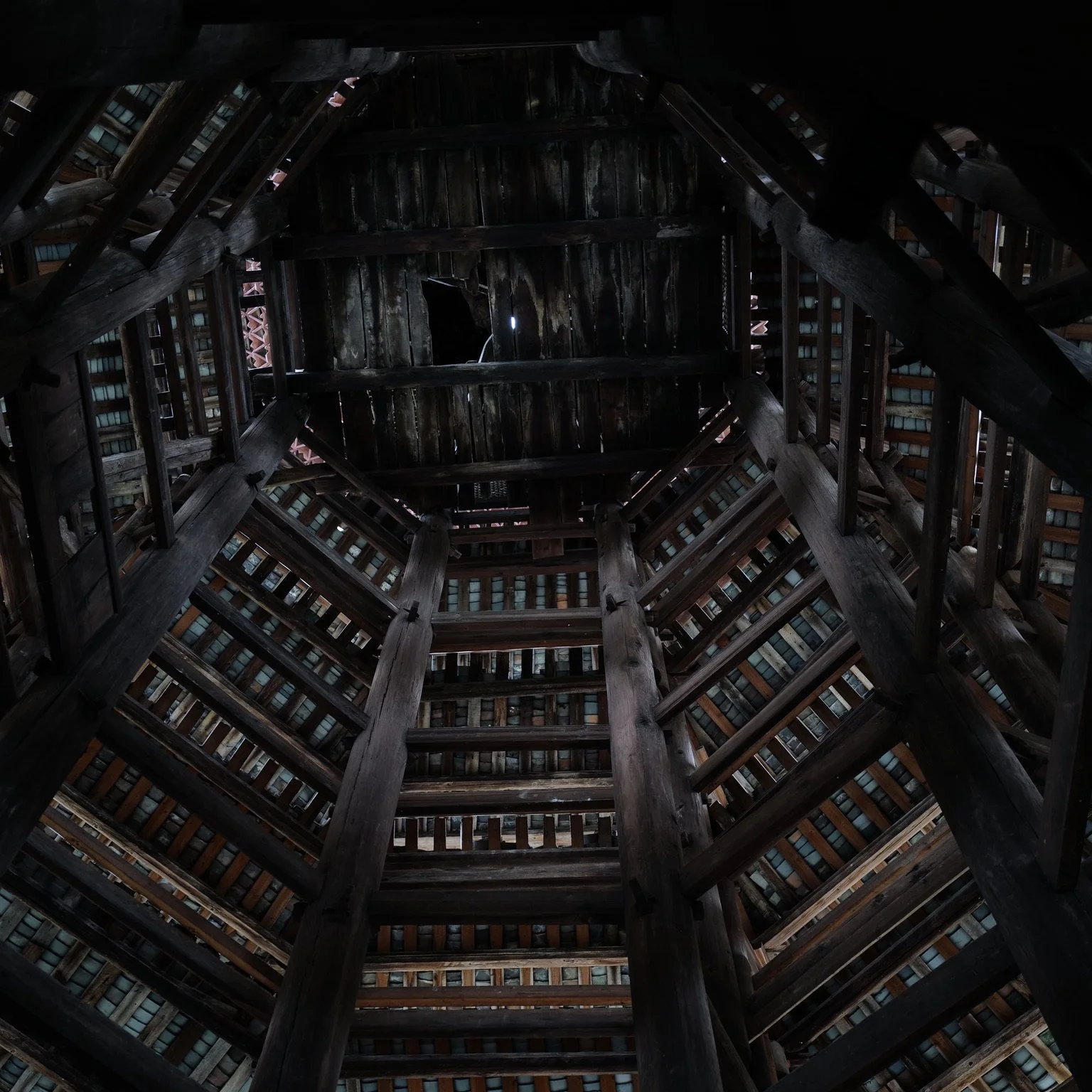
At Sanbao, we entered the sacred drum tower and the Temple of Sama, the divine mother of the Dong people. To be welcomed into her temple was to be invited into the pulse of a living cosmology, carried by guardians who hold knowledge that long predates written record or modern translation. We got to meet a most precious member of the Deyi Living co-op, sweet grandma Wu Nainai
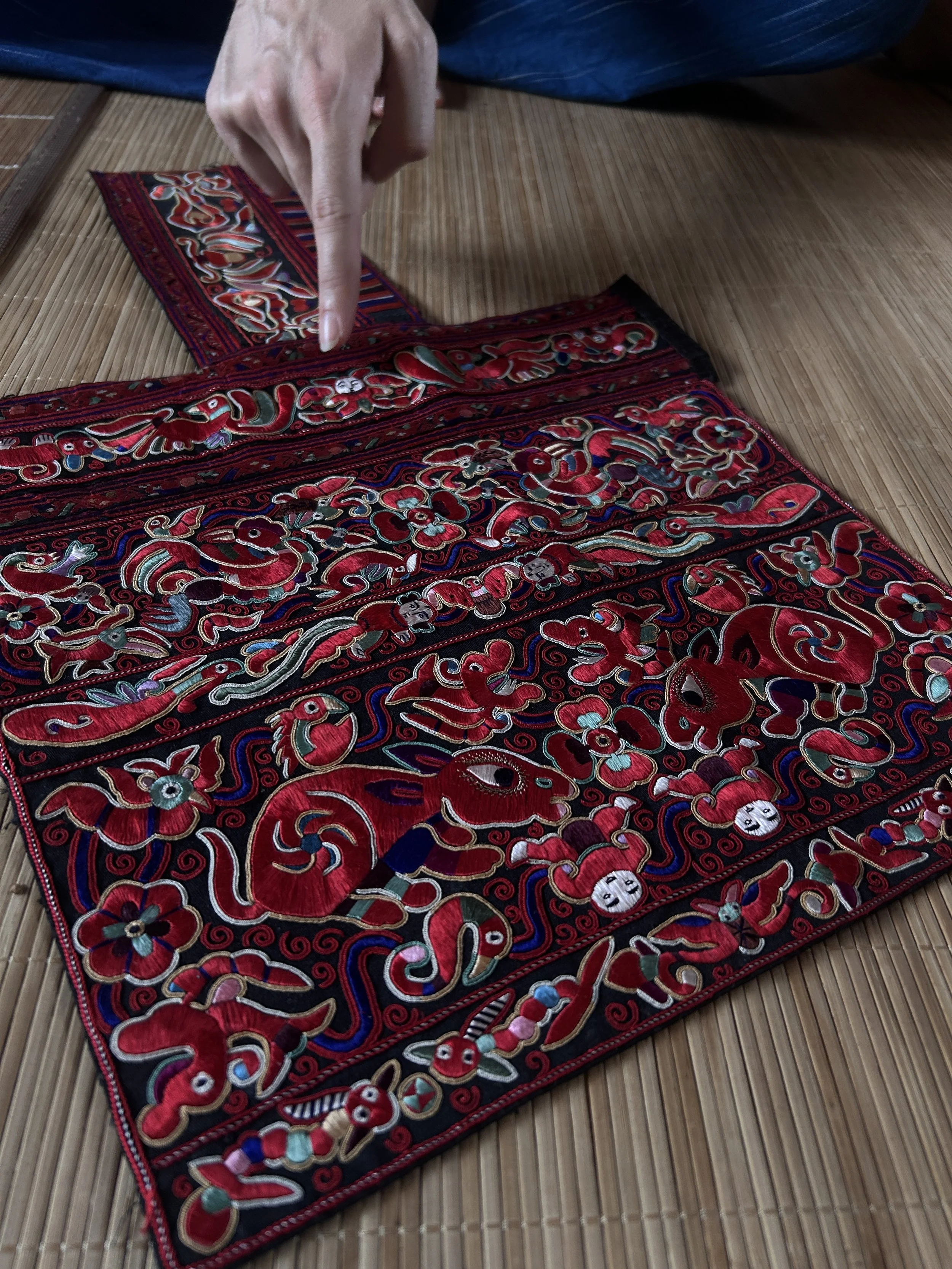
During our stay, Pan Xiaomei, a master embroiderer from the indigenous Miao community, brought her personal textile collection to the workshop, revealing cloth that spoke in sigils, stories, and ancestral metaphor. Because the Miao people do not have a written language, history and legend are carried through symbols stitched directly into fabric. With her, we learned about the mythic lexicon of both Dong and Miao textiles, decoding patterns as more than decoration, but as real language.
We were fortunate to be living with the Dong women during the autumn equinox. Under a nearly full moon, we celebrated with a traditional foot bath infused with mugwort and Sichuan peppercorn, sharing pomegranates and mooncakes that looked almost too beautiful to eat.
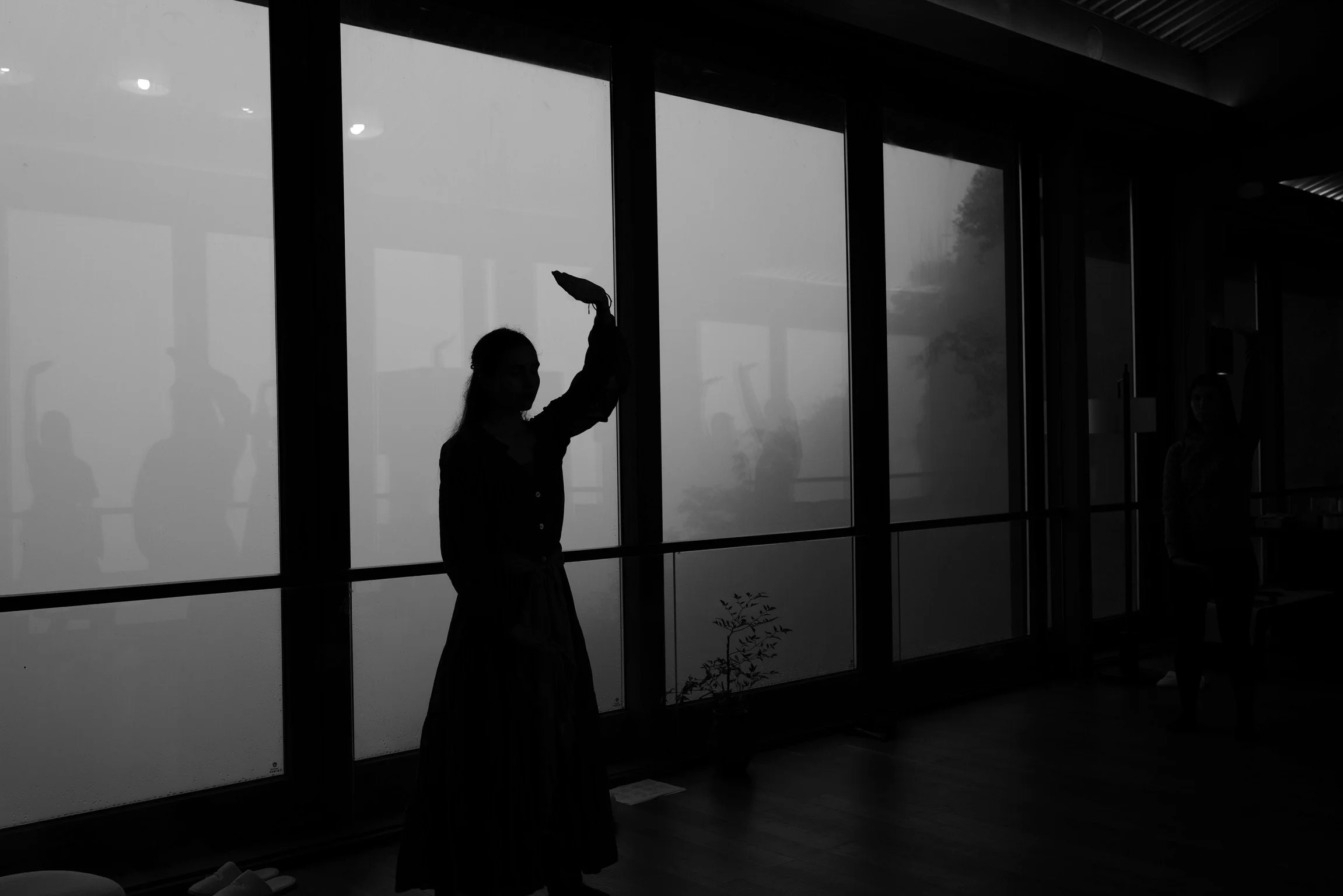
We later journeyed to Mount Fanjing, climbing above the clouds to a peak revered as the site of Maitreya's enlightenment and is the highest peak of the Wuling range. There, we were lucky enough to get to witness three monks chanted to honor Guanyin. The sound moved through the air, through the stone, through the mountains themselves, and through us, a kind of resonance that rearranges your inner landscape. It was, for me, one of the most unforgettable moments of the entire journey. I was really grateful that I had a special set of prayer beads with me so that they could get charged up with the energy of that space.
Tell us about your experience overall and why you recommend it?
The experience felt like being taken out of time and set gently back into the body. What struck me most was despite being on a curated retreat-style adventure, it still was deeply authentic. Because Pauline both lives in China and has spent a ton of time integrating herself into the indigenous communities, we got to taste and experience what westerners and tourists simply don't have access to. The traditions weren't explained like museum artifacts, they were lived around us, breathed through routine, tea steam, dye pots, drum tower songs, and the steady pulse of women creating, while telling their stories.
I recommend this type of retreat because it expands you without needing you to perform expansion. It invites you into a world where craft isn't simply a product, it's rhythm of life and nature itself. Drenching silk into vats of indigo, bowing into tea ceremony with your full presence, hearing monks chant into mountain mist, witnessing traditional song among tiny communities, all of it felt like being taught by life directly instead of watching it through glass.
“If someone wants to feel the intelligence of a culture that still consults land, cycle, element, and community before rushing into creation or decision, this is the way to do it. It doesn't just give me inspiration, it reset my inner metronome. I walked away realizing I've always known the rhythm, it just got drowned out by the chaos of life.”
During this trip, I feel like I got to meet beautiful parts of myself I didn't know lived in me. I think that's a gift everyone deserves to experience.
What did you learn? What practices did you try that felt meaningful?
I learned that creation doesn't have to mean dominating nature and material. The artisans we met do their work and live their lives in perfect partnership with the natural world and the result is breathtaking. When I distill all of the lessons I gained from my trip, this one feels the most potent.
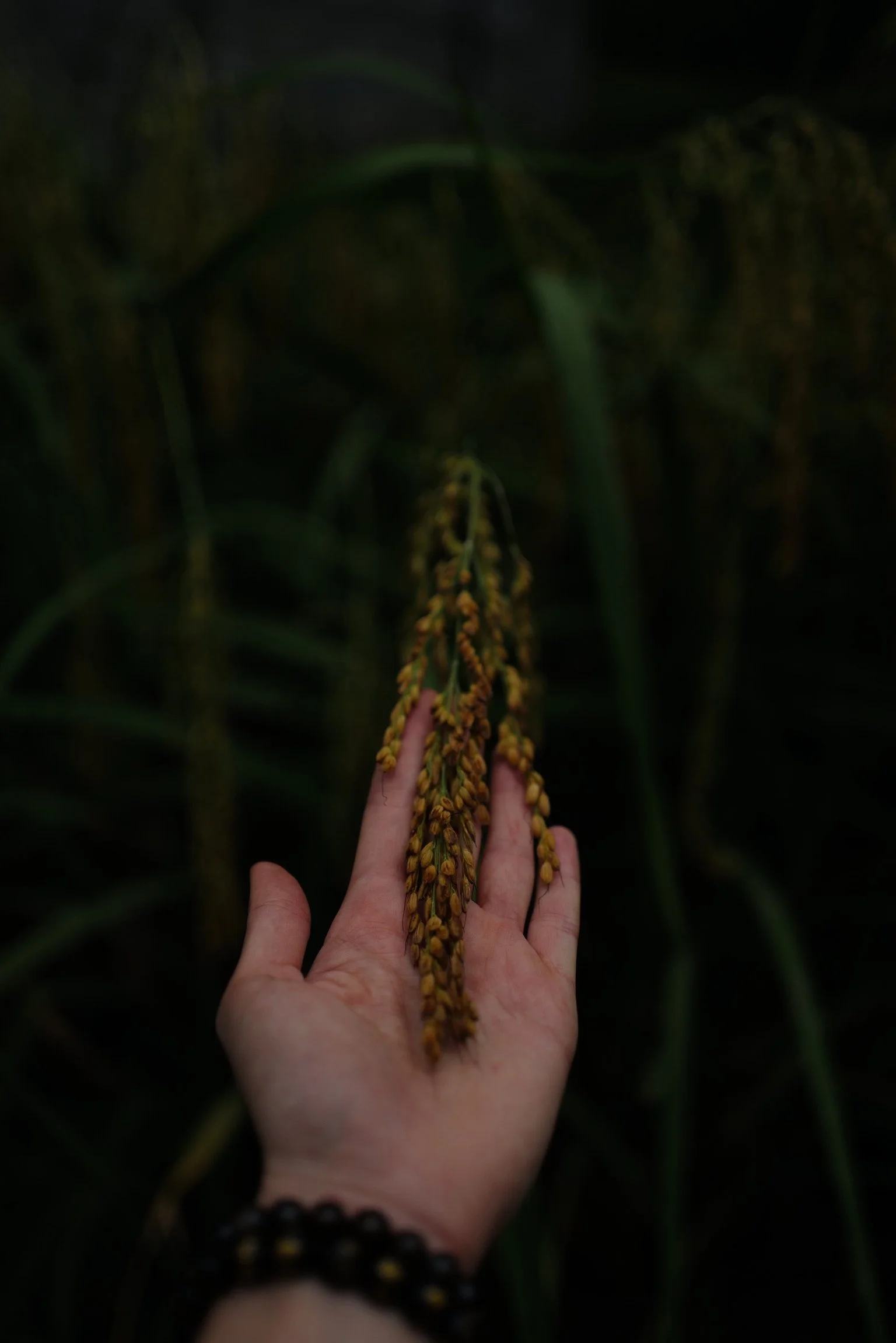
“We talk about nature like it's out there, scenic, distant, docile, when in truth we are its continuation. Our hands are branches, our lungs are wind, our blood is tide. The retreat really helped me deeply understand and integrate that.”
Tea ceremony already had a special place in my life, so it felt really special to try so many precious teas in China and get deeper into the ritual of it.
What wisdom and insights would you like to share from your experience?
One insight that stayed with me is how much care and attention can transform the ordinary into something precious and extraordinary. The artisans approach every step with patience and devotion.
“I realized that the quality of presence we bring into our work and daily life shapes the result far more than speed or efficiency ever could. This trip reminded me that slowing down and giving full attention is itself a practice, and it makes everything we touch more meaningful.”
Which native plants, botanicals, or craft materials did you encounter?
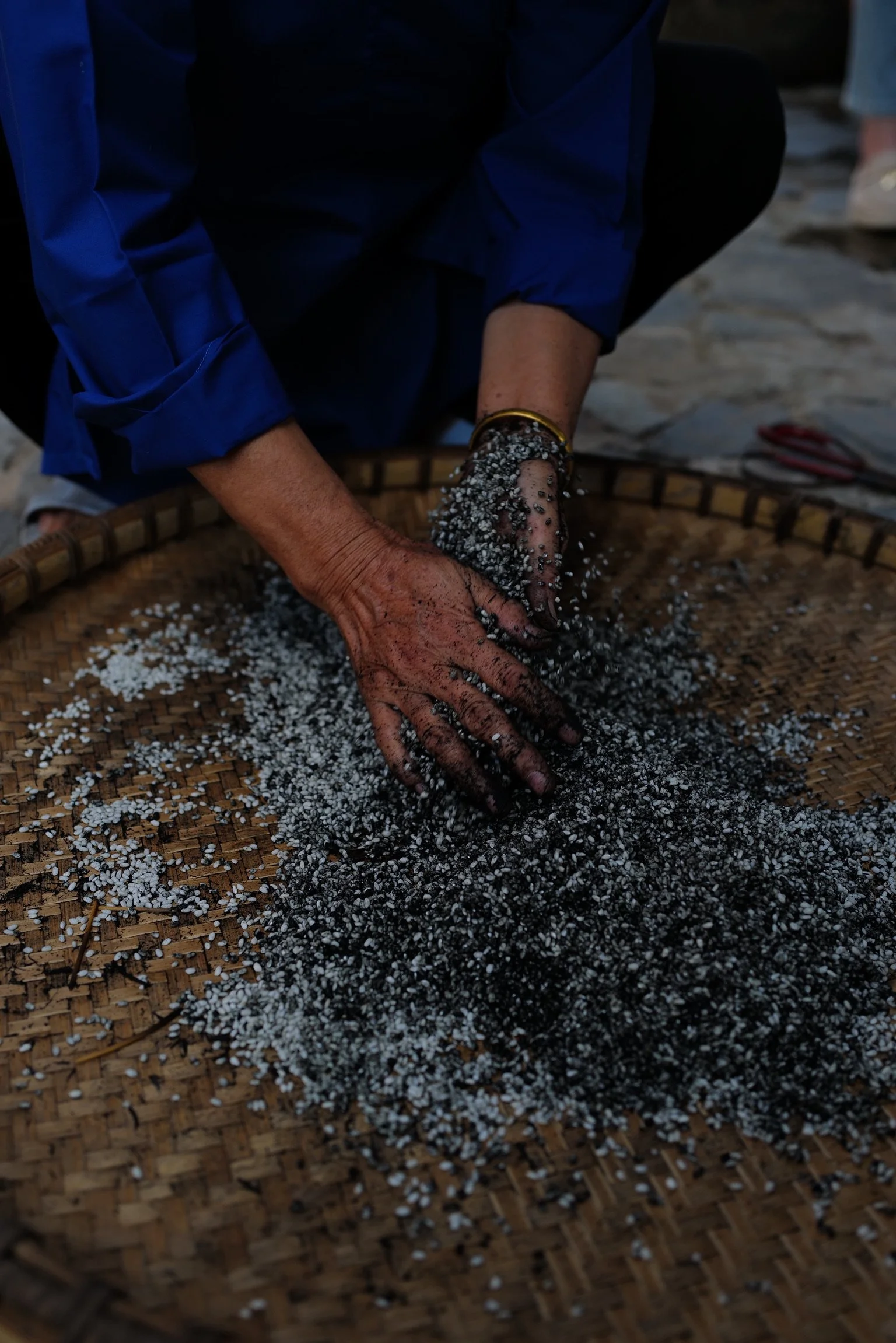
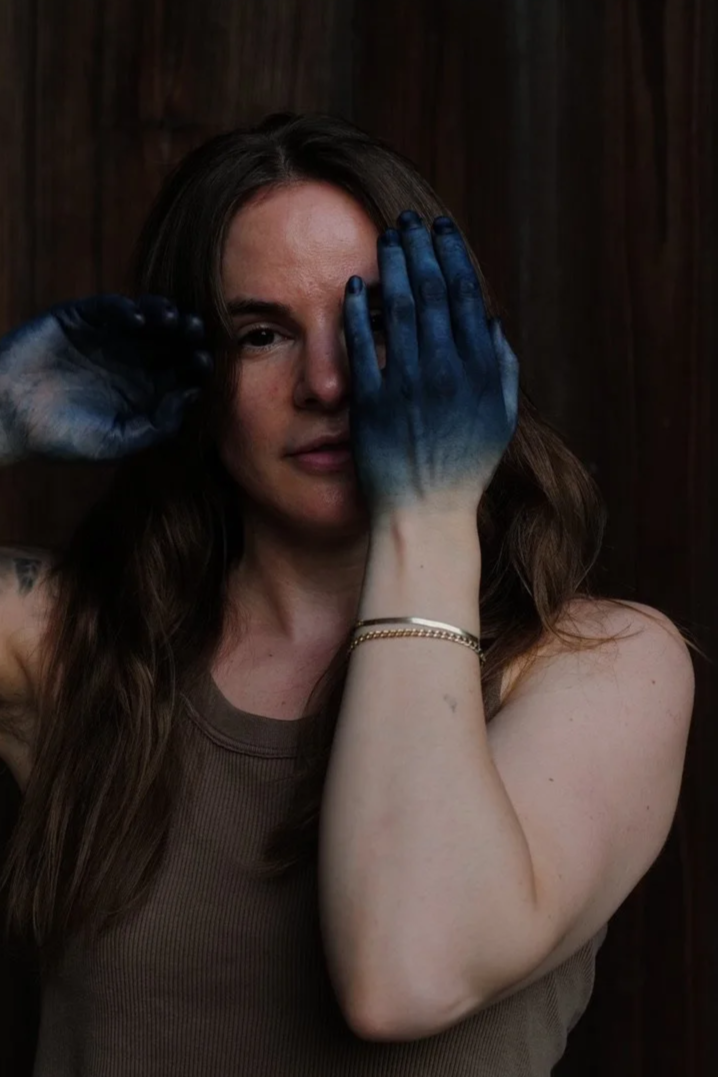
The artisans that work with Deyi Living primarily work with cotton. The dyes we got to encounter included native mugwort, indigo, Chinese yam, even mud and tree bark. One very special fabric is made with indigo, mud, and then beat with a wooden hammer for a long time with beef fat and egg whites to give it a rich, glossy finish. Truly incredible.
We were also lucky enough to see and handle some stunning Miao silver jewelry while we visited their village.
When Pan Xiaomei visited with her collection of embroideries, we learned that the majority of them were made with silk threads using natural dyes from flowers and bugs. It was so amazing to see how vibrant the reds and purples were.
One of my favorite sensorial memories was coming across a local wild pepper called Mu Jiang Zi. It was fun to squish them between my fingers and enjoy the zesty lemongrass scent.
What is something you learned that has shifted your outlook in relation to self & nature?
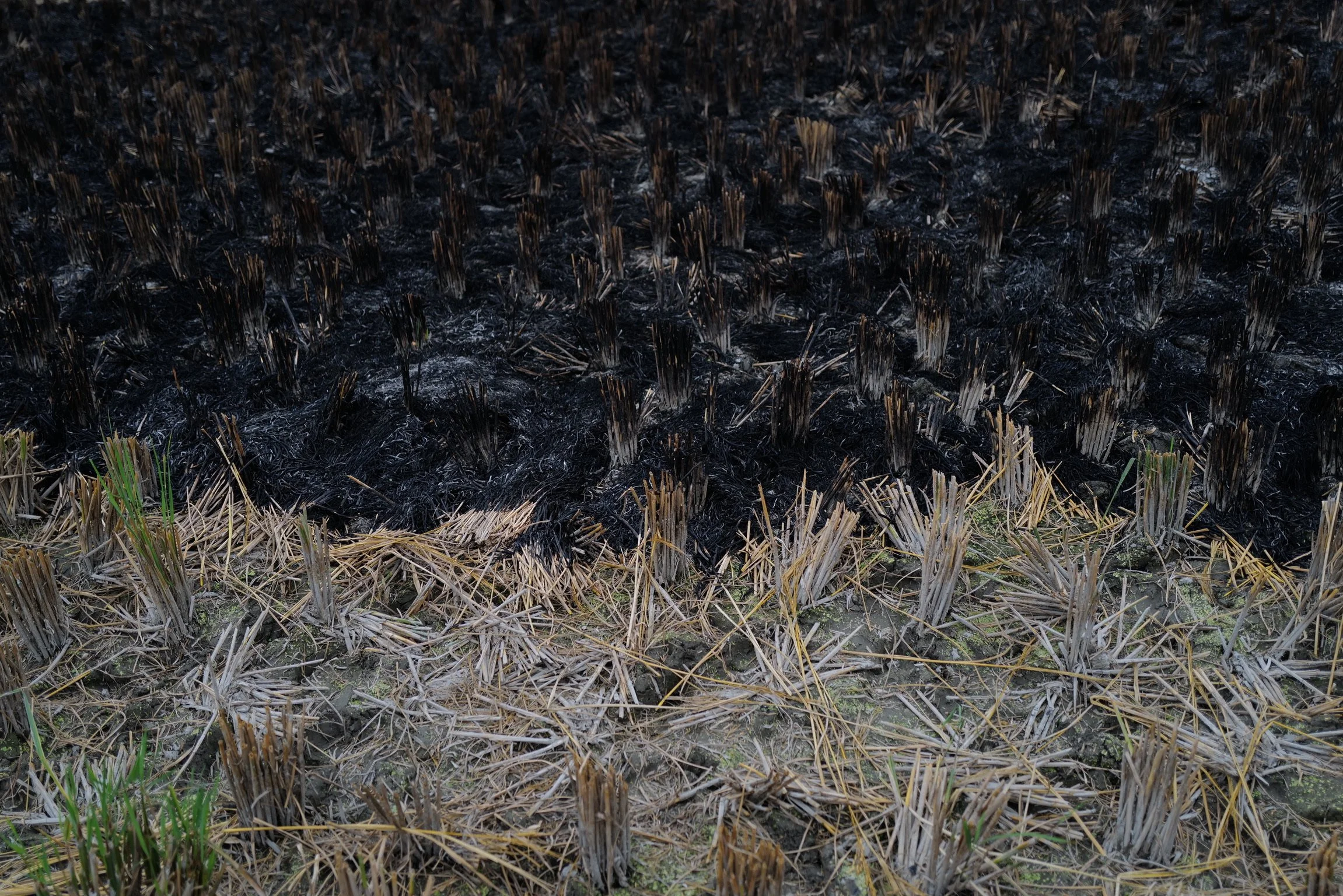
“One thing that shifted for me was realizing how deeply and inextricably intertwined we are with the natural world. Learning about how the artisans and village people work and live in harmony with the plants, weather, and seasons really deeply reminded me that I am not at all separate from nature, even though it can often feel like it. This has changed how I approach my own creativity and daily life. I'm more mindful of rhythms, patience, and the ways I can move with rather than against the flow of the world around me.”
How did this experience deepen your connection to nature & community?
Living alongside the Dong and Miao communities turned connection from an idea into a lived experience. Nature became something to be touched, processed, and created with, not just admired from afar. And community formed through shared routine, song, craft, tea, and laughter, a reminder that belonging is built in the small moments spent together, not the grand ones planned in advance.
What were some of the natural rhythms you noticed in the community? Was there a cyclical nature to the craft & practices?
Craft followed a clear rhythm of preparing materials, letting them rest, working by hand, even using the sun and moon cycle through a full 28 days to create a very special bright white textile. There was repetition in every process, spinning cotton, threading looms, harvesting plants for dye, returning to tea throughout the day.
“Nothing felt linear. It felt like a spiral that kept coming back to itself, each pass adding a bit more depth, color, or understanding.”
What season was it there, and what “inner season” did you notice in yourself? How did the outer season shape daily rhythms, food, rest, or making?
We were in Southwest China during a season that felt like summer refusing to leave. It was intensely hot and humid, the kind of weather that clings to your skin.
My inner season contrasted it in an interesting way. While the world around me was fruiting, lush, and damp, I felt myself cooling on the inside, growing clearer, quieter, more deliberate. The heat encouraged slow mornings, midday breaks, cold fruit, hot tea despite the weather, and gentle movements.
The approaching full moon around autumn equinox shifted the tone. Nights felt reflective, communal, and tender. The equinox brought a collective awareness of transition, a reminder that the world shifts even if the temperature seems to forget to.
How can people book this travel experience for themselves?
They can visit Deyi-living.com and get in touch with Pauline
How can people follow your journey + travels?
I am @thalassamama on Instagram. Stay tuned for travel and creative updates.
Travel reflection written by Sadie Spencer