A Spring Body Oil Ritual: Self-Anointing + Acupressure for Seasonal Renewal
Q+A with Dr. Brianna Sas, Doctor of Acupuncture and Chinese Medicine + Licensed Acupuncturist
Before we drop into the Q&A, I wanted to share a little context for how this conversation came to be. This spring, I had the joy of collaborating with Brianna Sas for a seasonal offering at the wonderful woo-woo here in Portland. It was an evening centered around gentle spring ritual and grounded, seasonal support. Brianna guided us through a spring self-anointing practice using the Spring Body Oil, shared a few supportive acupressure points to align with the season’s “new beginnings” energy, and then offered acupuncture alongside a sound bath that left the room feeling noticeably softer, clearer, and more alive.
We thought it would be fun to share some of these points in the Almanac. As well as share a bit of Brianna’s wisdom and insights as it relates to spring alignment. I feel so grateful and inspired to have been able to spend time and learn from this radiant being. I hope you enjoy, and I hope to see you at our next seasonal offering at woo-woo.
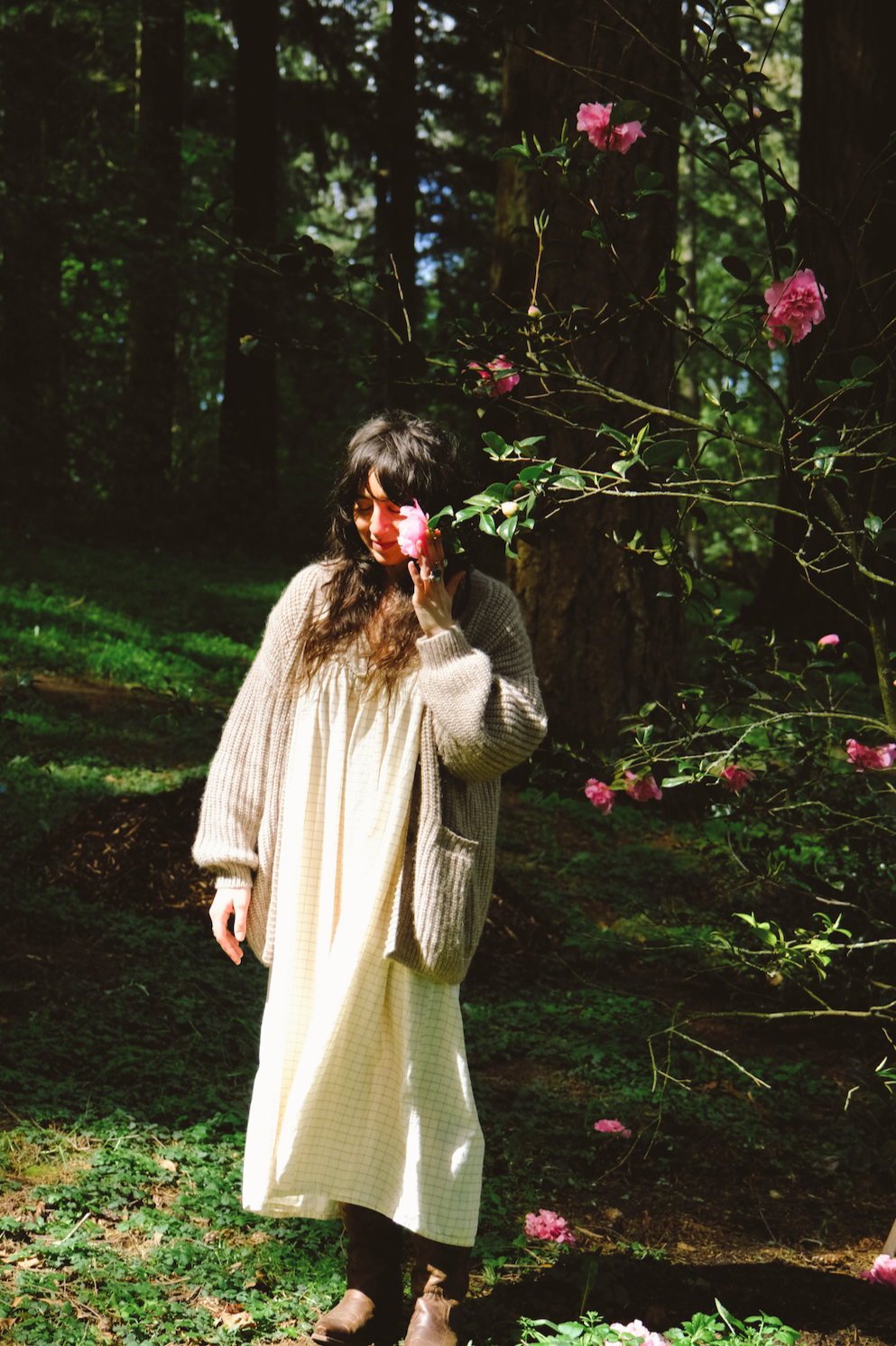
Tell us a bit about yourself...How did you find your way into acupuncture and seasonal living? How did Elixir Field Wellness come to be?
My mother introduced me to acupuncture at the tender age of 15. She had started working with an acupuncturist in my hometown of Tinton Falls, New Jersey. Ever since I was a little one, my mother was drawn to holistic care, as she was navigating support for chronic pain from fibromyalgia. And she had found her way to East Asian medicine. My mother knew I was struggling with unrelenting anxiety and digestive issues daily and so she took me to see Shoshanna Katsman, who became my first acupuncturist and mentor. I will always remember laying on the table, receiving acupuncture for the first time. I was able to drop into my body so deeply and witnessed the world expand around me. I felt like I was simultaneously floating yet grounded at the same time. And I felt better after each session. I could feel in my bones this medicine was sacred. It just made sense. ‘Elixir Field’ was inspired by the daoist concept of the fields of alchemy within each of us, the place where we can generate, preserve, nourish and conserve life force energy. In daoist medicine & philosophy, these fields are the upper, middle and lower fields which pertain to the third eye/pineal gland, heart and kidneys, respectively.
From a Chinese medicine perspective, what herbs (or everyday botanicals) best support the spring transition, and what are they supporting?
Dandelion, pu gong ying, purges and soothes heat or inflammation from the body, also known to promote lactation
Chrysanthemum, ju hua, gentle and cooling, can aid in treatment of common cold, allergies, calms dry, swollen, itchy or painful eyes
Magnolia bark, hou po, gently moves stagnant qi from the throat, chest and belly; eases fullness, bloating & many symptoms of IBS Buplerum, chai hu, releases stuck qi in cases of dizziness, vertigo, chest and hypochondriac pain and menstrual pain and discomfort
White peony root, bai shao yao, nourish blood and harmonizes menstruation, eases breast distension, calms digestion.
Goji berries, gou qi zi, nourish blood and the eyes, calm dizziness and vertigo, moisten dryness
Aged tangerine peel, citrus, chen pi, move stuck qi in the throat, chest and abdomen, bolster energy in cases of adrenal fatigue
Can you talk us through a gentle spring self‐anointing + acupressure practice someone can do at home to align with the energy of spring? What points would you choose (and why), how long should someone press them, and how often?
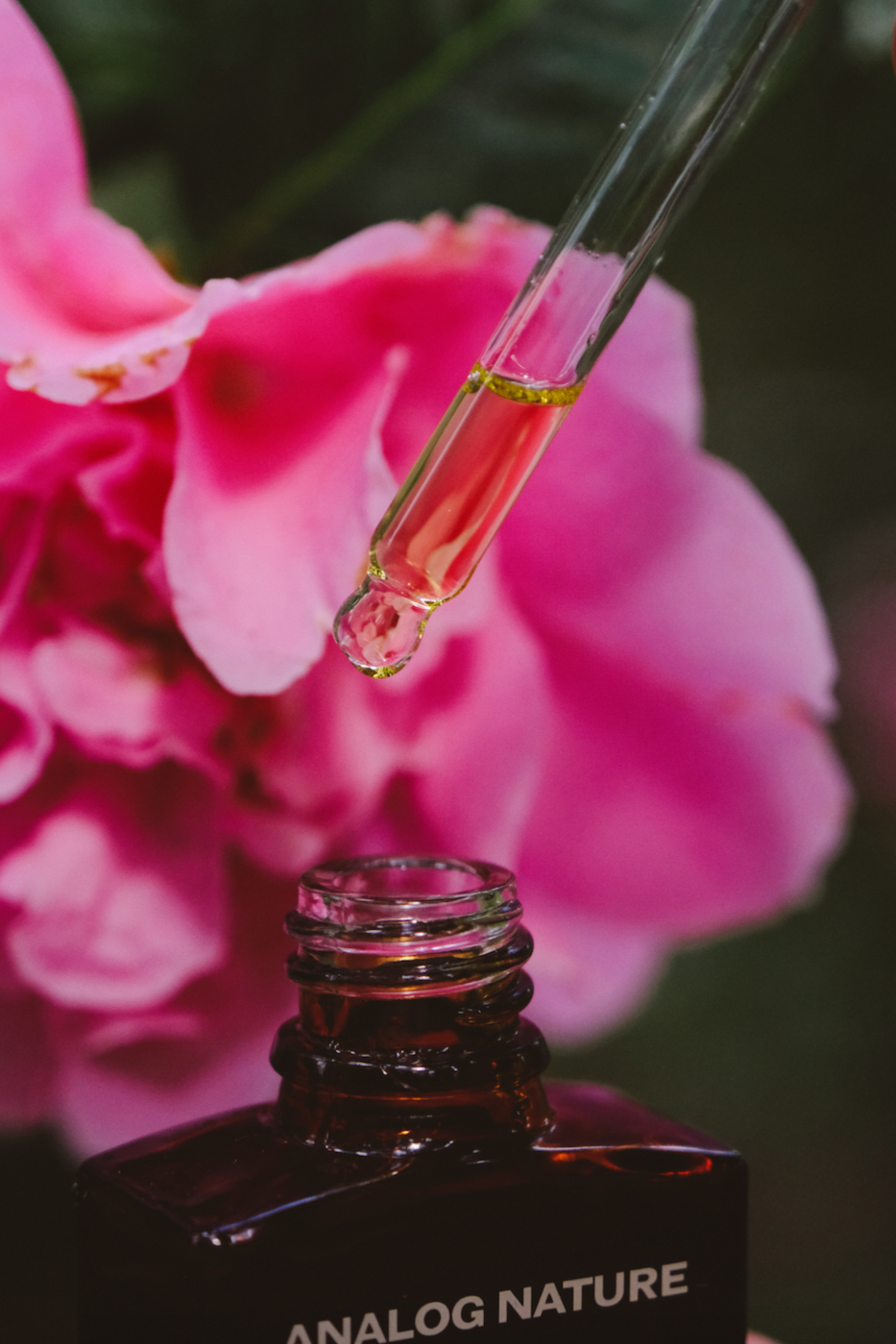
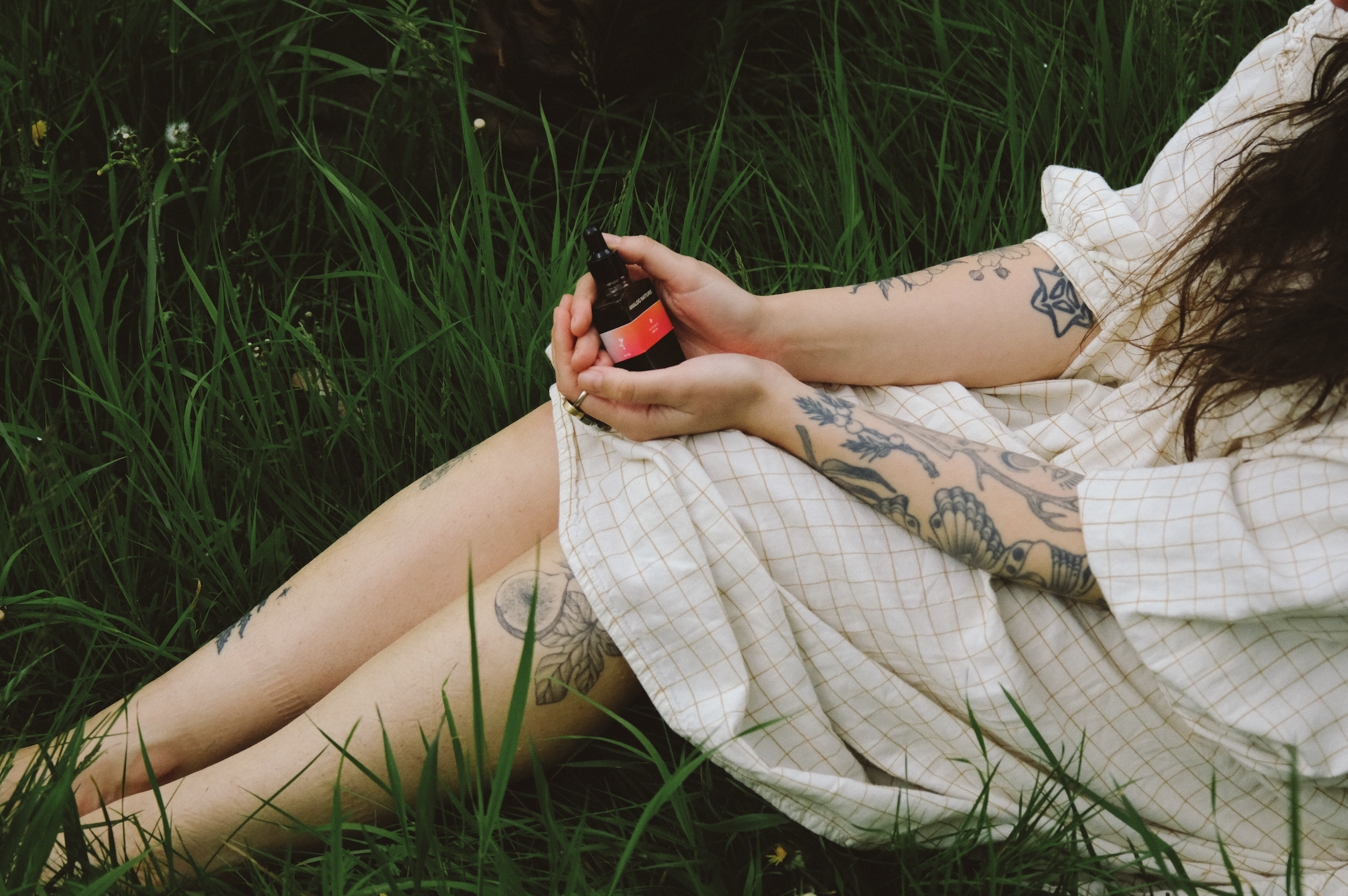
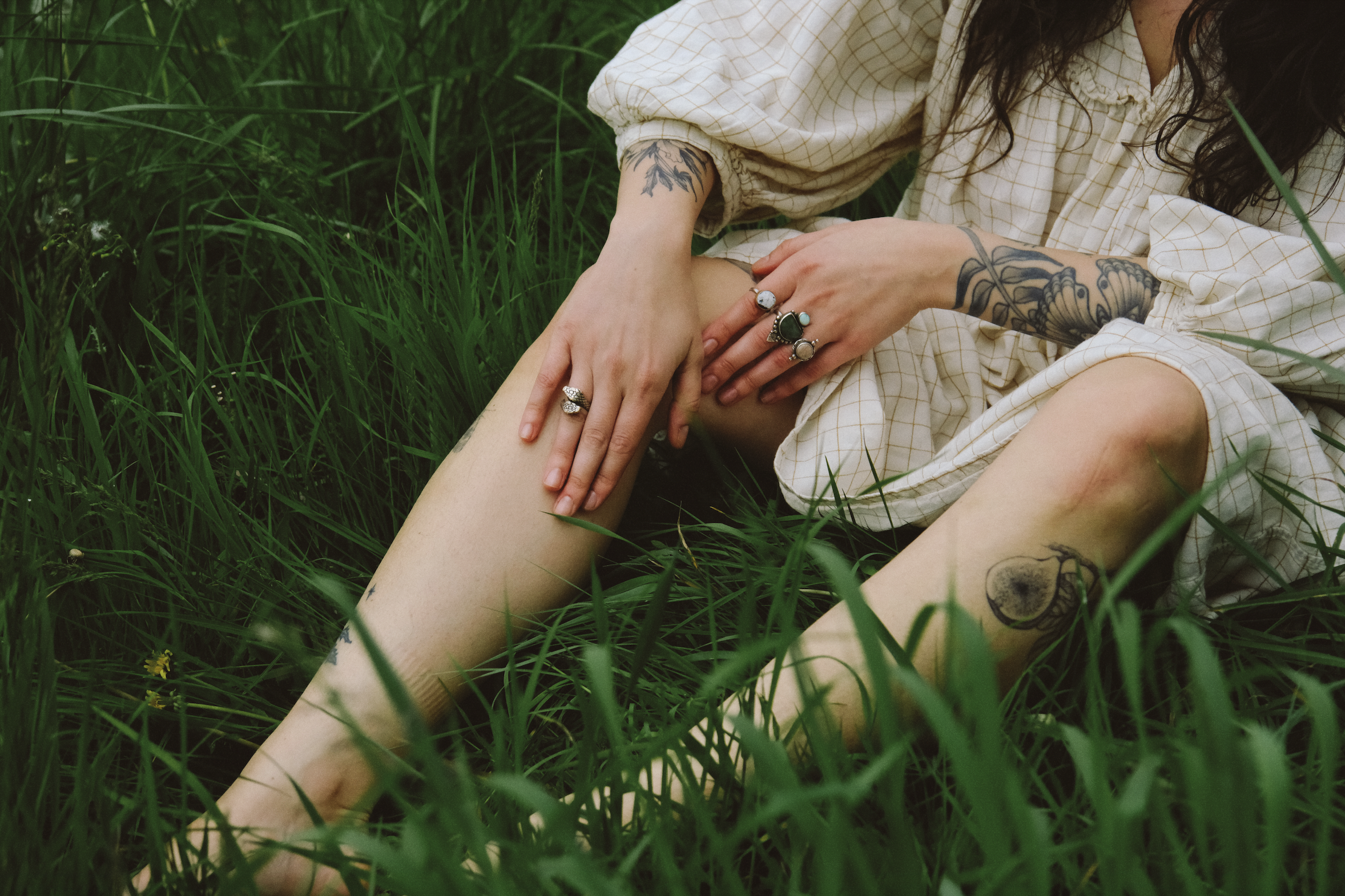
I love anointing my body with a beautiful oil in service of the highest good for my skin and for my whole body, mind and spirit ~ I usually hold the oil in my palm to warm it gently and then begin by smelling the oil, opening myself to the expansive nature of experiencing through touch and smell. I gently massage my face and then continue with long, gentle, mindful and nourishing strokes down along the arms, over my chest, over my belly, legs and feet.
“The ancient daoists say, ‘in springtime, one should let down their hair and take long strides through the garden.’ meaning: Spring is the season of taking your time ~ of reveling in the beauty and miraculousness and unfurling of nature around you.”
Points for springtime:
Lu1, zhong fu ~ located in the hollow four fingerwidths below the clavicle, where it meets the deltoid.
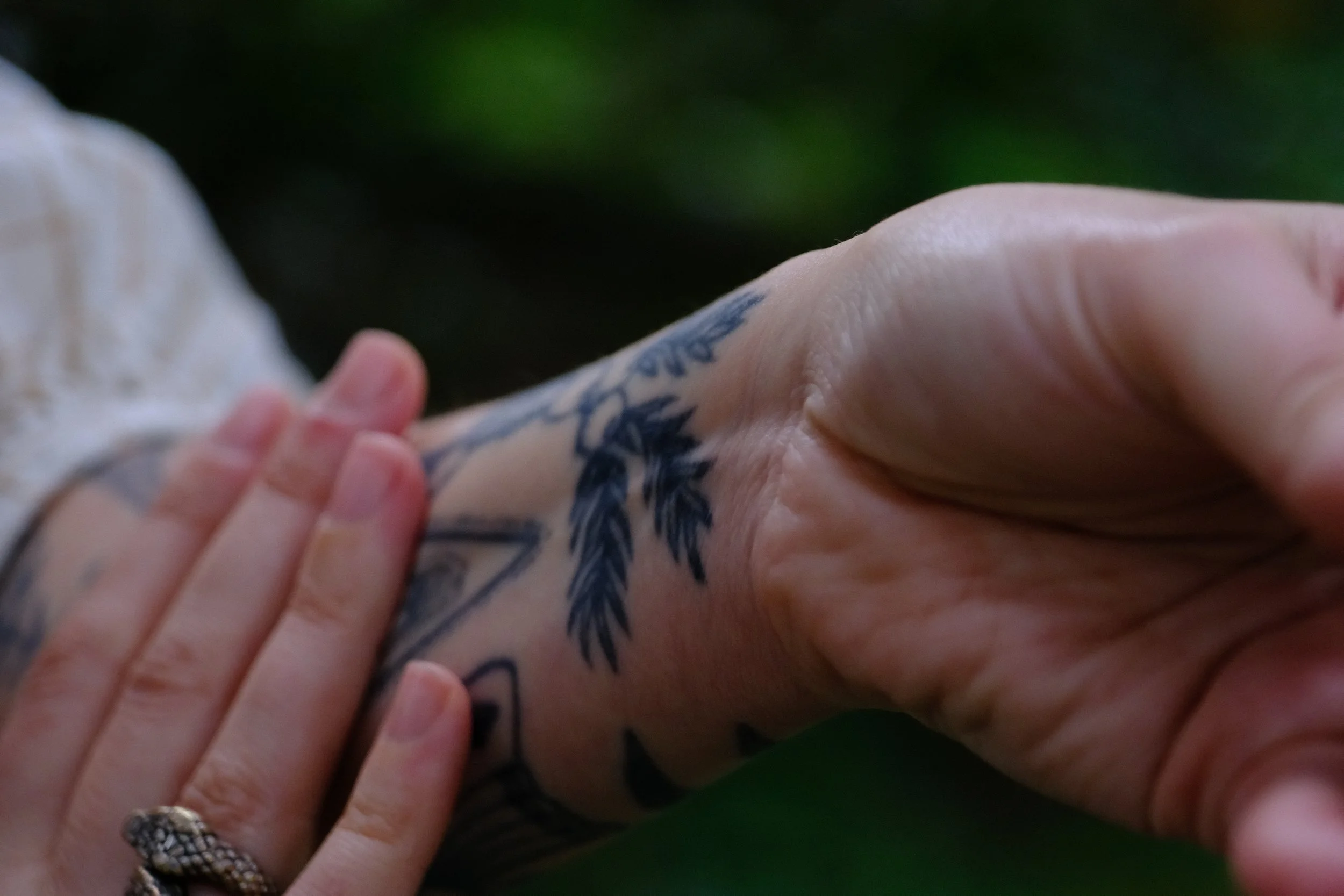
This point roughly translates to ‘the central palace’, the beginning of the new qi cycle (equates to Aries starting a new astrological year), a fresh start, a new beginning. anoint this point with oil and gently apply light pressure and mindfully rub this point for 20 seconds in whatever way feels most nourishing for you. I like to tap this point, massage in circles and hold gentle pressure interchangeably.
Liv3, tai chong ~ located in the depression between the first and second metatarsals. This point roughly translates to ‘the great urge forward’, or ‘supreme rushing’ anoint this point with oil and pressing to whatever depth feels most comfortable for your body; this point can aid in promoting the movement of stuck energy, especially when we need to call upon the stability and groundedness of the earth in order to move forward in life.
Why are acupuncture, self‐massage, and seasonal ritual so supportive during transitions like spring?
“Seasonal and daily rituals allow us to nurture and cultivate our relationship to our natural cycles, our connection to nature and the innate intelligence of our bodies, as reflections of nature itself.”
I call upon these practices in order to honor the spring body, which asks us to navigate the pivot ~ the spaces between, the liminal spaces, the unknowns ~ the realm of infinite possibilities. Springtime is the season of tending the seeds and the soil that will give birth to new life energy. Harmonizing with the spring season through gentle, slow, intentional rituals helps us to navigate the complexities of the body in a state of emergence, growth, shedding and rebirth. These practices and rituals are powerful antidotes for living under systems that do not honor our body’s natural seasons, cycles and rhythms and continuously drain our vital resources.
What’s one daoist idea you return to when you’re helping people align with the seasons?
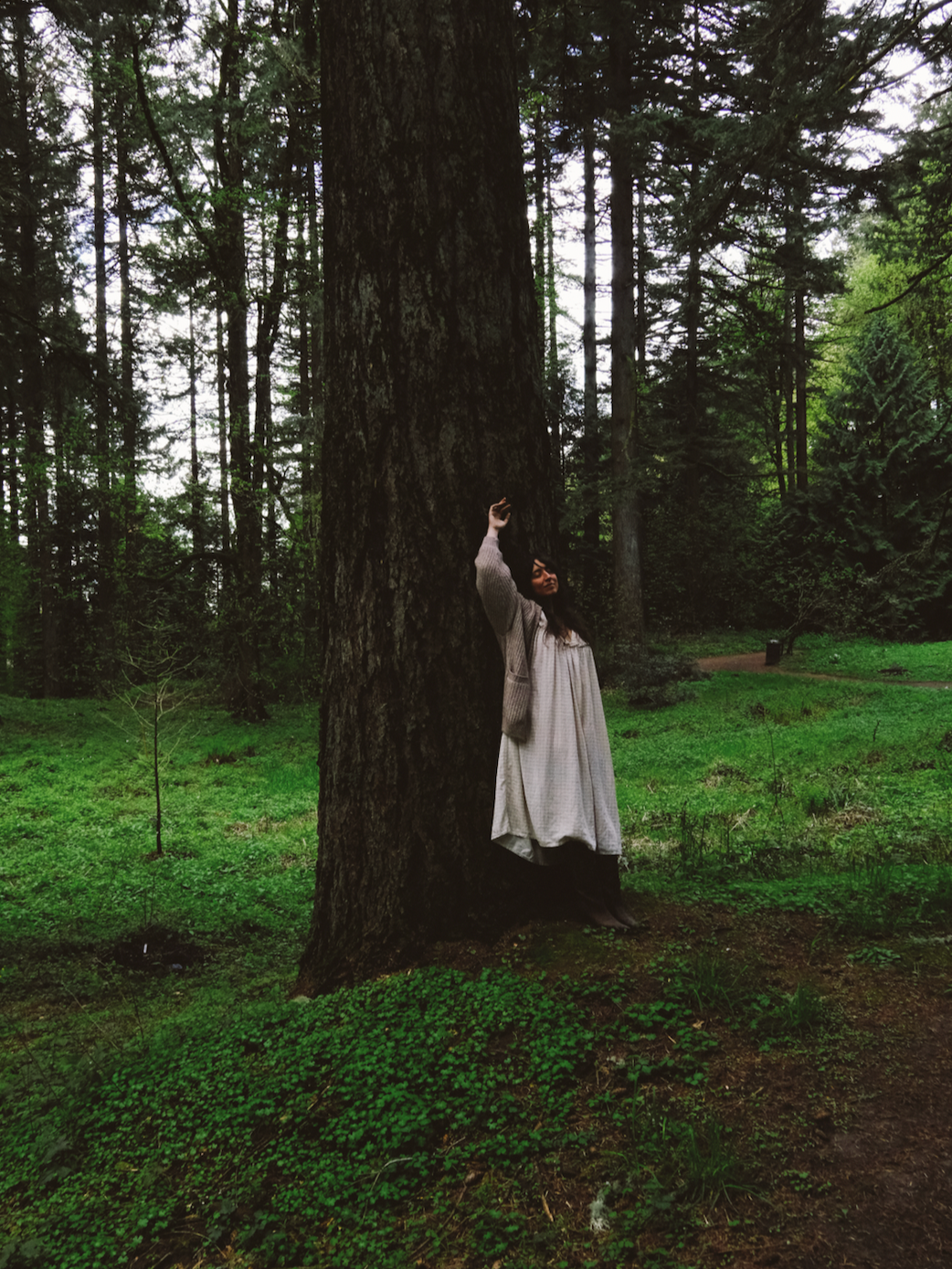
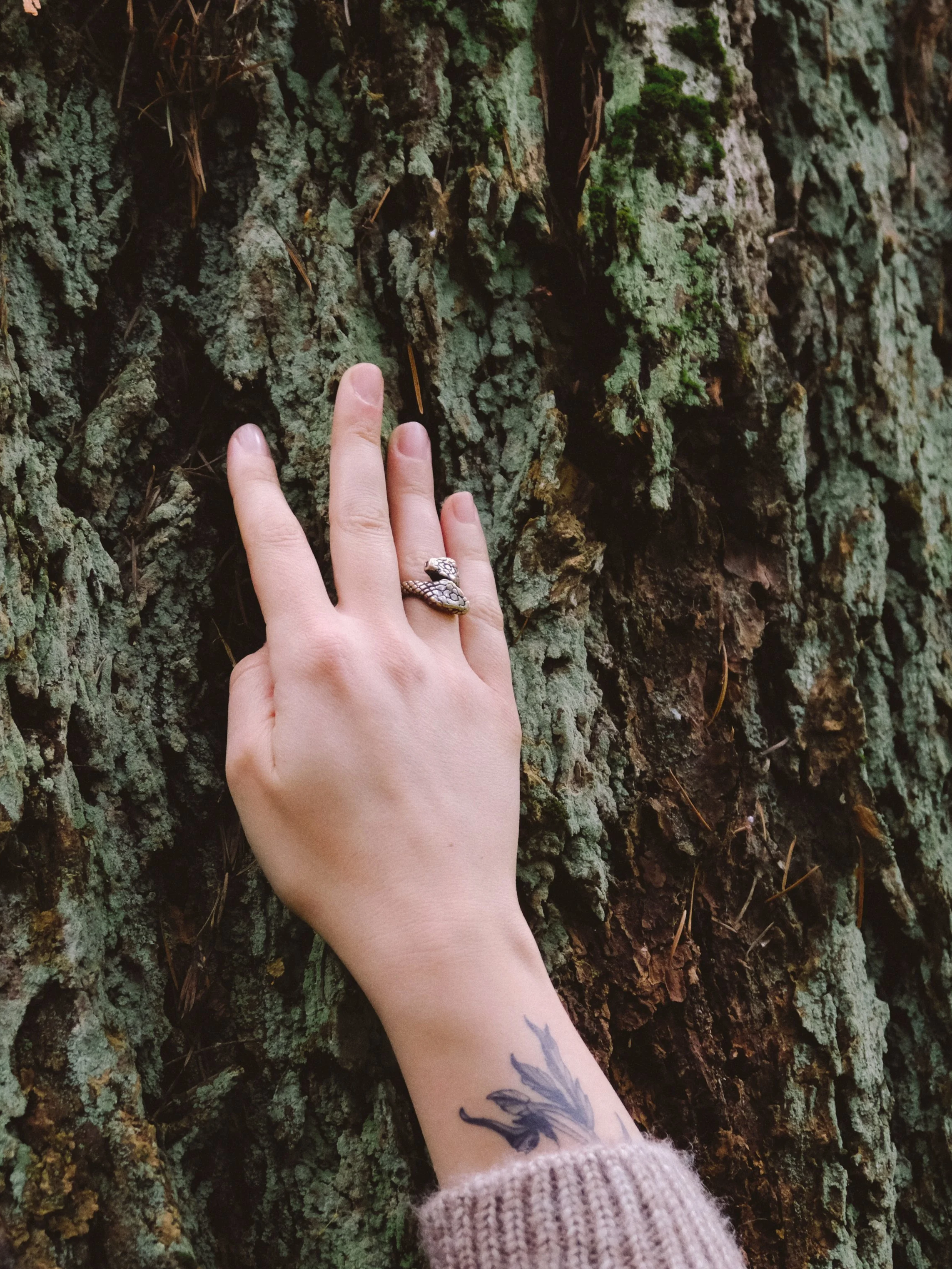
As a 20 year student of daoism, I always return to the idea of holism, of the body as an inner landscape, a beautiful, lush and thriving garden - tian ren he yi- roughly meaning nature and humanity are one, nature and humans are one united whole. There is a daoist map of the body called the nei jing tu, which depicts the body’s landscape as a network of water passages, rivers, streams and oceans, with the eyes representing the sun and moon, the head as mountain peaks, the liver as a grove of mulberry trees, just to name a few. I love referring to the daoist maps of the body as a way to remember the natural beauty and intelligence of the earth, the cosmos and the human body.
Do you have any new moon rituals?
New moon energy in daoist medicine ~ symbolically represents winter, deep stillness, quiet, rest, the moment just before conception, the fertile potential of emptiness, nothingness, the realm of infinite possibility ~ My favorite ways to honor the new moon are to meditate in the dark, listen to silence, practice self massage, and visualize planting seeds in fertile soil that align with my highest purpose and most expansive dreams.
Do you have any spring rituals you practice, or recommend for people to try at home?
Go to bed a little later than usual, rise a little earlier, listen to the first birdsong you can hear, tea ceremony and observe all of the green and abundance around you, qigong shaking/thunder qigong to move stuck qi, slow walks in nature, observing the natural beauty and abundance of springtime.
Can you tell us a little bit about daoist philosophy? What drew you to this field of study, and what is something you find particularly insightful that you wish everyone knew?
Daoism is thought of as a way of life itself. My curiosity grew from receiving acupuncture treatments and practicing qigong when I was 15 years old. During my undergraduate studies, I met a daoist philosophy professor that I still keep in touch with today. He introduced me to many of the classical daoist texts such as the i ching, the dao de jing of lao zi, chuang zi, Confucius, Meng zi, sun tzu and the intersection of daoism and Chan buddhism. Daoism just made sense to me, particularly the main tenants of ontological daoism such as wu wei, or effortless action as well as the concept of dao as a process and the cosmos as an infinitely proliferating unfolding of phenomena. I keep a copy of the dao de jing, the i ching and the chuang zi nearby at all times. I learn something new from these texts every time I immerse myself in their wisdom. I think it is important to know that these texts are not religious doctrines or mandates, but rather suggestions on how to walk through life in joy and ease.
I was really interested in acupuncture points as it relates to your menstrual cycle. Are there any specific points you would suggest as it pertains to each of the 4 phases?
REN4, SP6, LIV8, LIV3 These points can be used throughout any phase of one’s cycle, depending on one’s specific need. REN4, guan yuan, the gateway of origin; a portal to the fertile gardens that bring wisdom, clarity and inspiration to our life. Nourish our vital life force energy so we remain open and free flowing. LIV3, tai chong, a supreme surging forward; the earth point on the wood channel, giving grounding and stability so that we can grow with nourishment and ease. LIV8, qu quan, a maze of spring water; the water point on the wood channel; represents the flowing energy of a spring bubbling out of the ground with vibrant, nourishing water; here we can contact the deep inner springs that bring us inspiration and nourishment. SP6, San yin jiao; the crossing of the three yins; the energy of the liver, spleen and kidneys converge in this space - representing the grains, the growing plants and the water that fills us with vibrancy and vitality; used traditionally for any pain associated with the moon cycle.
What is your relationship with your own cyclical nature? Any insights or rituals you'd like to share with others that helps you find balance in your body?
I am constantly learning from my body’s cycles, learning how to better atune to her needs. Our bodies change from day to day, month to month, year to year, moment to moment. The only constant is change.
“Daoist philosophy has helped to provide me with the fertile and nourishing soil to root into, to allow me to respond to seasonal, cyclical changes and meet myself with more grace and loving kindness. To view aging as a sacred right of passage. God is change.”
Anytime I need a reset, I simply observe the dynamic and ever-changing qualities of nature.
“There are 24 hours in a day. There are 24 seasons according to the daoist lunar calendar. Our bodies experience 24 mini seasons each day. We can start new, fresh anytime we need to.”
What are your go‐to natural supports for seasonal allergies?
Acupuncture! Sinus points like LI20, GB2, BL2, ST7, SI18, SJ17, GB20, etc. Lymphatic drainage massage, face massage, shaking practice. Cinnamon twig Curcumin - 2000 mg daily (1000 AM, 1000 PM) Nettle tea Mint (bo he) Xin yi hua, magnolia buds Dandelion, pu gong ying Wind Pearls by Classical Pearls for itchy allergy symptoms Hista-Aid by Quicksilver for when you need extra support.
What is inspiring you right now?
All the green! Falling petals, the mini seasons within springtime ~ lilacs, wisteria, plum blossoms, iris, dogwoods just to name a few! Slow, embodied movement, slow walks in nature, waking early to observe light returning, listening to birdsong, dandelion tea before bed, shaking and lymphatic drainage massage, simple skincare rituals like face massage with nourishing oil, home cooked meals that prioritize greens!
Anything else you’d like to share that you think would be insightful for others as it pertains to cyclical wellness, spring, and natural rhythms?
“Our bodies are so so wise. When we quiet all the noise of what we think we should be doing or what we ought to be doing, we can tune into the subtle language of the innately intelligent and miraculous landscape of the body.”
How can somebody get in touch with you if they’d like to work with you?
Seeing patients 1:1 at vetiver acupuncture. Collaborating with local spaces like woo-woo, deep waters. And I will be starting a non-profit for community acupuncture in the next year!