What’s in Your Belt?
Creator Series: #1 María José Gómez
Summer is the season to nurture, bloom, and return to balance. These small-batch, naturally dyed eucalyptus creator belts were made with that rhythm in mind. They are a functional tool and a quiet invitation to make creating in nature feel like a ritual, and to hold space for the projects and things you love most.
As a continuation of this collaboration, we became excited about learning about creators who work in or with nature through what they choose to carry. What their process looks like, what they are making space for, and how we can create space to connect and be inspired. So we decided to do a little “What’s in your belt?” series. It feels right to start with María José Gómez herself (designer, natural dye practitioner, and color specialist based in Bogotá, Colombia), a friend and the maker behind these one-of-a-kind eucalyptus patchwork belts I designed.
This is the first of a few creator features. This one dives a bit deeper into the making of the belts themselves. If you want to go deeper into the making, process, and intention behind the belts, you can read the full story on blumenhaus journal here: https://www.blumenhaus-magazine.com/journal/analog-nature
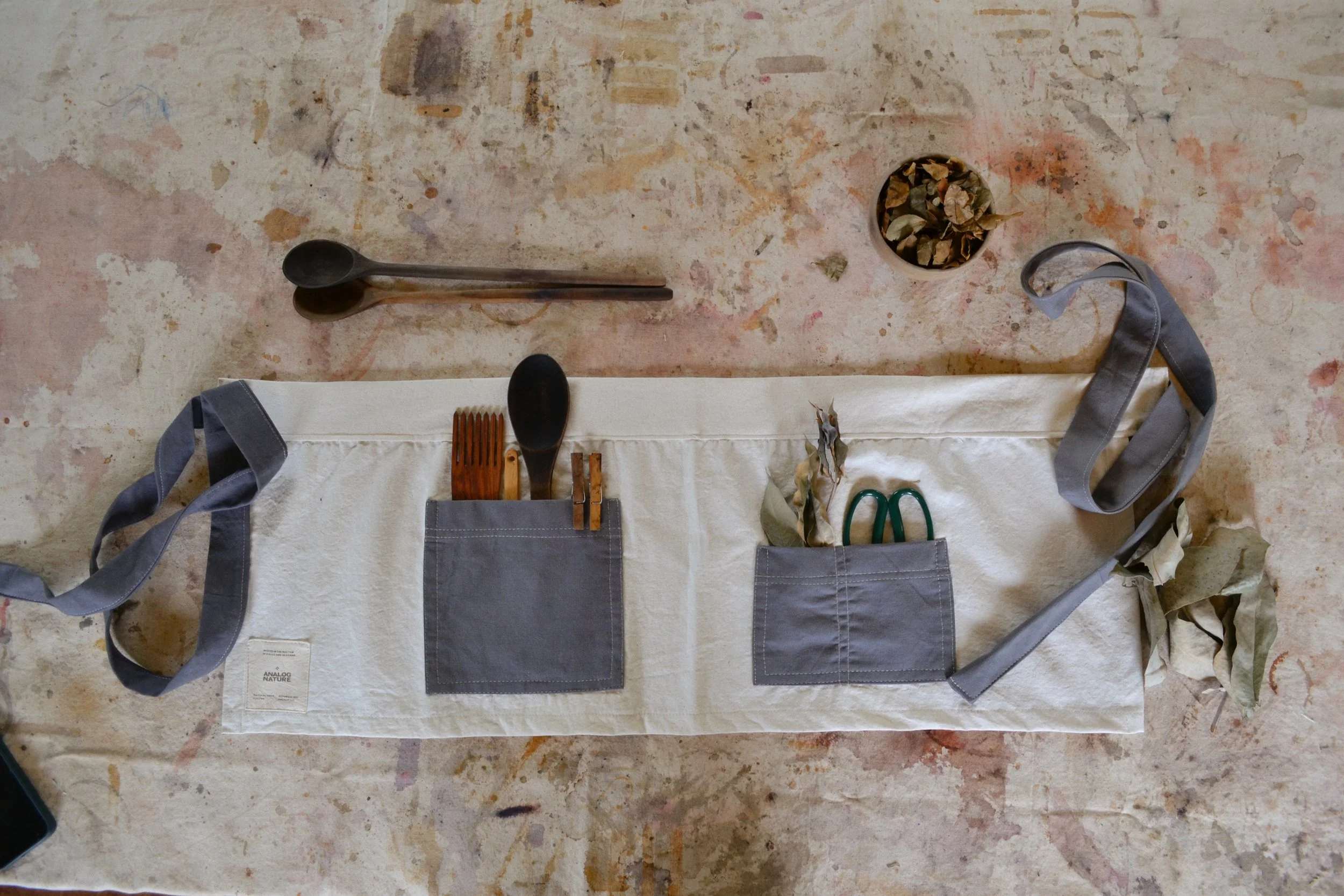
What is in your belt?
Garden scissors for cutting the flowers from the garden before preparing the dye bath
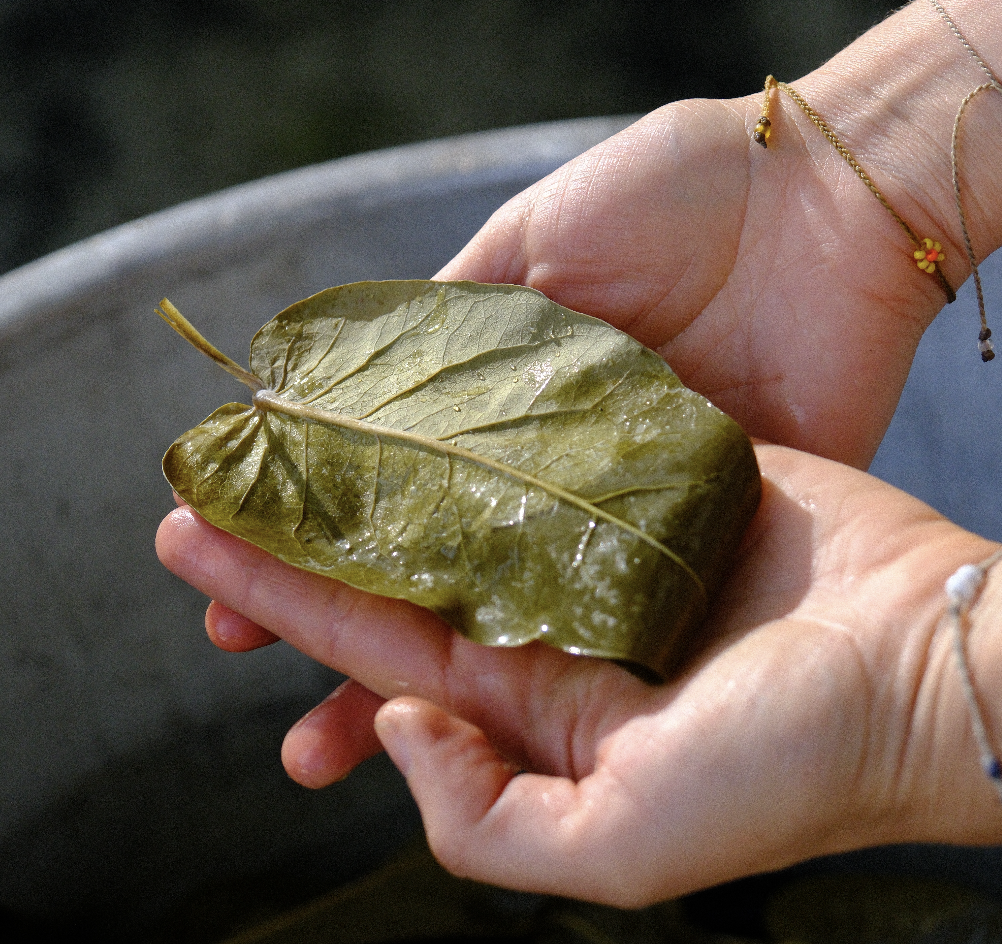
Dry eucalyptus that is going to be used to extract colour
Wooden spoon for mixing the dye bath
Wooden weaving tool to use in the loom
Clothespin to hang the fabric already dyed to dry
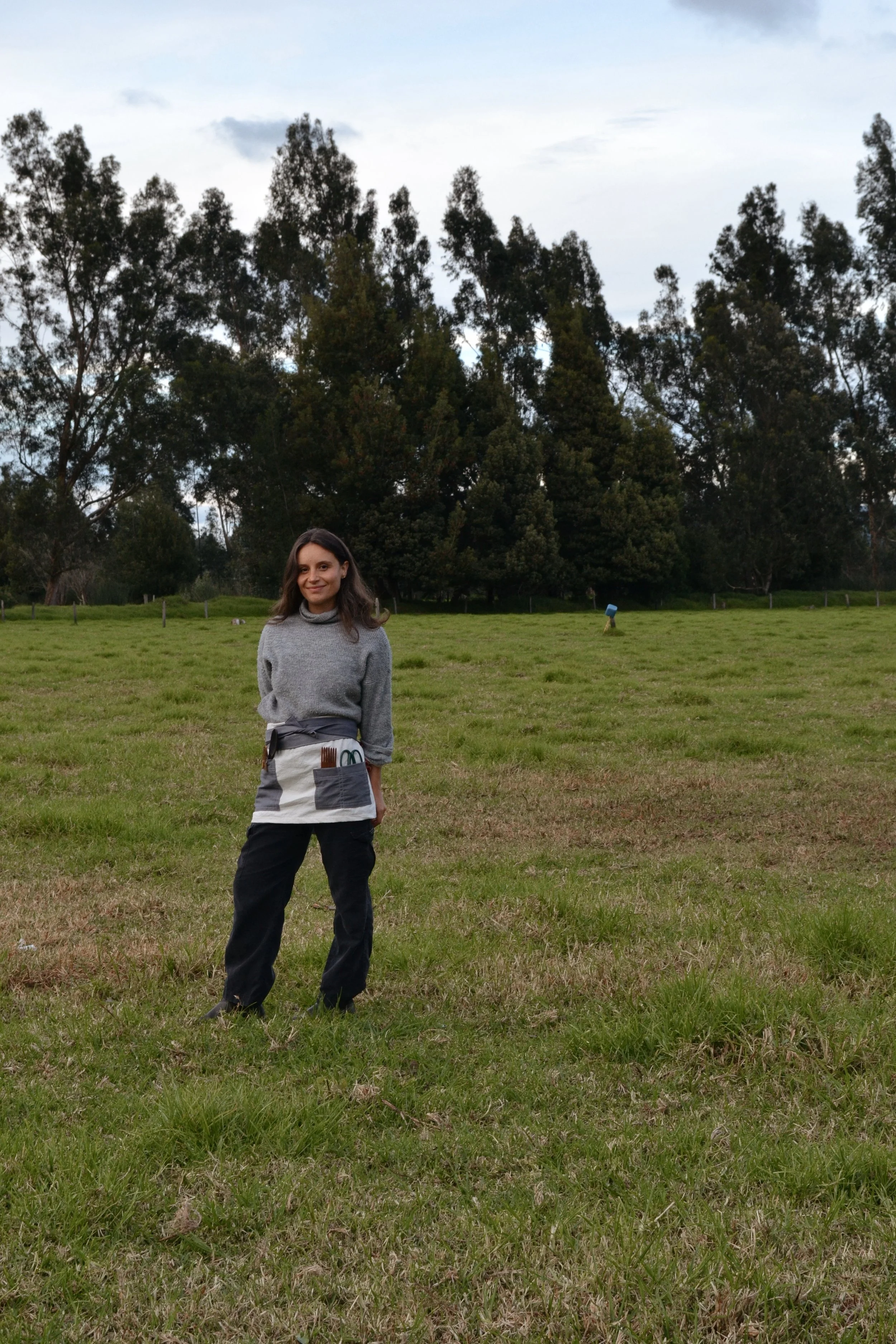
Who are you, where are you based, and what is your art or craft?
My name is María José Gómez , a designer passionate about natural dyes and fibers, based in Bogotá, Colombia.
Tell us a bit about eucalyptus from a natural dye color specialist’s perspective?
Eucalyptus is one of my favorite plants for dyeing because it produces very unique colors, such as a deep gray. It’s a plant that contains a lot of tannin, which makes it one of the best plants for dyeing cellulose fibers like cotton, as it helps the color set better and last longer over time. The tannin characteristic of eucalyptus makes it easier to achieve dark tones with a more uniform finish when combined with an iron dye bath.
What inspired you or excited you about this project and the collaboration?
Besides being friends with Brooke, I think our two projects, Analog Nature and Cúrcuma, create a special synergy. I’m excited to share my passion for color in objects that other people can use, especially pieces that align closely with what we do, like a garden belt. I believe these encounters between people who love nature and see how it can be an inspiration are very special. I think that’s where creativity springs from. Out of friendship and a love for nature.
Tell us about the full process of naturally dyeing these belts, and where they were made?
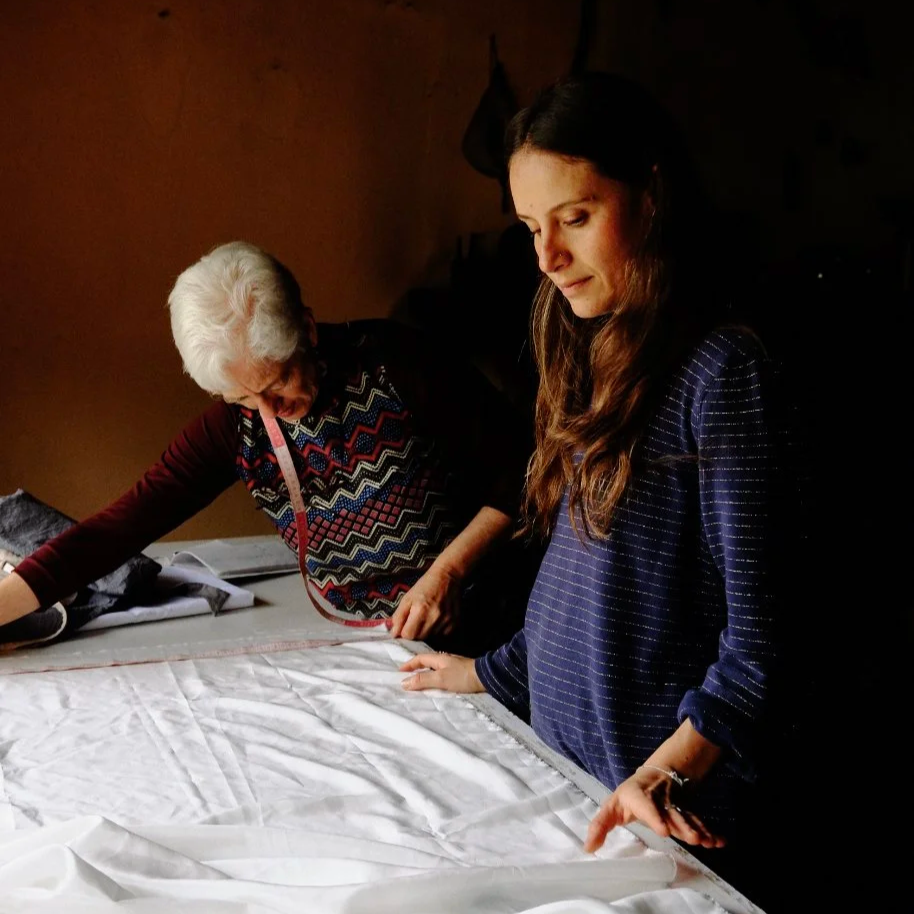
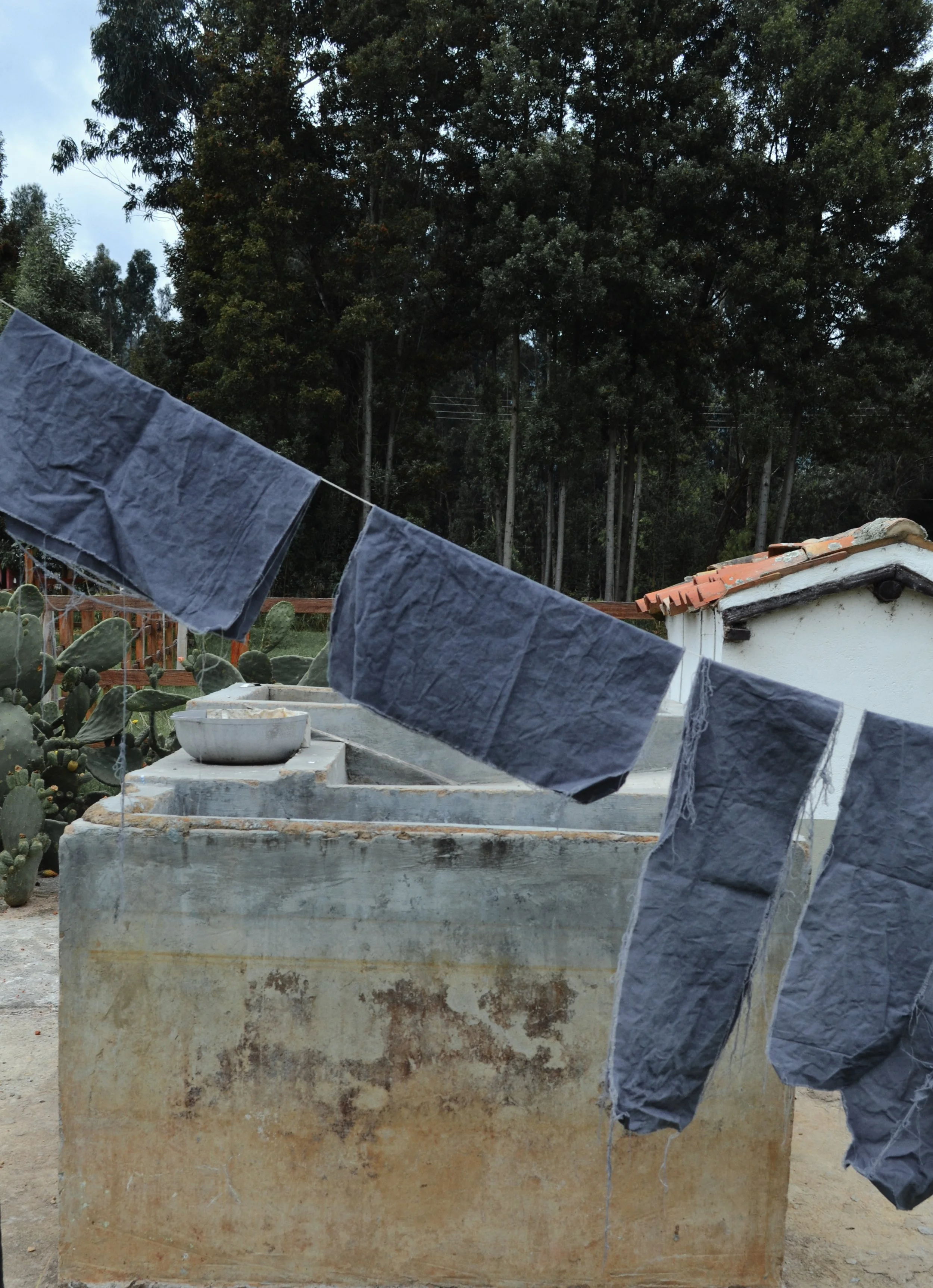
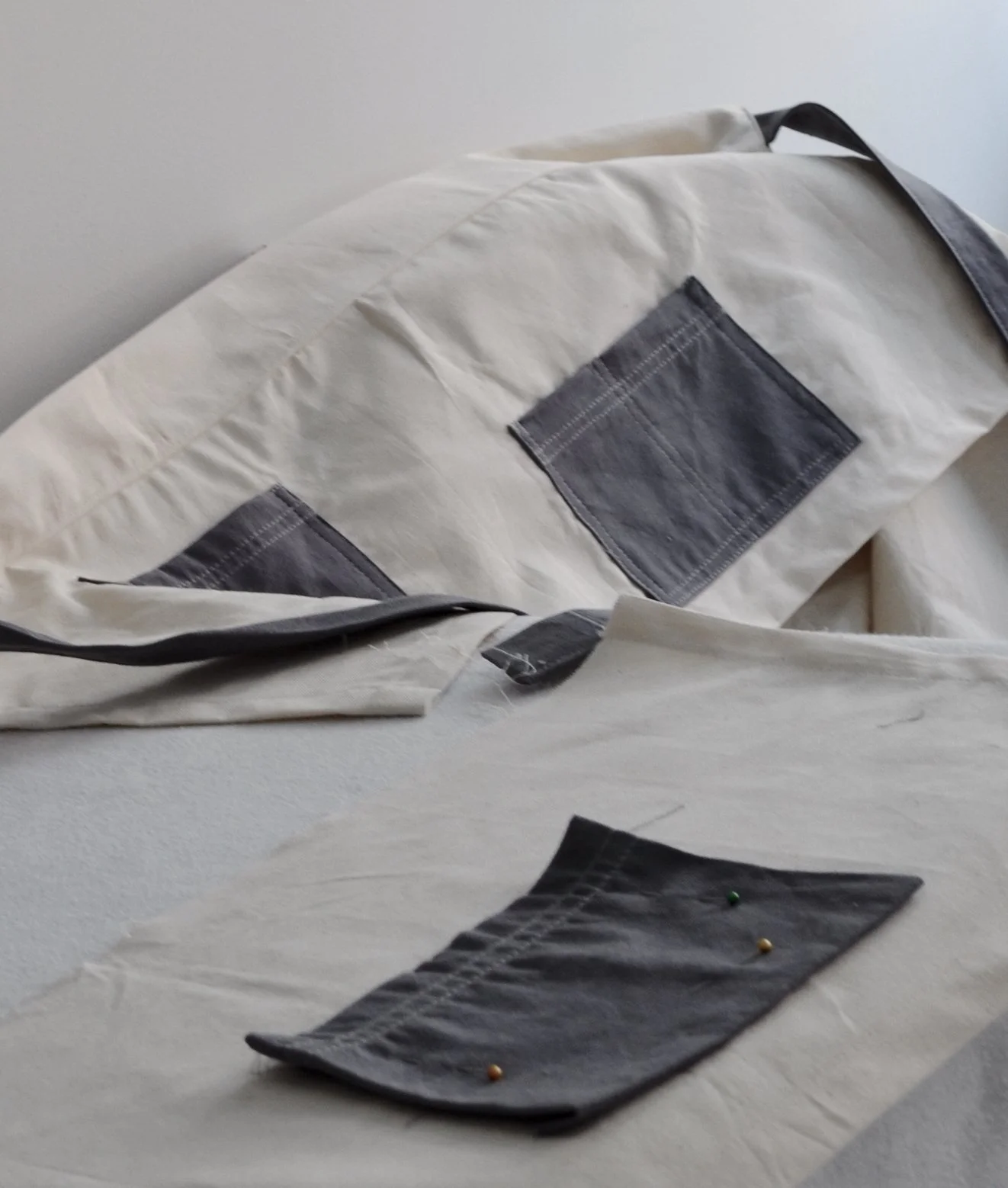
The belt was made across a few places, mainly in Ubaté (about two hours from Bogotá), where we have our natural dyeing workshop and where the fabric is cut and dyed. The space itself used to be a cheese factory, which feels fitting given Ubaté’s history of milk and fresh cheese production, and it now functions as a color laboratory that stays connected to local craft and the land. We also have a dye garden where we grow some of the plants we use, and the area is surrounded by eucalyptus trees. Since eucalyptus is invasive and not native, using it for natural dyeing is one way to help control its spread. For this project, we simmer the eucalyptus in rainwater for about three hours to extract the color. In parallel, we prepare the fiber for 12 hours so it can absorb the dye and so the pH is balanced. Once the dye bath is ready and the fiber is prepped, we dye about 600 grams of fabric at a time. For 25 of the aprons, we modified the pH with iron to achieve gray to blue tones, and for the other 25, we used baking soda and alum to achieve greener tones. Because natural dyeing shifts from batch to batch, the process takes time and patience. After dyeing, the fabric is washed, dried in the shade, and then sent to Esperanza’s studio in Zipaquirá (about 45 minutes from our studio), where all the pieces are sewn together and shaped into the belt. Even the label is handmade, screen printed with coca leaf pigment, which creates unique tones and keeps the process as natural as possible.
Why do you think working with natural rhythms is important when it comes to artistry and craft?
I believe that rhythm is everything in creativity, but especially in craftsmanship. As slow rhythm. Working with your hands dictates a different, slower pace of production, because you seek perfection (which doesn’t exist in these techniques) using your hands and, in this case, the rhythms of nature. Creating with your hands means producing small batches, in harmony with the material you’re using. Few machines are involved in this process, so mass production isn’t possible. But that’s what makes it so special. These are processes that create unique pieces; no two are alike, and that’s where the value lies—in the delicacy and the pursuit of perfection with the hands, not with machines.
What’s a ritual or repeated act that keeps you close to the work?
I think more than a ritual is being physically in my studio in the farm. Being there keeps me close to the land, the materials, the plants and the process itself. Is hard for me to work away from that space.
What are you inspired by right now? What new ideas or projects are you trying to create more space for?
I’m very inspired by the community around especially talented woman that has been part of this project and around the world. I’m trying to focus on the residency program, coming up with a coherent experience of immersion of material and colors along with more immersive and long workshops. Also, I’m creating more space for rest, pause and silence.
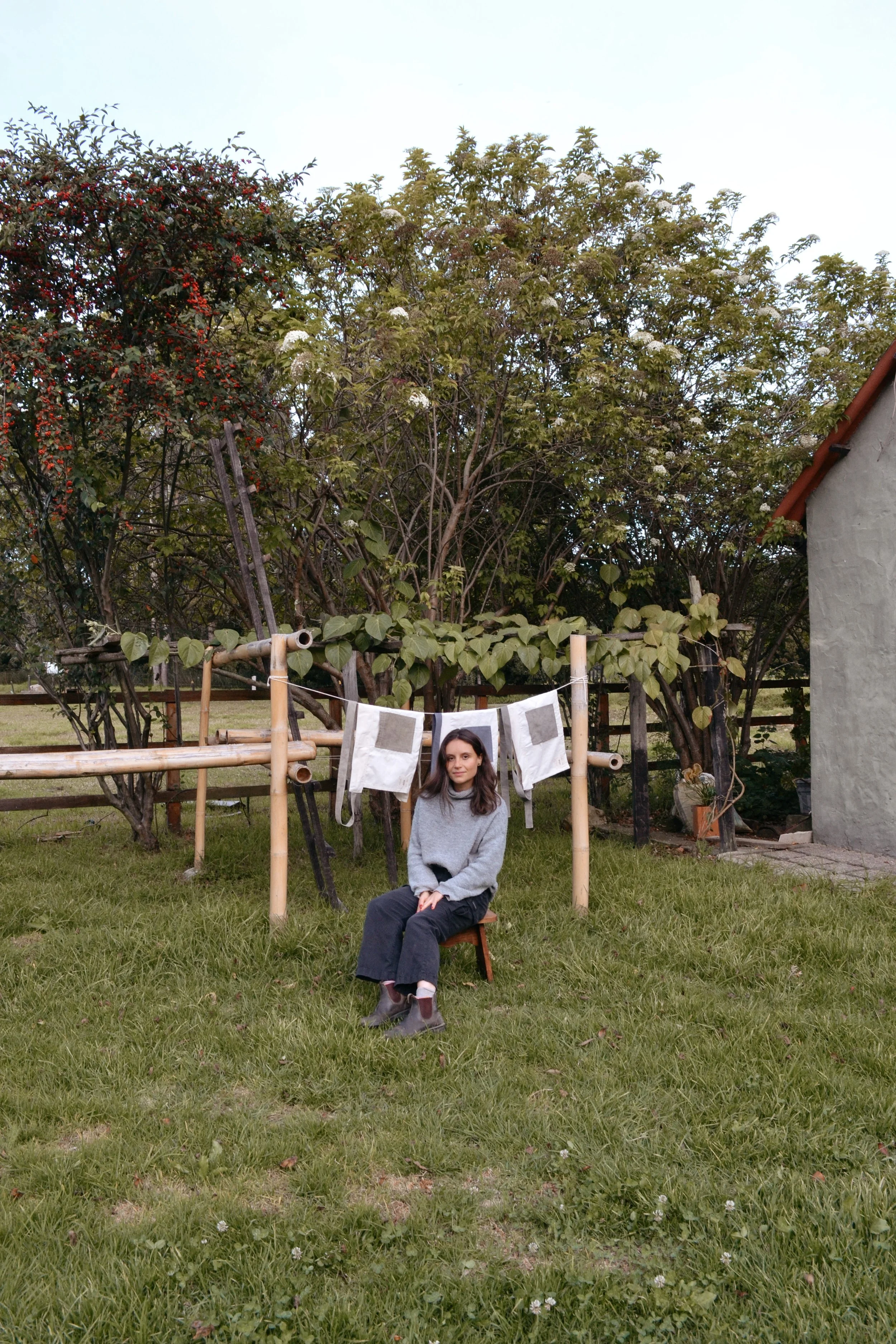
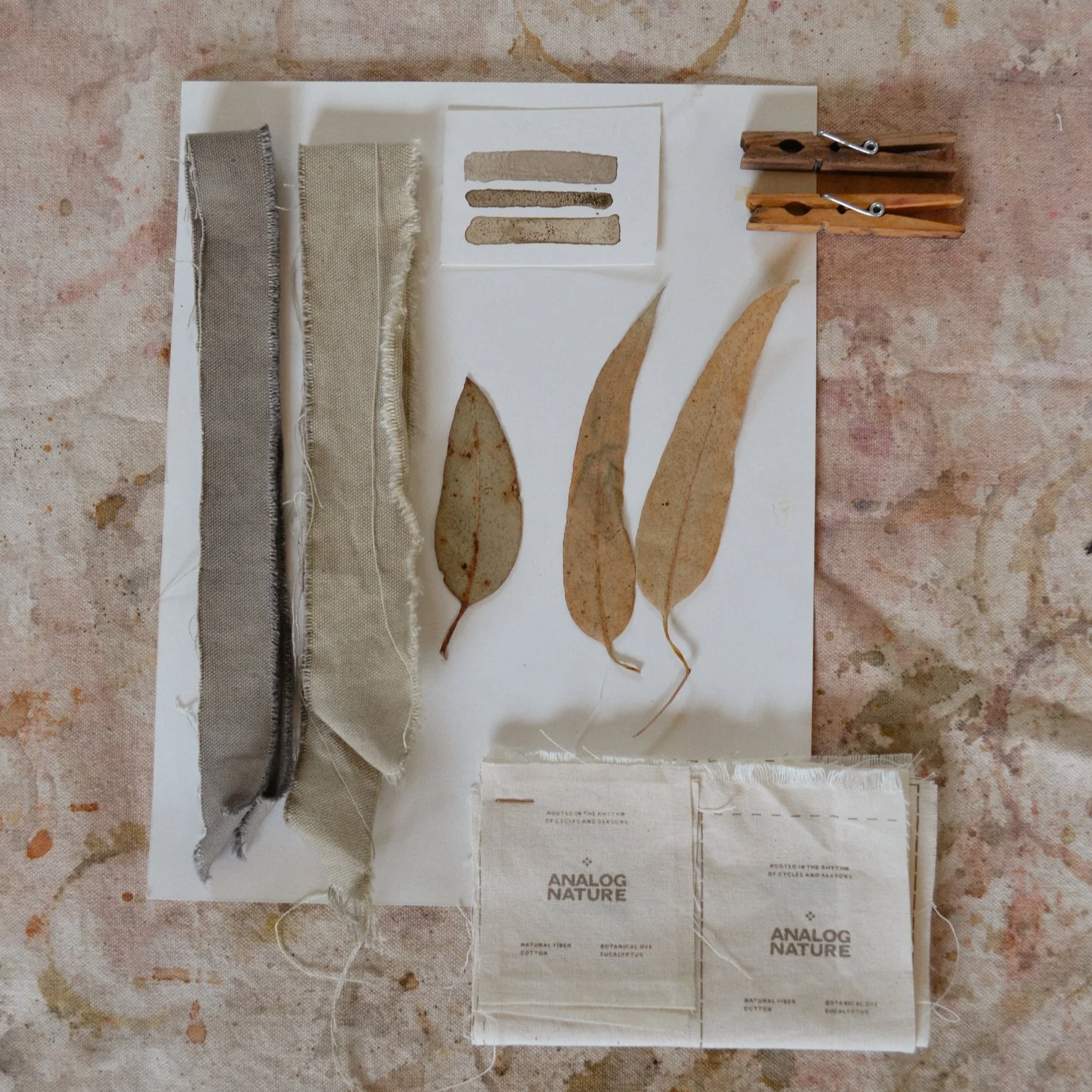
Small batch of Eucalyptus dyed creator belts are available here for purchase. For full process story check out our article on Blumenhaus.
Follow Maria’s creative journey on social @bycurcuma_ & @casaraiz.taller