What’s in Your Belt?
Creator Series: #2 Sarah Van Raden, Creator of Notary Ceramics
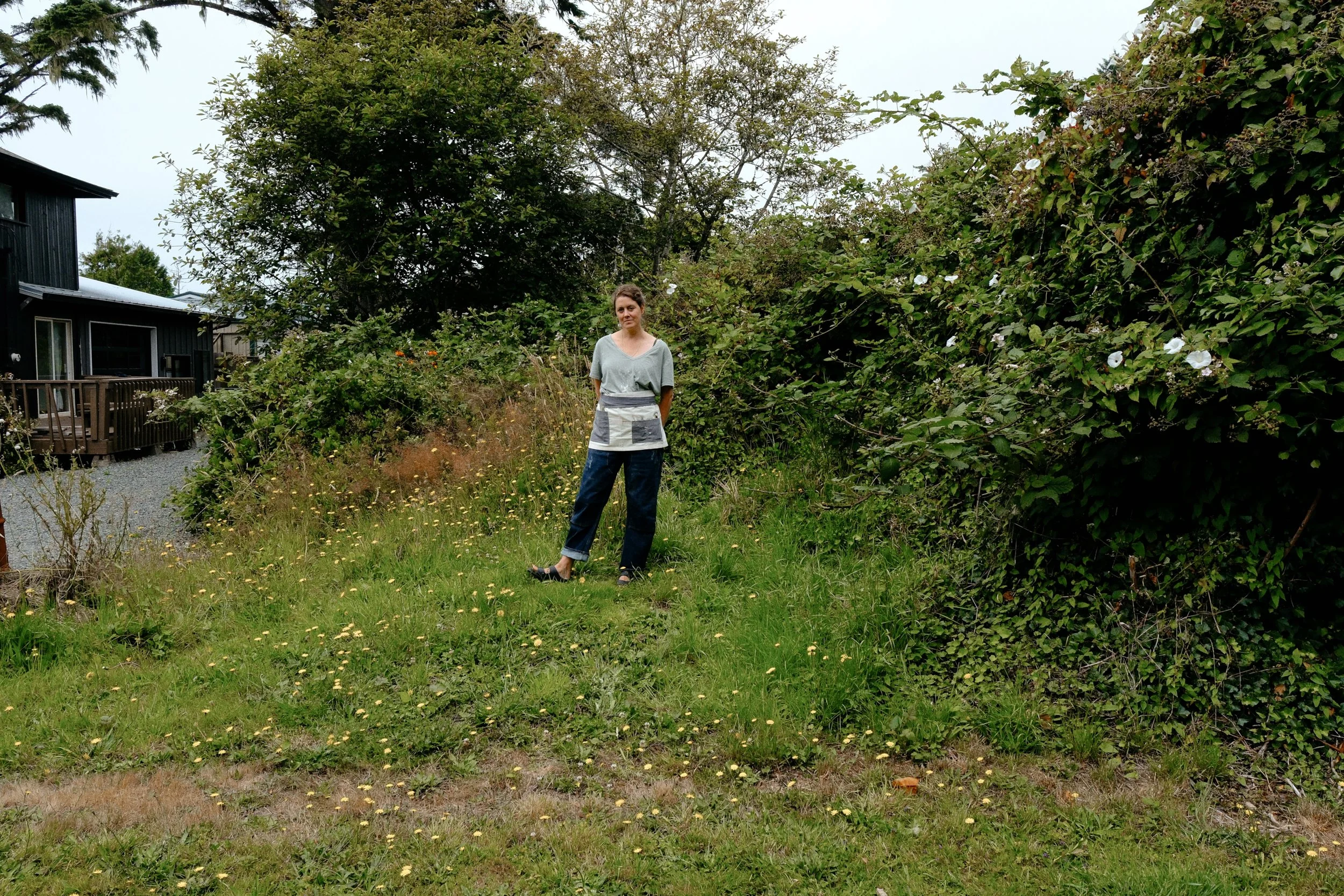
Interviewer: The intention of this on-going series is to learn from creators whose practices are rooted in nature’s rhythms and analog craft via the tools they choose to carry in their analog nature seasonal belt.
I met Sarah on a lovely spring day while volunteering at a beautiful flower farm here in Portland, Oregon. Before we met, I was planting seeds alongside a few women who worked for her. They described Sarah as an angelic being who brought so much love and warmth into every space she entered. Sure enough, when I met her soon afterward, I knew exactly what they meant.
For the past year, I’ve had the opportunity to sell my botanicals at Sarah’s beautiful shop, Notary Ceramics. The space feels like an extension of Sarah herself—her love and warmth can be felt throughout it and in every piece she creates. It makes perfect sense that her focus has turned toward lighting; she is someone who brings so much light and warmth wherever she goes.
As I navigate building a small business born from an intimate place—with my creativity and artistry infused into every part of it—this conversation with Sarah felt deeply nourishing. It left me feeling inspired and empowered to keep doing what I love. I hope her story offers you that same inspiration: a glimpse of what it can look like to live in alignment with yourself and the work you feel called to create.
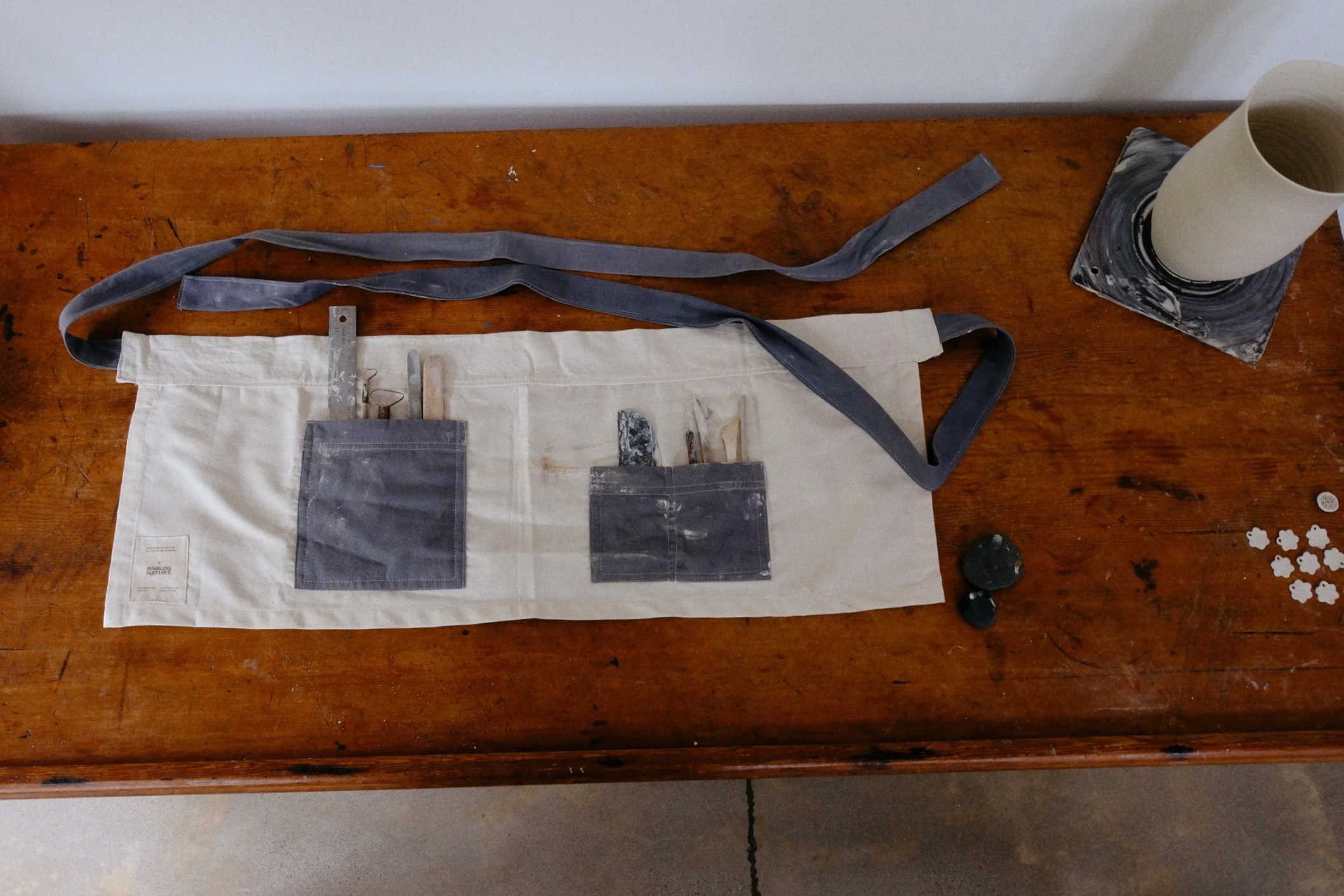
What is in your belt?
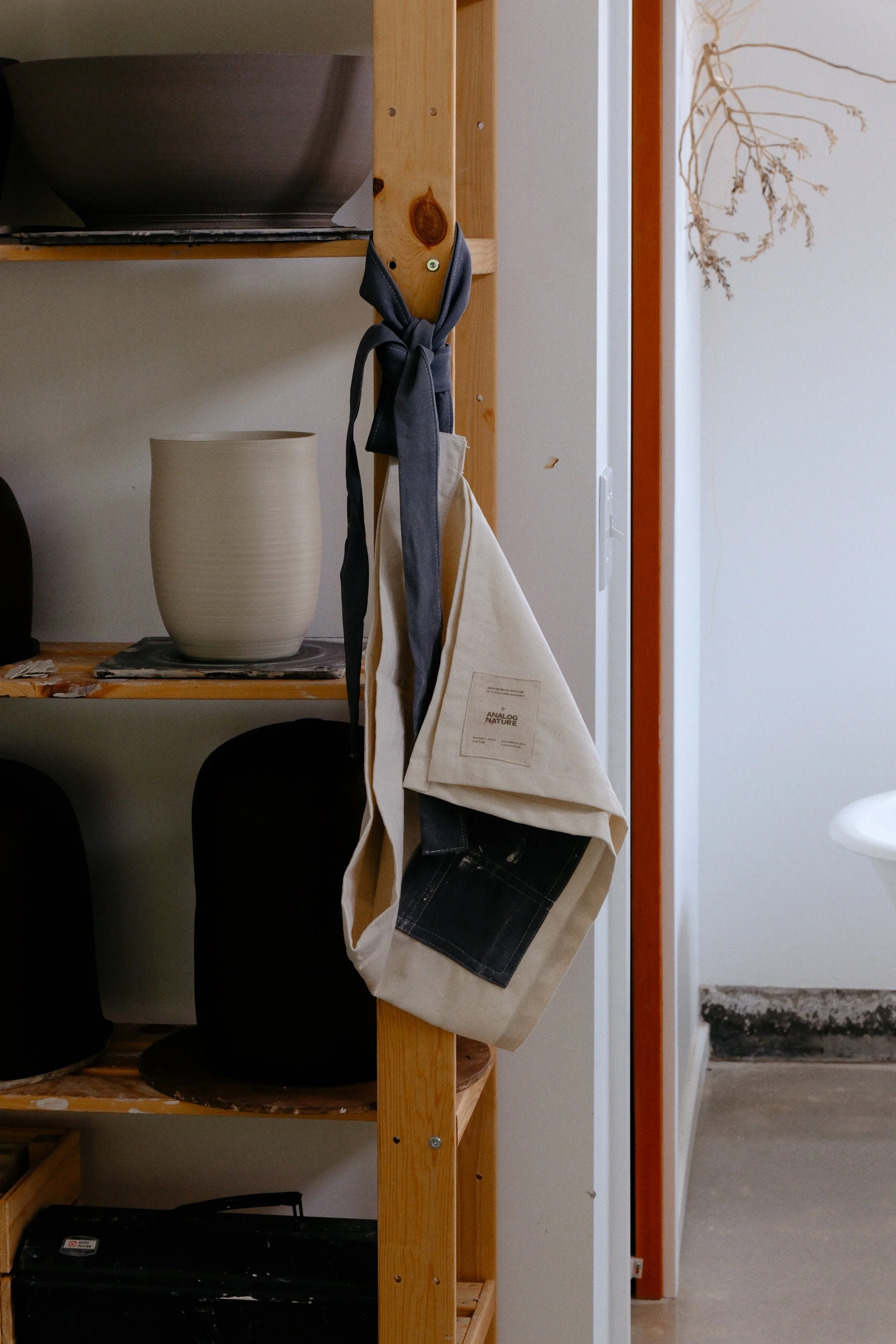
Ruler, loop tool, shaping tool, metal rib, needle tool, and more shaping tools.
Where are you, and what are you making right now?
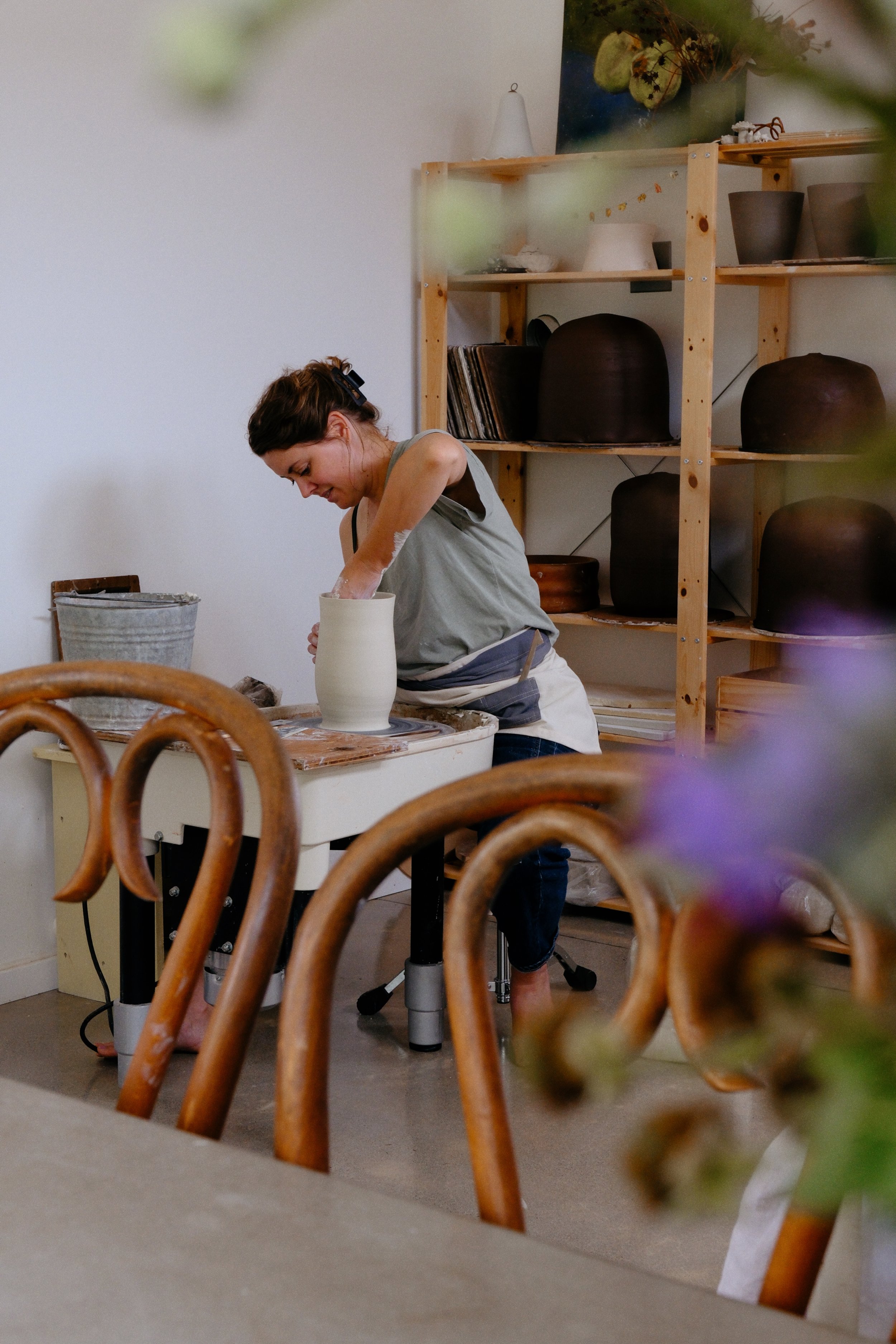
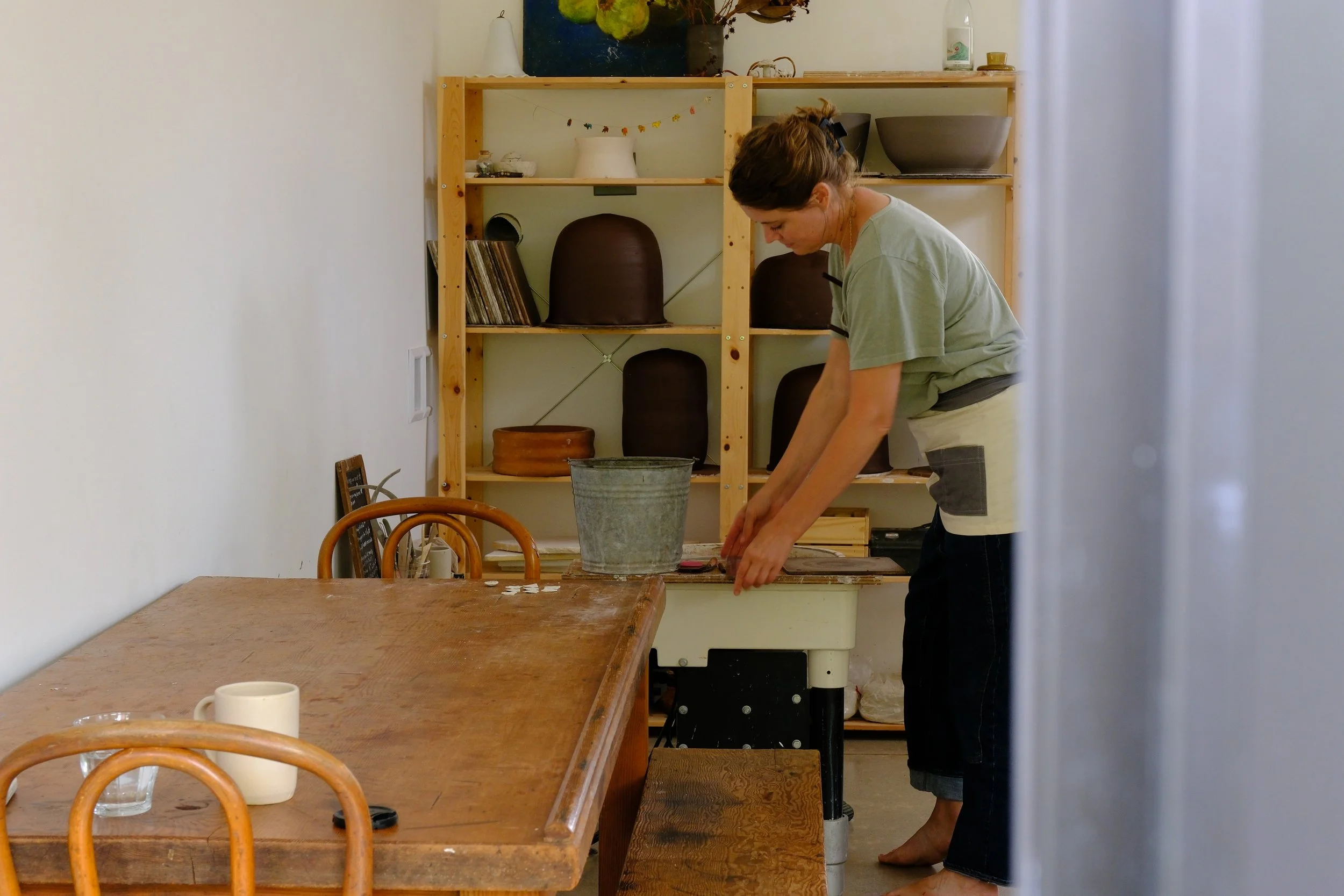
I’m at my coastal studio, which my husband and I built two years ago. We’ve finally put the finishing touches on it. I’m working on fulfilling a bunch of orders people have made in the past few weeks. Then I try to take Fridays to work on something new—something I just want to work on that doesn’t have to do with any other projects. Today, I’m going to work with porcelain and play with some new shapes.
What are you inspired by right now? What new ideas or projects are you trying to create more space for?
Right now, I’m most inspired by shifting the focus of my business from being a daily lifestyle brand—with dinnerware, kitchen tools, and living objects—to focusing more on lighting.
For the past year or so, I’ve been playing with porcelain. I’d never experimented with it before, and it has really different properties from the clays I’m used to working with. It’s way harder to throw, which I really like. I love a challenge. Learning how to work with it and get big pieces out of it has been a little grueling, but I’ve also had some success, so it makes me want to keep going.
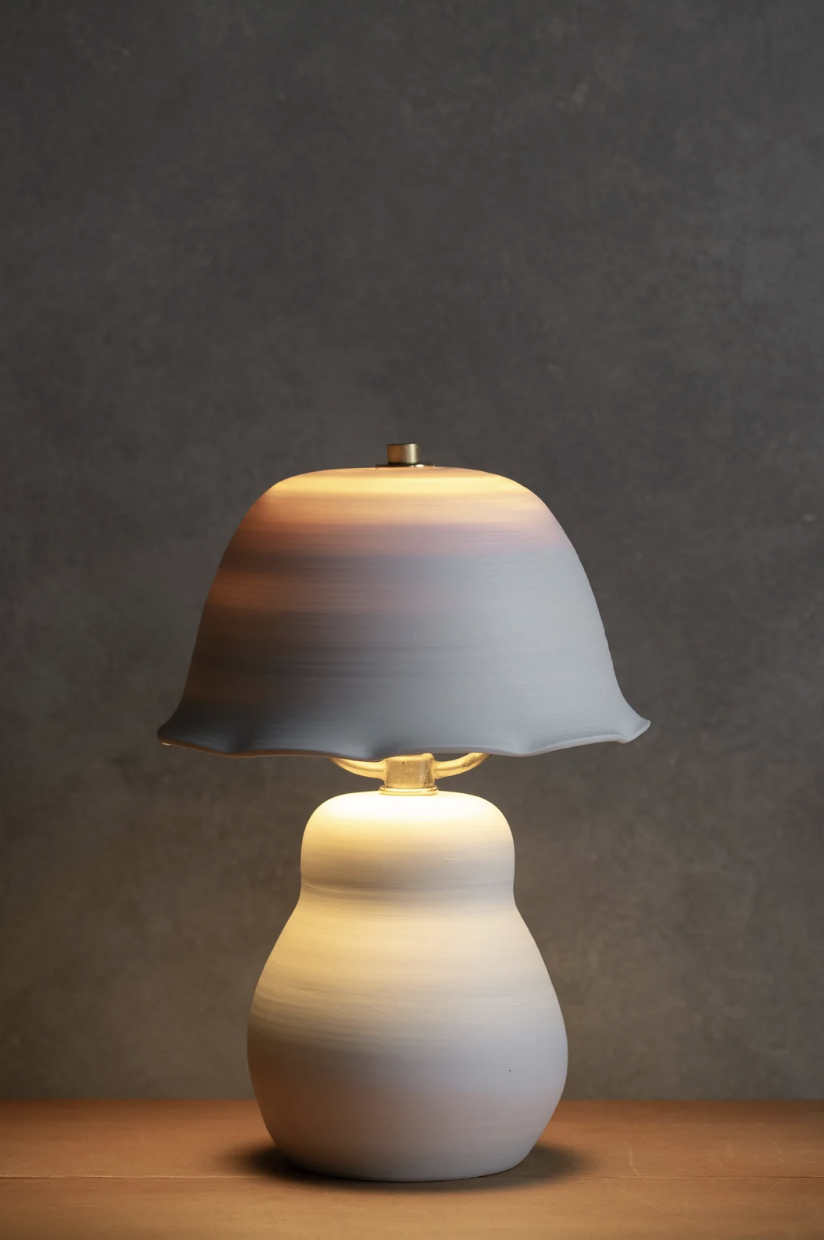
The translucency of porcelain, when you get it thin enough, is pretty exquisite with lighting. You can put these gorgeous porcelain bulbs in it, and when you turn it on at night, it has its own presence and glow—especially if you have a dimmer. With the other lighting I’ve made, which I still really enjoy, the light glows inside the dome, but nothing comes out of it. With porcelain, the whole thing glows and becomes like a little firefly. I just think it’s fabulous.
I’m also excited about collaborating with you for the winter season. Getting to make really pretty beads and diffusers. I love getting to work with other creatives, and I don’t do it very often. When it does happen and aligns, it feels invigorating and exciting. It’s fun to pick up on somebody else’s energy.
I want to continue playing with lighting, learn more about it, and figure out more spaces we can get into and different types of people we can work with. I’m also inspired by being at the beach as much as possible and being at the beach house. I feel the most fueled here. It’s pretty amazing to be in this studio with all the light, the breeze, the animals, and the smells. It’s seasonal for us because we can only really do this when the kids are out of school, so I’m trying to lap it up as much as I can.
How did you get into ceramics?
I had a massive health crisis. I didn’t know what was wrong with me. I started having chronic panic attacks that came out of nowhere—I’d never had one before in my life. I started losing a bunch of weight. I had two little girls and was trying to manage the stress of styling jobs, which were always freelance, so nothing was guaranteed. I felt like I had to take anything that came my way. They would be 12- to 14-hour days and really physical.
I was burned out and exhausted, emotionally and physically. I had a horrible panic attack at work, came home that night, and said, “I’m never going back. I will never do this again.” My husband said, “There’s no way. For 10 years, you’ve crawled to get this job and create this career.” But I was done.
I had been taking a ceramics class one evening a week. My husband got it for me for Mother’s Day or something, just as a creative space where I could play, get outside the house, and make something that didn’t have to be work-related or somebody else’s vision.
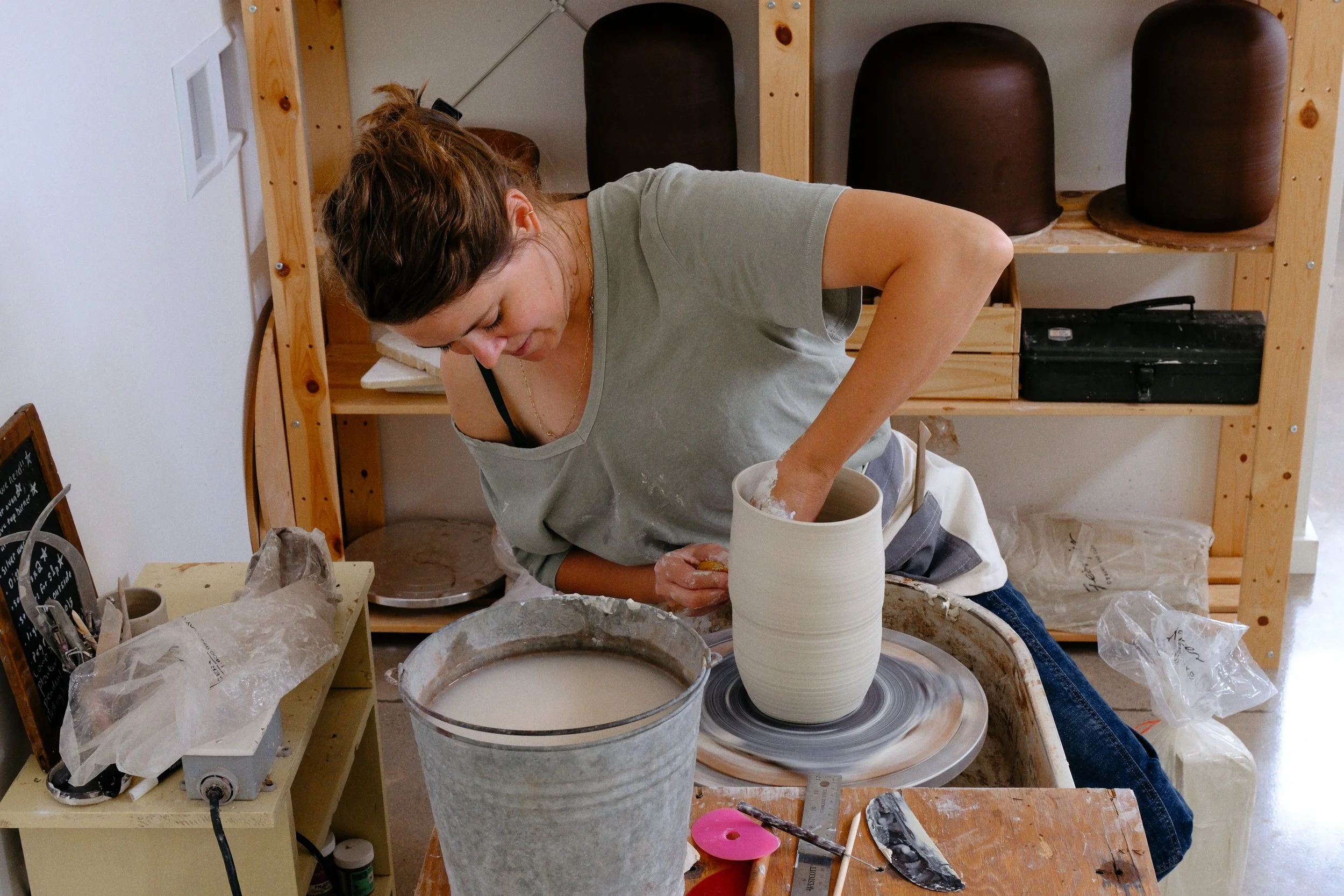
“I was loving it. I came home every time with sore cheeks from smiling so hard—happier than I’d ever been in a creative space.”
I’d always sewn and even had a clothing line for a while, but that was really technical. Ceramics felt so free.
When I quit my job, we figured out that we had about six months of savings I could limp along on. After that, I would have to get another job. I threw myself into playing with clay because it felt therapeutic.
At the same time, I was healing my body. I found out I had Hashimoto’s and started going through all the protocols for that. I found a naturopath, got on anti-anxiety medication—all the things I had been pushing off and trying to ignore came to a head at the same time.
I just played, really. Then I had a friend with a little shop, and she said, “The shit you’re making isn’t terrible. Do you want me to see if we can sell a couple of things?” I said, “If you think you can.” She started selling my work in her shop, and it actually sold. People wanted more, so I started making more and created a little Instagram for it.
Around the five-month mark, someone reached out to me on Instagram. She wanted to buy all the dishware for the café her fiancé was opening as a surprise gift. I got this huge wholesale order. It was enough to fuel us, put a little money back in our pockets, and get me over the next hump.
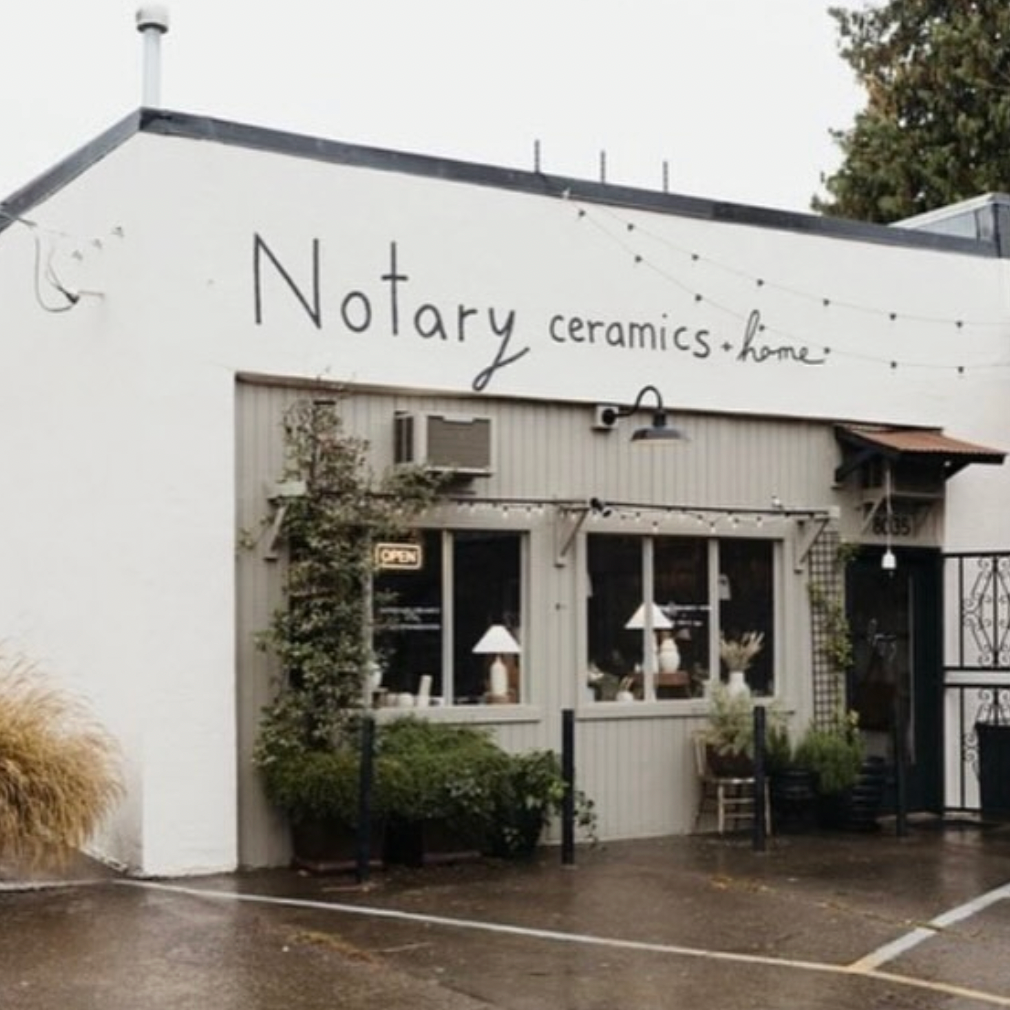
Then I started doing wholesale and eventually found our little space. It slowly, incrementally grew from there. My space was never meant to be retail; it was only going to be my studio. That’s part of why it feels special.
What makes porcelain harder to throw?
It’s really fine. It has no grog. They put grog—which is like a stabilizer, almost like sand—in most of the stoneware clays I usually work with. That gives the clay rigidity and helps it hold itself.
Porcelain is so fine. It’s basically like throwing with tiny glass powder, and it feels like cream cheese between your hands. Trying to make cream cheese do what you want it to do is a nightmare. Getting it thin enough to show the light through without puncturing it is the challenge. I’ve cut through so many things.
What draws you to porcelain as a material?
Porcelain comes from China and is thousands of years old. It was prized and held as this precious material for so long, until people were able to start mass-producing it. It’s still precious, expensive, and prized, but it’s more accessible now. Every potter can work with it if they want to, whereas I think there was a long time when only certain people got to work with it. It feels really cool that I get to play with it.
What in nature inspires your creative practice?
Dirt, mostly. I grew up in the country, kind of on a farm, and was in the dirt all the time. My sister and I would dig holes for the salamanders we caught. That smell and earthiness you get from the forest and natural dirt is the same scent you get when you open a bag of clay.
When I open the clay, I stick my head in the bag and breathe so deeply. It’s so nostalgic for me—it reminds me of my childhood. I grew up in Helvetia, between Hillsboro and Scappoose.
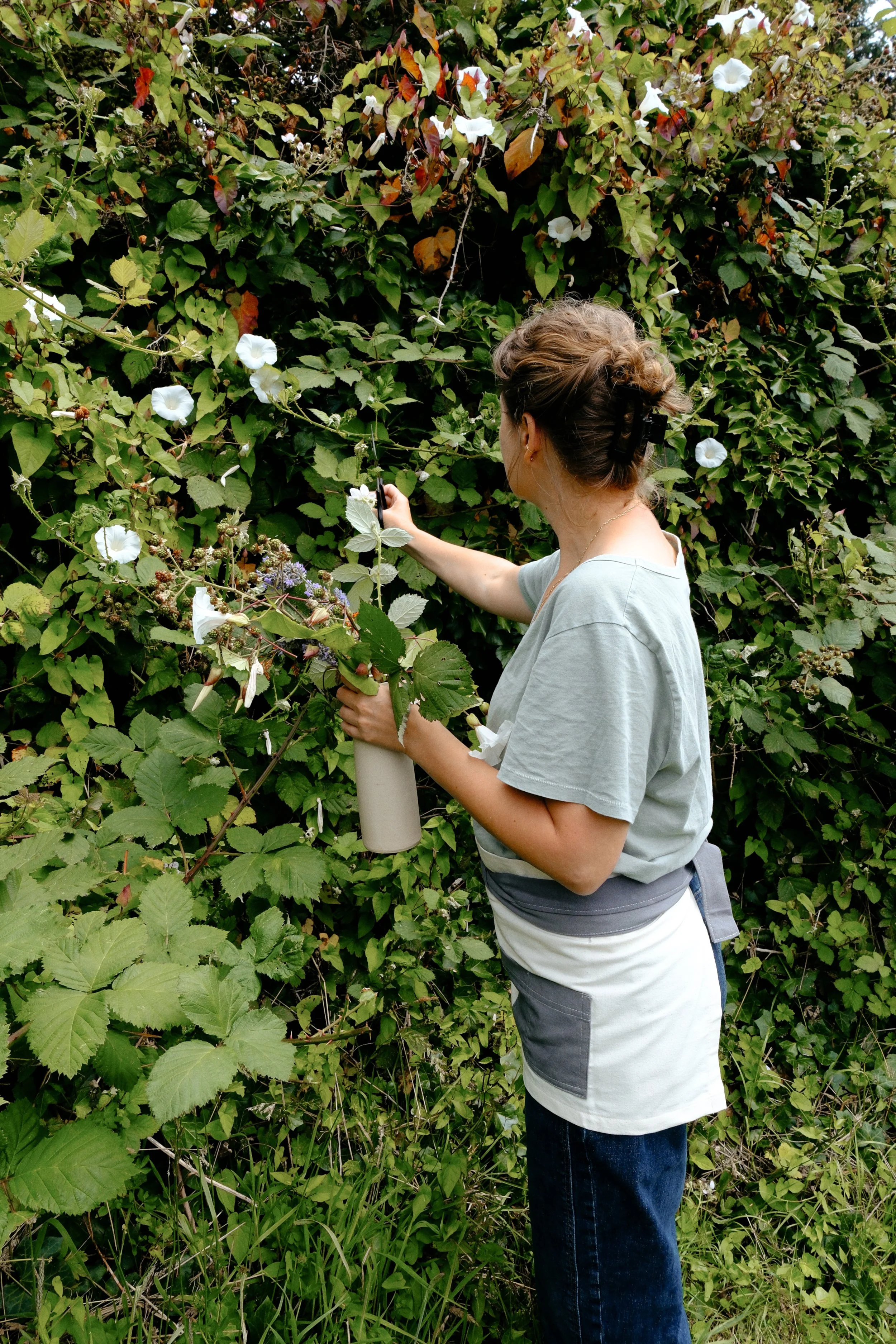
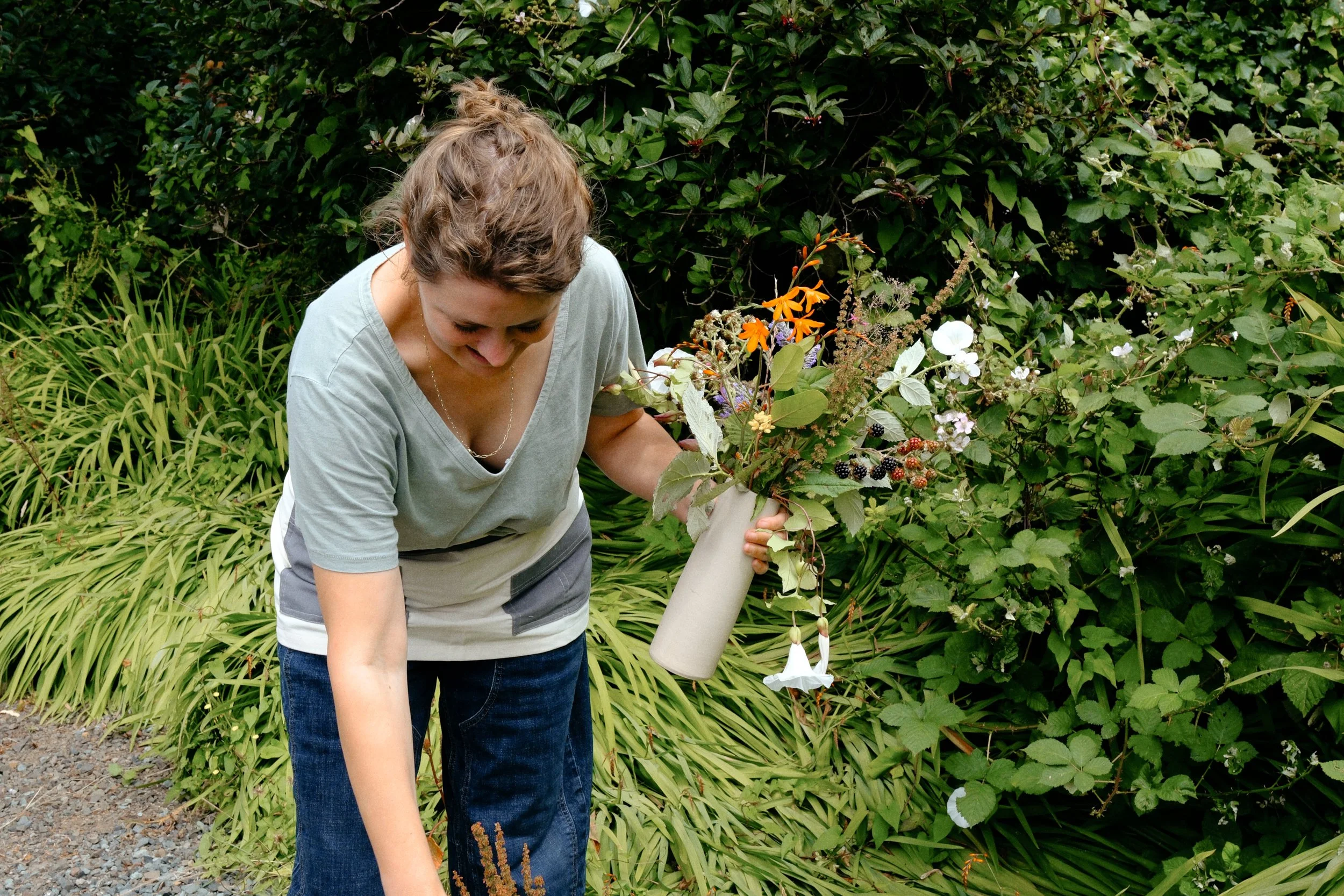
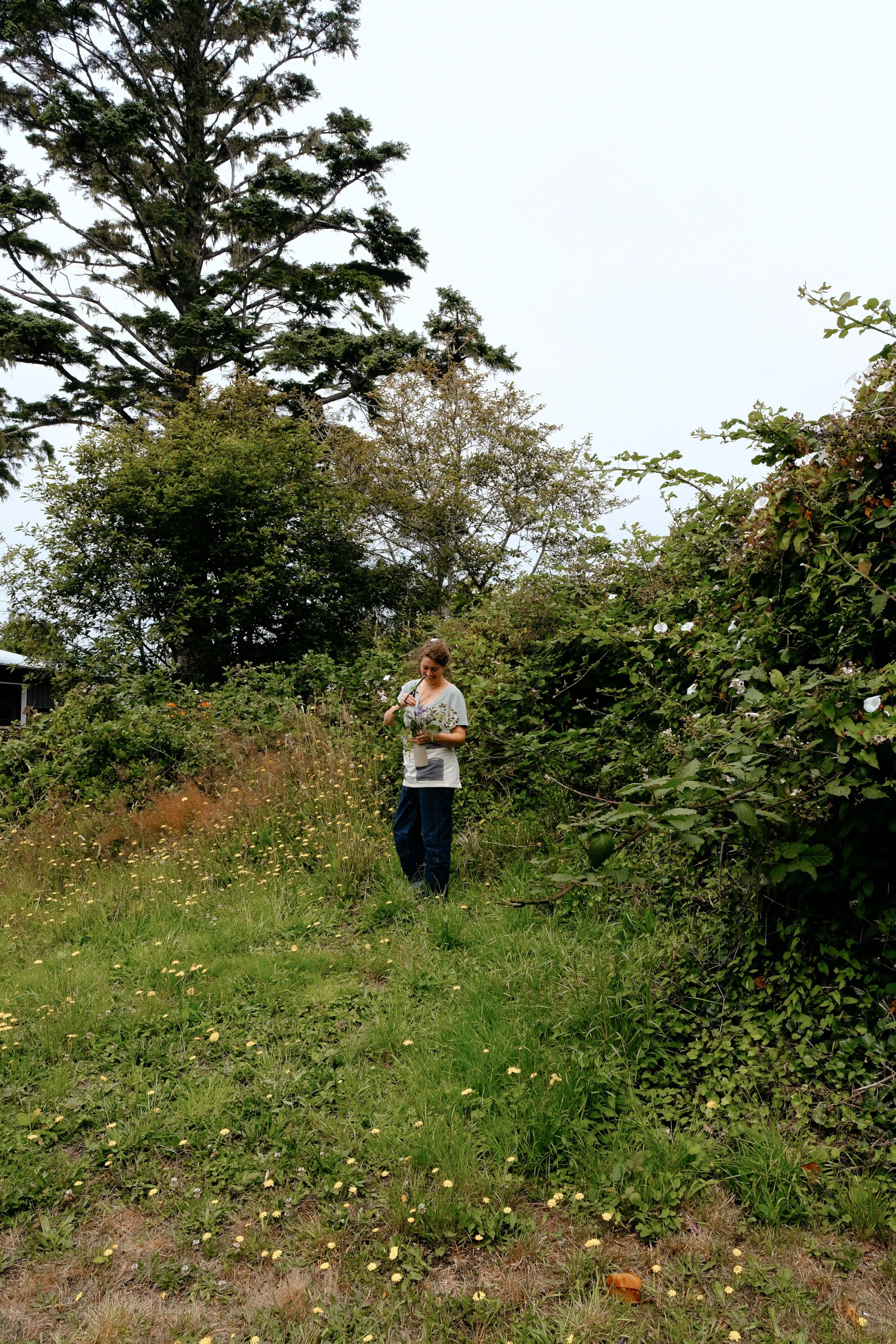
The ocean grounds me and puts me in a state of mind where I want to create because I’m relaxed and feel comforted. But flowers, trees, and things I can bring into my space are more directly inspiring to me. I’m constantly making vessels because I’m kind of a kleptomaniac. My husband says I have an actual problem. When I go on a walk, I always come home with a bouquet of something. I cannot help it. The flowers want to be in vases.
Why did you gravitate toward lighting?
I had been making a lot of vases and more décor-based pieces, but they’re never really the focal piece of a room. A light is so often the focal point.
A table lamp becomes this whole moment, and the same is true of a pendant—it grounds the space. I liked the idea of creating something that was more of a statement.
I also needed lights, so I made some for myself. I really fell in love with them and had a great reaction from everyone, so I thought maybe more people would want them.
How do you approach light in your work?
I like soft light. For me, it feels the most calming and restorative—like being in the forest under a canopy of trees, with beautiful dappled light coming through. That’s the kind of environment I try to recreate in my own spaces.
The lights I’m making might have a little ruffle, so when the light casts off it, it almost looks like a leaf. Or there might be a little ridge, similar to what you see in the sand after the ocean has receded and the tide is back. The sand falls into these beautiful little ripples. I try to recreate that in my lighting, and when it’s on, the light comes through those ripples really delicately. It’s magic.
What is a ritual or repeated act that keeps you close to the work?
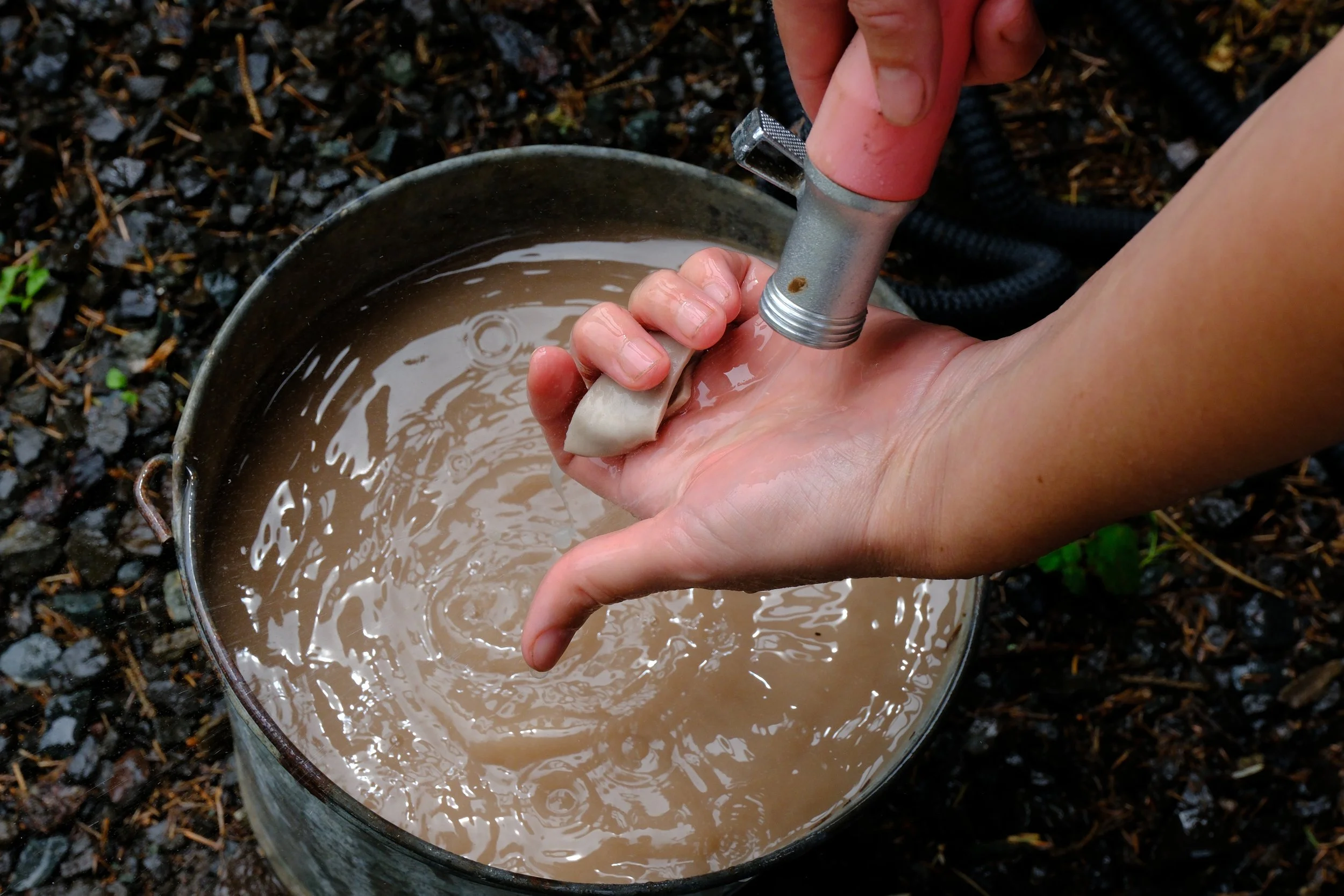
Cleaning is a big one. I often have to clean between each clay body, so I take apart my wheel and clean each tool individually. That also helps me inventory what I have and what I might need to replace.
I like cleaning the wheel. I like having a fresh slate and starting with it brand-clean, only to trash it again. It’s fun. I’m definitely a muddy little country baby who likes to be covered in mud.
Why do you create?
I can’t not. I cannot sit still. My mom is the same way. I come from a whole family of artists: my grandma was a painter, my grandpa was an architect and turned wooden bowls, and my uncle is an incredible potter. Creating is a constant driving force. If it’s not clay, it’s something else. I can’t sit still.
I sew a lot. I love to sew, cook, and bake. I’m always experimenting with weird new recipes. I like to garden, collect flowers, and clean my house. I know cleaning doesn’t necessarily sound creative, but it feels creative. You get to move everything off somewhere, have a blank slate, and put it all back in a new way. I really love that.
What did you do before ceramics?
I was a stylist for 10 years before I got into this, so clothing was always the way I created. Toward the end of my career, I started styling for home and houseware brands. I got to do more prop styling, which has been very helpful in creating this company.
We also offer some design services. My collaborator Roe and I can come in, consult, and help with placement. People often say, “I don’t know what type of lamp to put here or what kind of light fixture I need.” She can refer them back to me, and I can custom-make things for their spaces, which has been really fun.
Now that ceramics is your work, how do you protect the creativity and play within it?
It’s been interesting. I’ve come up against a couple of places where I’ve had to make a choice: Do I want to hire multiple potters to create my work, which would put me in more of an administrative role? Or do I want to stay smaller and get to touch clay every fucking day?
I’ve continually chosen health and creativity over business and money. I still have to make enough money to live and pay my employees, but not at the expense of my sanity, my health, or the health of the people around me.
“It’s so important to me that the women I work with feel rested and at ease in this space—that it’s not a high-pressure environment. We all fuck up. Me more than anyone else, all the time. I want to create the type of environment for them that I wish had existed for me.”
My mom always said, “Don’t sweat the small stuff.” There’s just so much fucking small stuff. It’s a hard thing to learn, but I think I’ve gotten better at it, and I’m still learning.
It feels so good to walk into an environment with no drama and no high stakes, where we’re all there because we want to be. None of us are going to get rich doing this—that’s a given. But hopefully, we’re all going to be pretty happy, feel supported, and leave every day feeling pretty chill.
What are some of the most important things you’ve learned through your craft?
Patience is definitely something I’ve had to learn and get better at. I don’t have a lot of it naturally, so I’ve had to work at building it. Being a mom has helped with that, too.
I’ve also learned to give myself the grace to fail and not have that actually be a failure, but an opportunity to learn something and make changes going forward.
With ceramics, there’s so much failure at every stage. It blows up in the kiln. It cracks while it’s drying. You put your tool through it. Your hair gets caught in it while it’s on the wheel. There are so many opportunities for it to go wrong.
“Learning to let it go, not hold on to it, and not let it become too precious has been a huge lesson. I think I have a pretty healthy relationship with my work now. It doesn’t hold too much weight. I put my love into it and work my hardest on it, but if something happens to it, I can make another one. That feels really good.”
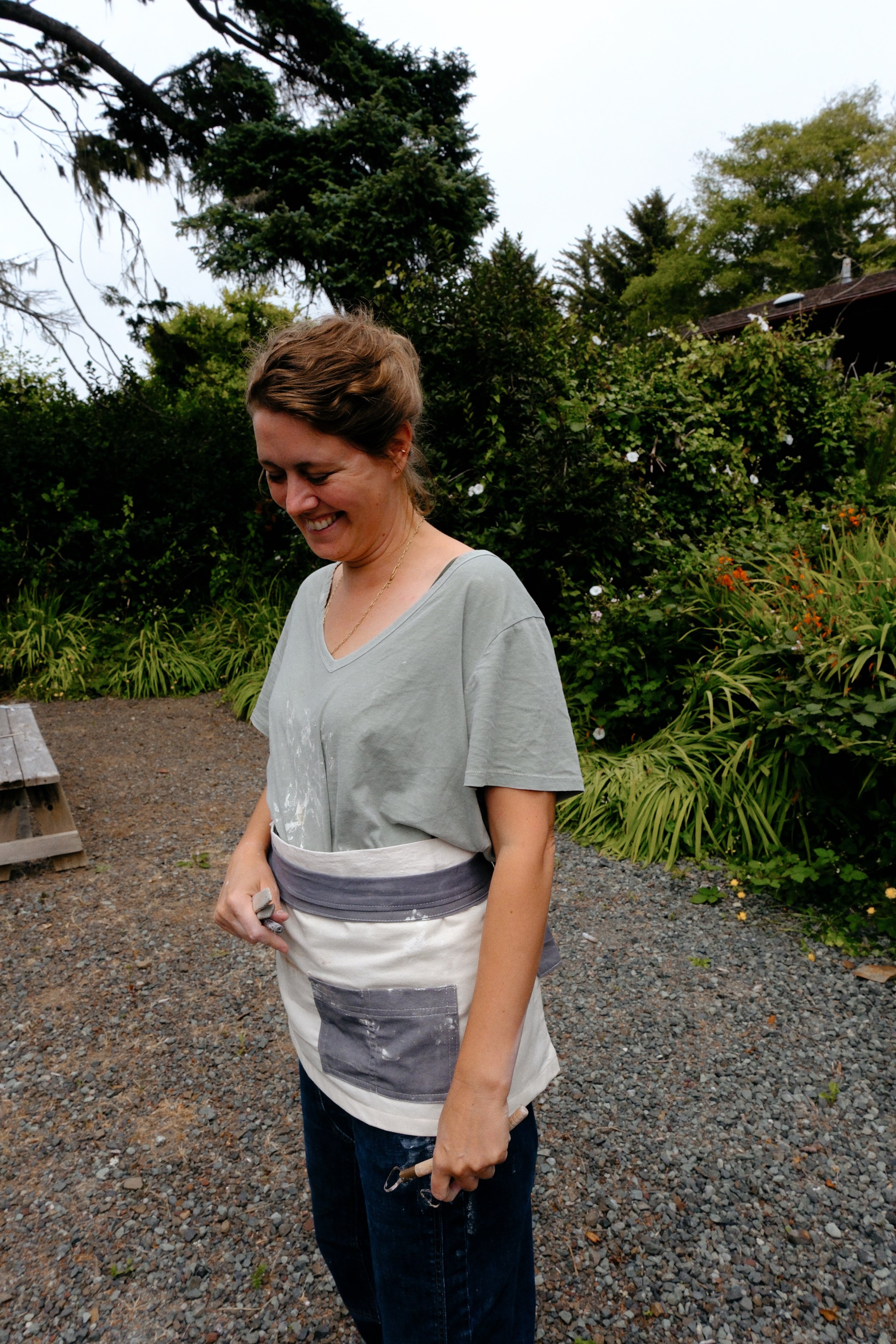
Your studio has so many beautiful antiques. How do antiques and found objects influence your work?
Old stuff. Old shit. I grew up in the country, and my mom and I went to barn sales on the weekends. The best things we found were in the free pile—the things other people didn’t see value in, but we saw that we could turn into something beautiful or interesting.
I love things that have a patina, a history, or wear. I love that about ceramics, too. The more you use a piece, the more it develops its own history and life. I think ceramics and old objects complement each other really well that way.
What has been a consistent source of inspiration for you?
The utility of objects is constantly inspiring. I like finding things I could use in the kitchen or while collecting and arranging flowers. There are a lot of things I have a hard time finding in the world that are beautiful or well-made, so I create my version of them to fill a gap or a need I have.
A friend wanted a garlic grater, and I’d never made anything like that. I’d never really seen one, so I did some research. We worked together to create this pretty little dish where you can grate your garlic, pour oil on top, add spices, and dip your bread in. It filled a need I didn’t even necessarily know was there.
In my own home, I’m constantly trying to create pieces I can’t find or can’t afford elsewhere. It’s where form becomes function.
Are there any books, magazines, or resources you recommend?
I really like memoirs written by chefs. I love how they talk about their process and describe scent, feeling, and sound. That’s really inspiring to me.
I’ve never been especially good in the kitchen, and it wasn’t something I was drawn to before. But since working with clay, I’ve noticed some big similarities between cooking, kitchens, and ceramics—even down to the fact that you’re cooking the piece in the end.
I get a lot of inspiration from books written by chefs. I love the language they use and the beauty they see in those moments. Often, they’re pulling from nature: beautiful farmscapes tied back into a kitchen, or an old antique bowl that belonged to their grandmother. It all feels very visceral. Gabrielle Hamilton is probably my favorite food writer. Blood, Bones & Butter is my favorite book. She had a childhood really similar to mine, and it’s a great read.
I also love Milk Decoration. It’s an interiors magazine based in France, and they do a great job highlighting makers, interiors, special objects, and families from around the world.
I have another book that’s a collection of photographs of old tools—I think it’s called The Hard Life. It includes tools from the late 1700s to now: ceramics tools, wooden tools, metal tools, and tools used for all kinds of work. It also gives you the history of each one. I love that book. When I go to garage sales, the first thing I look at is the tools. I don’t even know what some of them are for; I just need them because they’re cool.
What wisdom about creativity would you like to share?
Hard work pays off. Even if you have to grind pretty hard in the short run, it will be beneficial in the long run, and you’ll see results from it.
“I see so many people get discouraged, feel inferior for whatever reason, and give up. There needs to be more encouragement around the creative process because it takes so long to establish.”
Finding your niche is important, too, and so is trying not to be too hard on yourself. Everything has supposedly been done, so it can feel defeating to try to find something that’s completely new and yours. But you can put your own spin on something over time and create an aesthetic you return to—a through line that runs through your brand. I think that’s really important.
Learn more about Sarah + Shop her new porcelain collection at Notary.com
Photography shot by: Brooke Stewart